Algaes in your backyard fountains don’t only look bad, but they also damage your filtration system and can harm you and your pets’ health.
Because outdoor fountains expose water to sunlight, this naturally creates algae blooms. Though this process is natural and unavoidable, it doesn’t mean there’s nothing you can do to prevent or slow this process. Learn about the tricks that help fountain owners maintain their water health!
Change Your Fountain Water
Change the water of your fountain at least once a month by completely draining your fountain, letting it air dry, then refilling it.
Algae grow in your water naturally. But when you change the water monthly, you get rid of the current ones and prevent their rapid spread. By doing this, you also prevent algae build up in your pump, which can lead to a clog.
Regular Cleaning
More than just changing the fountain water, you should also clean the fountain itself every two months. Scrub your fountain surface regularly and thoroughly clean your pump by brushing its parts with a toothbrush and clean water.
When the surface of your fountain starts to develop a film or feel slippery, deep clean the fountain by emptying it of all water and scrubbing it with a brush or sponger, hot water, and some mild soap solution.
Meanwhile, when taking apart your pump, consult your fountain manual and carefully follow the manufacturer’s instructions on how to clean and assemble your pump, since all pumps are different.
Alter Your Water
Algae forms because of the chemical reaction between water and sunlight. Hence, a way to prevent algae formation is by changing the chemical properties of your water through the use of chlorine, bleach, or algaecides.
These chemicals act as a disinfectant. By adding approximately ¼ teaspoon of chlorine or bleach to every gallon of water, you can kill existing algae in your water fountain and prevent future algae growth.
Similarly, algaecides or algae preventive products, such as BioGuard and Kem-Tek, eliminate algae and prevent future spore growth, so your fountain can boast healthy water. Just keep in mind that these strong chemicals can make water toxic. So, if you have pets or children, it’s best to keep the concentration levels low, lest they drink the treated water.
Add Some Shade
Another way to prevent algae growth is to minimize the sunlight touching the water. To do this, you can relocate your outdoor fountain to a more shaded area to avoid direct sunlight exposure during the hottest times of the day.
Doing this can go a long way in slowing down the growth of algae, and help you minimize algae overall, while you practice other abovementioned tips for maintaining water health.
Water Fountain Repair
Following the tips above goes a long way in maintaining water health. But there are just some problems you can’t DIY, and you’ll need help from an experienced water fountain repair service.
Whether your fountain has deep cracks, is losing water for some unidentifiable reason, or if you have an algae disaster on your hands, we got you covered!
We help maintain all types of water features and understand backyard fountains and garden fountain repair more than anyone.
We can help restore your water feature, so you can fully enjoy your outdoor space. Contact us at 949-653-2305 at Orange County Pond Service today!
4 Ways to Keep Your Outdoor Fountain Algae Free was last modified: April 21st, 2022 by Admin
A fountain that constantly needs topping off is frustrating. The water level drops faster than expected, the pump starts making noise as it sucks air, and you’re hauling the hose out every other day. Most homeowners assume something is wrong with the fountain itself, but in many cases the answer is simpler: water evaporation. A water feature in a sunny, dry, breezy outdoor space can lose 1/4 to 1/2 inch of water per day to evaporation alone, and that adds up quickly. Knowing how to keep fountain water from evaporating reduces refill chores, protects the pump, and supports better water conservation across the property. For homeowners who suspect the problem may be a leak rather than weather, our step-by-step guide on why your fountain keeps losing water walks through the diagnostic process.
Here’s what we break down in this guide: what causes fountain water to evaporate faster than normal, six practical adjustments that slow it down, the warning signs that point to a leak instead of evaporation, and the common mistakes that quietly make the problem worse. We also cover when an auto-fill system makes sense, how a fountain cover changes the math during hot weather, and the placement tweaks that reduce wind-driven loss. For homeowners with active maintenance routines, our outdoor water fountain maintenance tips post is a useful companion read.
Key Takeaways
Knowing how to keep fountain water from evaporating starts with identifying the four main culprits: direct sun exposure, hot weather, wind, and splash from overspray, each of which calls for a different fix.
Simple, low-cost adjustments to spray height, basin position, and shade placement cut daily water evaporation by 30 to 50 percent without changing the look of the fountain.
A fountain cover or lid used during off hours and overnight protects against the heaviest evaporation losses, especially during summer months when surface water temperatures stay high after sundown.
Auto-fill valves and refill systems tied into the home’s water supply system handle the inevitable losses without manual refilling, which keeps the recirculating system from running dry and damaging the pump.
When water loss exceeds normal evaporation rates, the cause is usually a leak, crack, or plumbing system issue rather than the weather, and our specialists at Orange County Pond Services can pinpoint the source quickly.
How to Keep Fountain Water From Evaporating Starts With Knowing the Causes
Before changing anything, understand what’s pulling water out of the basin. Evaporation isn’t a single problem; it’s a combination of physical conditions acting on the water surface every minute the fountain runs. The bigger the surface area exposed, the faster the water drops.
Four factors drive most fountain water evaporation:
Sun exposure. Direct sunlight raises the water temperature, which speeds the conversion of liquid to vapor. A fountain in full afternoon sun can lose twice the water of a shaded one.
Air temperature. Hot weather increases the air’s capacity to hold moisture, which accelerates evaporation off the water surface. Days above 85°F push losses sharply higher.
Wind and air movement. Moving air carries away the humid layer that forms just above the water, allowing more evaporation to take its place. Even a light breeze doubles the evaporation rate compared to still air.
Splash and spray loss. Water that leaves the basin as spray, mist, or spill over never returns. This is technically not evaporation but it shows up the same way: a lower water level than yesterday.
Most homeowners are dealing with two or three of these at once. A fountain in a sunny spot with a tall spray pattern and an exposed basin is going to lose water no matter how well-built the unit is. The fix isn’t a single change; it’s a combination of small adjustments that each chip away at the loss.
How to Keep Fountain Water From Evaporating: Reduce Sun and Shade Exposure
Sun exposure is the biggest factor in fountain water evaporation, and it’s often the easiest to address. Even partial shade during the hottest hours, roughly 11 a.m. to 4 p.m., can cut evaporation losses by 30 to 40 percent.
Practical shade options:
Plant a shade tree or tall shrub on the south or southwest side of the fountain. Native species in Orange County, like coast live oak or California lilac, deliver shade without becoming high-maintenance.
Add a pergola, gazebo, or shade sail above the fountain. These work well for architectural water features that anchor a patio or seating area.
Position a freestanding umbrella during peak summer days. This is the lowest-commitment option and works for tabletop or smaller backyard fountains.
Move portable fountains to a shadier corner of the outdoor space if the original placement was too exposed.
Shade also benefits the fountain in other ways. Less direct sun means less algae growth, slower mineral buildup, and a longer life for the pump and electrical components. For more on how shade interacts with algae control, our post on eco-friendly, bird-safe algae control solutions covers the full picture.
If shade isn’t an option because the fountain anchors a sunny patio, focus on the other adjustments below. The combined effect can match or exceed what shade alone delivers.
Lower the Spray Height to Reduce Splash and Spill Over Loss
Tall spray patterns look impressive but they’re also the largest source of non-evaporation water loss. Water shot 18 inches above the basin breaks into smaller droplets that evaporate before returning, get carried away by wind, or splash beyond the basin edge. Lowering the spray height alone can cut daily losses by 20 to 30 percent.
Most fountains let you adjust spray patterns through one of these methods:
The flow control valve on the pump or in-line with the supply tubing
The nozzle or spray jet at the spray point, which often has interchangeable inserts for different patterns
The pump speed setting if the pump has a variable speed control or rheostat
Reduce the height in small increments, watching the basin’s water line over a few days. The goal is the lowest spray that still looks the way you want and keeps the water sound. Pair the lower spray with a check of the basin perimeter for spill over points where water leaves the catchment area. Low spots on the rim, gaps between stones, or worn caulking can let water escape during normal operation.
For fountains with a pond as the catch basin, a slightly raised lip or a strip of native stone along the perimeter contains splash and keeps it inside the recirculating system. Small bog plants or marginal aquatic plants placed along the edge also absorb the splash and look natural in the process.
Add a Fountain Cover for Off Hours and Hot Weather
A fountain cover or lid placed over the basin when the fountain isn’t running is one of the most effective single moves you can make against water evaporation. A cover blocks sun, slows wind across the water surface, and traps the humid layer just above the water, which together cut evaporation by 60 to 80 percent during covered hours.
Cover options range from simple to integrated:
Pre-fabricated fountain covers sized to common basin shapes, available from outdoor home stores
Custom-made vinyl or canvas covers for unusual basin shapes or larger water features
Hinged wooden lids for tabletop and smaller pedestal fountains, which double as a decorative finish when closed
Pool-style mesh covers for larger pond-like fountains, which catch debris while still allowing some air exchange
Use the cover overnight, during heat waves when daily temperatures climb above 90°F, and during longer absences like vacations. A weighted edge or strap system keeps the cover in place during wind. For fountains in regions with significant temperature swings, a cover also reduces the strain on the pump from cycling through hot, oxygen-depleted water.
If you don’t want a removable cover, a partial floating cover, like a sheet of foam or a few aquatic plants on the surface, achieves a similar effect during the day. Floating plants in particular reduce evaporation by 40 to 50 percent on the area they cover and look natural in most fountain styles.
Install an Auto-Fill or Automatic Refill System
Even with shade, lower spray, and a cover, some evaporation is unavoidable. An auto-fill valve or automatic refill system tied into the home’s water supply system handles the small daily refills, which protects the pump from running dry and saves the manual refill routine.
A typical auto-fill setup includes:
A float valve mounted in the basin, set to maintain a target water level
A 1/4-inch supply line from a nearby outdoor spigot or irrigation hookup
A shutoff valve and pressure regulator at the connection point
An optional water filter or softener cartridge to reduce mineral buildup
The float valve releases a trickle of fresh water whenever the basin level drops below the set point. Most setups use less than 5 gallons per week even on hot summer months in sunny locations, which is well within most municipal water budgets. The system runs quietly in the background and keeps the fountain looking right without homeowner intervention.
For homeowners with existing irrigation systems, the auto-fill line can tap into a drip zone, which makes the install simpler and avoids new plumbing system work. A licensed plumber can handle more complex setups that involve a dedicated supply line. Pairing the auto-fill with a slow-drip overflow drain prevents flooding if the float valve ever sticks.
Address Wind Exposure to Slow Fountain Water Evaporation
Wind drives evaporation by sweeping away the humid air that builds up just above the water surface. Replace that humid layer with dry incoming air, and the evaporation rate jumps. Reducing wind exposure around the fountain is a quieter improvement than the others on this list, but it’s surprisingly effective.
Practical wind reduction:
Plant a hedge or windbreak on the side facing prevailing winds. In most of Orange County, that’s the southwest. Native shrubs like ceanothus or toyon work well.
Add a screen, lattice panel, or low wall between the fountain and the wind source. Anything that breaks the wind without fully blocking airflow helps.
Reposition the fountain against an existing wall, fence, or building corner that already blocks wind from one or two sides.
Drop the spray height as discussed above, since taller spray catches more wind than shorter spray.
Wind protection also keeps debris like leaves, dust, and pollen from blowing into the basin, which means less cleaning between maintenance cycles. The same windbreak that slows evaporation extends the life of the water and reduces filter loading.
In coastal Orange County areas where afternoon winds are predictable, timing also matters. Running the fountain during calm morning hours and pausing it during the windiest part of the day cuts daily losses without affecting the times you actually enjoy the water feature.
When Water Loss Isn’t Evaporation: Leaks, Cracks, and Pump Issues
Sometimes the problem isn’t evaporation at all. A fountain losing more than an inch of water per day in moderate weather almost certainly has a structural issue rather than a weather one. Knowing how to tell them apart saves time and gets you to the actual fix faster.
Signs the loss is a leak or crack:
Water level drops at the same rate even on cool, overcast days
Wet patches or persistent moisture in the soil around the fountain base
Mineral deposits or white residue along visible cracks in the basin
The water level always drops to the same line, suggesting a crack at that height
Drop continues even when the pump is off for 24 to 48 hours
The 24-hour test is the simplest diagnostic. Turn the pump off, mark the water line with a piece of tape, and check it again the next day. Normal evaporation in mild weather should be less than 1/4 inch in 24 hours with the pump off. More than that points to a leak. For a more thorough method, our post on diagnosing fountain water loss walks through dye testing and other techniques.
Pump issues are another non-evaporation cause. A pump that pulses, runs hot, or makes new noises may be losing prime, splashing water unevenly, or pushing water past the intended catchment area. Our guide on why a water fountain pump might not be working covers the diagnostic steps.
Common Mistakes That Speed Up Fountain Water Evaporation
Several common habits work against water conservation efforts. Avoiding these keeps the other adjustments working as intended.
Mistake
What Goes Wrong
How to Avoid It
Running the fountain 24/7 in summer
Maximum daily evaporation, pump stress
Run during peak enjoyment hours; cover or pause during peak heat
Topping off with cold water
Splashing increases as cold water hits warm basin
Add water gradually; let it warm to ambient before refilling fully
Skipping basin cleaning
Mineral buildup roughens the surface, increasing evaporation area
Clean every 4 to 6 weeks during summer
Leaving the basin lip unsealed
Water wicks over rough edges and evaporates from outside the basin
Seal the rim with outdoor-rated sealant; replace worn caulk
Choosing a tall spray pattern in windy areas
More splash loss, more wind-driven evaporation
Match spray pattern to wind exposure; lower it during windy weeks
Using untreated tap water
Mineral deposits accelerate algae and increase cleaning
Use a basic filter cartridge or treat with dechlorinator
The cleaning frequency one is often overlooked. A fountain basin coated in algae or mineral scale has more surface area exposed to air than a smooth basin, which compounds the evaporation problem. Regular cleaning keeps both the visual quality and the water level stable.
When to Call Orange County Pond Services for Fountain Water Loss Help
DIY adjustments handle most evaporation issues, but some situations call for professional diagnosis and repair. Signs that the problem has moved beyond a weekend fix:
Water loss continues at the same rate after shade, cover, and spray adjustments
Visible cracks or wet patches around the fountain base that don’t dry out
Pump that runs hot, shuts off, or won’t restart
Older fountains where the original sealant has degraded
Auto-fill valve or plumbing system installation in a complex layout
Fountains in custom landscapes where shade or windbreaks need to fit a specific design
Orange County Pond Services has been handling fountain water-loss problems across Orange County since 2001. With more than 25 years of hands-on experience on garden fountains, wall fountains, pond-style features, and custom architectural water features, our team brings the diagnostic equipment and repair experience that get to the actual cause quickly.
Trust our specialists with the work that goes beyond a quick adjustment. Call 949-653-2305 or request a free quote online. Whether the problem turns out to be evaporation, a slow leak, or a pump issue, we’ll diagnose it and recommend the simplest path back to a fountain that holds its water.
Frequently Asked Questions
Q1. How much water should a fountain lose per day to evaporation?
A. Normal fountain water evaporation runs about 1/4 to 1/2 inch per day in mild weather, with rates climbing to 1/2 to 1 inch per day during hot weather above 85°F. Smaller basins lose proportionally more because the surface area is large relative to the total water volume. If you’re losing more than 1 inch per day in moderate weather, the cause is likely splash, wind, or a leak rather than evaporation alone. Tracking losses over a week with a simple tape mark gives a clearer picture than day-to-day readings.
Q2. Does covering a fountain at night actually save water?
A. Yes, a fountain cover used overnight reduces evaporation by 60 to 80 percent during covered hours. Even though air temperatures drop at night, water in the basin retains heat and continues evaporating, especially in summer months when basin temperatures stay above 70°F until morning. A cover blocks the air movement that drives the loss and traps the humid layer above the water. For homeowners who only run the fountain during the day, covering it the rest of the time can cut weekly refill needs in half.
Q3. What’s the right fountain placement to minimize evaporation?
A. A spot with afternoon shade, partial wind protection, and proximity to a water source for refills covers most of what matters. East-facing locations get morning sun and afternoon shade, which is ideal for the fountain and the surrounding plants. Avoid placing fountains in open lawn areas where wind has unbroken access to the basin. A spot near a wall, fence, or hedge gives natural wind protection without requiring extra structures. Plan for a nearby outdoor spigot if you’re considering an auto-fill system later.
Q4. Should I use distilled water or tap water in my fountain?
A. Tap water works fine for most fountains as long as you account for chlorine and minerals. Distilled water reduces mineral buildup and is worth using in indoor fountains or fountains with sensitive metal finishes. For typical outdoor fountains, treated tap water is more practical, especially with auto-fill systems where distilled water isn’t feasible. Adding a basic dechlorinator or using a hose-end filter handles the chlorine, and the small mineral buildup that does occur cleans off easily during regular maintenance.
Q5. How can I tell evaporation loss from a leak?
A. Run the 24-hour test. Turn the pump off, mark the water line with tape, and check the level the next day. Normal evaporation with the pump off is less than 1/4 inch in mild weather. More than that, especially in cool or overcast conditions, points to a leak. Wet soil around the fountain base, persistent water level drops to a specific line, and mineral deposits along visible cracks all confirm a leak rather than evaporation. If the test points to a leak, locate the source before the next refill so you’re not topping off into a problem that’s getting worse.
How to Keep Fountain Water From Evaporating: A Practical Guide was last modified: July 6th, 2026 by Admin
A cracked fountain in your outdoor living area turns a focal point into an eyesore. Water seeps out, the basin loses pressure, and over time the surrounding stonework or planting beds suffer too. Most of these problems can be addressed with the right materials and a methodical approach. Outdoor water fountain repair is a manageable project for many homeowners, especially when the damage is caught early and the right repair products are matched to the fountain material. For situations beyond a basic patch, our outdoor water fountain repair service handles the diagnostic work and the structural fixes that DIY methods can’t reach.
What follows is a complete walkthrough of how to inspect, plan, and execute repairs on cracked or chipped water features. We cover the materials you’ll need, the steps for sealing hairline and wide cracks, how to repair broken pieces and chips on concrete water fountain models, the resin-and-fiberglass method for resin fountains, and how to renew worn waterproof sealant. We also flag the common mistakes that turn a quick fix into a redo, and we close with the warning signs that mean it’s time to bring in a professional. For homeowners dealing with active water loss, our guide on diagnosing and fixing leaking ponds and fountains is a useful companion read.
Key Takeaways
Outdoor water fountain repair starts with correctly identifying the damage type, since hairline cracks, wide cracks, broken chips, and worn sealant each require different repair methods and materials.
A proper fountain repair kit includes clear silicone, two-part epoxy, fiberglass cloth, quick-drying concrete, and an outdoor-rated water fountain crack sealer for the full range of common repairs.
Concrete water fountain repairs use quick-drying cement patches, while resin fountain repair calls for resin and fiberglass cloth applied in thin, smooth layers to prevent water seepage.
Skipping the curing time, mismeasuring materials, or reapplying sealant before clearing existing cracks are the three most common mistakes that send DIY fountain repairs back to square one.
Knowing when to handle the repair yourself and when to call Orange County Pond Services protects your investment, especially for structural damage, repeated leaks, or repairs on aged concrete water fountain bowls.
Outdoor Water Fountain Repair Starts with Identifying the Damage
Before mixing any sealant or epoxy, take time to assess what you’re working with. The repair method depends on the fountain material, the type of damage, and where the damage is located. Skip this step and you risk applying the wrong product, which means doing the job twice.
Empty the fountain and let the surface dry for at least 24 hours. Cracks that aren’t visible while the fountain is wet often appear as white mineral lines once dry, since calcium-rich water leaves deposits along leak paths. Inspect every face, paying close attention to the basin floor, the rim, and any joints between the bowl and pedestal. Run your fingers across the surface to feel for hairline cracks.
Damage falls into four broad categories:
Hairline cracks. Thin, surface-level cracks usually caused by temperature swings, settling, or age. Often repairable with silicone or a thin epoxy fill.
Wide cracks. Cracks larger than 1/8 inch, sometimes running through the basin wall. These need a structural repair using epoxy mortar, fiberglass cloth, or concrete patching compound.
Chipped or broken pieces. Sections that have flaked off or fully separated. Repaired by bonding the piece back with epoxy, or rebuilding the missing area with patching material.
Worn or failed waterproof sealant. A surface that no longer beads water, often accompanied by darkened patches where moisture has soaked in. Repaired by stripping old sealant and applying a fresh coat.
Once you know what category you’re working with, the materials and steps fall into place. For homeowners with a fountain that is part of a larger pond installation, our outdoor water fountains design and service page explains how repairs interact with the broader water feature design.
Outdoor Water Fountain Repair Tools and Materials You Need
Having the right materials on hand prevents the frustrating mid-project trip to the hardware store. The exact list depends on which damage type you found in the assessment phase, but a complete fountain repair kit covers most situations.
For sealing cracks, you’ll need:
Clear outdoor-rated silicone caulk for hairline cracks on stone, ceramic, and resin surfaces
Two-part epoxy rated for wet environments, used to bond chips and fill medium cracks
Quick-drying concrete patching compound for cement and concrete water fountain repairs
Resin repair kit with fiberglass cloth for resin fountain repair on cracks of any size
Water fountain crack sealer designed for outdoor water features, which doubles as a finishing coat after structural repairs
For preparation and finishing:
Wire brush and sandpaper (100 grit through 220 grit)
Putty knife or trowel sized for the patch area
Clean rags and a bucket for rinsing
Painter’s tape for masking
Acetone or denatured alcohol for cleaning surfaces
Outdoor-rated paint or stain to match the fountain finish
Keep a small bucket of clean water nearby for rinsing tools, and disposable gloves for handling epoxy and resin. If the repair involves any pump work, set the pump aside in a safe spot before starting on the surface so the unit doesn’t get splashed with sealant or sanding dust.
How to Seal a Crack in a Water Fountain
A crack or leak left untreated wastes water, damages the surrounding hardscape, and eventually compromises structural integrity. Sealing the crack early is far cheaper than rebuilding the basin.
The first step is locating the leak. Fill the fountain to its normal level, then mark the water line with tape on the inside of the basin. Let it sit without the pump running for two to three days, checking the water level daily. Where the water stops dropping tells you where the crack sits. If the water keeps dropping all the way down, the leak is in the basin floor or a pump fitting. For more detail on this method, our post on how to repair a leaking garden fountain like a pro walks through the diagnostic steps.
Once you’ve located the crack, follow these steps:
Drain the fountain completely and dry the surface with clean rags.
Use a wire brush to clean loose debris from inside the crack.
Wipe the crack and surrounding area with acetone or denatured alcohol.
For hairline cracks: apply clear silicone caulk along the crack, smoothing it with a wet fingertip or plastic spreader. Cure 24 hours before refilling.
For wider cracks on stone or resin: apply a thin layer of two-part epoxy, press it into the crack, and feather the edges. Cure 6 to 12 hours.
For cracks larger than 1/4 inch on concrete: use a quick-drying concrete patching compound, troweled in firmly and smoothed flush.
After the structural repair has cured, apply a coat of water fountain crack sealer over the area as a finishing layer.
Refilling too soon is the most common cause of failed crack repairs. Sealants need their full cure time, sometimes up to 72 hours, before water exposure. For larger or more complex leaks, our team has documented 8 effective ways to address a leak in a water fountain that go beyond surface-level patching.
Repairing Broken Pieces and Chips on Concrete and Stone Fountains
Pieces that have chipped off or broken away need to be bonded back rather than just sealed over. Two-part epoxy is the right product. It cures hard, bonds to concrete, stone, ceramic, and resin, and stands up to constant water exposure.
To reattach a broken piece:
Clean both bonding surfaces with acetone.
Test-fit the piece to confirm alignment before mixing epoxy.
Mix the two epoxy components per the package directions, usually equal parts by volume.
Apply a thin layer to both surfaces.
Press the piece into place and hold for the time specified, usually 1 to 5 minutes.
Tape it in position if you can’t hold it steady, and let it cure undisturbed for 12 to 24 hours.
Once cured, fill any visible seam with a thin epoxy bead or color-matched patching compound.
For chips and missing chunks where you don’t have the original piece, use concrete patching compound on cement fountains and a sculpting epoxy on stone or resin fountains. Build the missing area in thin layers rather than one thick application, since thick layers tend to crack as they cure. Use a damp finger or small trowel to shape the surface to match the surrounding texture before the material sets.
Most concrete repairs benefit from a final coat of paint or stain to blend the patch into the rest of the fountain. Use outdoor-rated, masonry-friendly products, and apply only after the patch has fully cured. While the basin is drained, this is also a good time to check the pump for clogs or worn seals. Our garden fountain construction and maintenance page covers the related upkeep that pairs well with structural repairs.
Resin Fountain Repair Using Fiberglass and Resin
Resin fountains crack differently from concrete. The material is lighter, slightly flexible, and can develop stress cracks at corners, around the pump housing, or where the basin meets the pedestal. The good news is that resin responds well to a fiberglass-and-resin repair, which produces a strong, watertight bond that often outlasts the surrounding material.
The process for resin fountain repair:
Drain the fountain and let the affected area dry completely. Resin and fiberglass won’t bond to a damp surface.
Sand the area with 100 grit sandpaper, extending about 1 inch past the crack on each side.
Wipe away dust with a clean rag and acetone.
Cut a piece of fiberglass cloth large enough to cover the crack with at least 1/2 inch of overlap on every side.
Mix the resin per the kit instructions. Most kits have a working time of 5 to 15 minutes.
Brush a thin layer of resin onto the surface, lay the fiberglass cloth over it, then saturate the cloth with another resin layer until it goes translucent.
Smooth out air bubbles with a small roller or putty knife.
Let the patch cure for 24 hours before sanding lightly to feather the edges.
Apply a finishing layer of resin or compatible water sealer over the patch.
Resin patches can be painted to match the surrounding fountain color once fully cured. The resin fountain repair method works for hairline cracks, wider stress cracks, and even small holes where a piece has gone missing. For deeper cracks, you may need two layers of fiberglass cloth applied with a second resin coat between them. If the damage is on a fountain that’s part of an integrated water system with a connected pond or filtration loop, the cracking may point to a deeper structural issue worth diagnosing.
Renewing Old Waterproof Sealant on Stone Fountains
Stone fountains often come with a factory-applied waterproof sealant that wears off over the years. Once it’s gone, water soaks into the porous stone, accelerates freeze-thaw damage, and creates conditions for new cracks to form. Renewing the sealant protects everything you’ve already repaired.
The renewal process:
Patch any existing cracks first using the methods above. Sealant cannot fix a crack on its own.
Drain the fountain and let it dry for 48 hours.
Clean the entire surface with a stiff brush and mild detergent. Rinse thoroughly.
Strip any flaking sealant with a wire brush or chemical stripper rated for the stone type.
Apply a masonry-grade waterproofing sealer with a brush or roller, working in thin, even coats.
Let each coat cure per the manufacturer’s directions, usually 4 to 12 hours.
Apply a second coat if recommended, and let the final coat cure for at least 24 hours before refilling.
Choose a sealer rated specifically for water features. Generic concrete sealers may work in dry environments but often fail under constant water exposure. The product label should mention pond, fountain, or potable water safety. Pairing a sealant renewal with a regular pond and fountain maintenance schedule keeps small surface issues from becoming structural problems.
Common Mistakes to Avoid During Outdoor Water Fountain Repair
Most failed fountain repairs come from a small number of avoidable mistakes. Knowing what they look like before you start saves time and material costs.
Mistake
What Goes Wrong
How to Avoid It
Refilling too soon
Sealant doesn’t fully cure, water seeps through, repair fails
Follow the cure time on the package; add 24 hours of buffer for outdoor conditions
Mismeasuring materials
Wrong epoxy or resin ratios cause the patch to stay tacky or set unevenly
Use the included measuring cups or a kitchen scale; mix in small batches
Skipping surface prep
Resin and epoxy don’t bond well to dirty, damp, or smooth surfaces
Clean with acetone, sand rough, dry for 24+ hours before applying
Sealant over active cracks
Sealant covers but doesn’t fix the leak path; cracks reopen
Repair structural damage first, then apply sealant as the finishing layer
Patching in cold weather
Most epoxies and concrete patches need 50°F+ to cure properly
Schedule for mild, dry days; check the temperature range on the product
Building patches too thick
Thick layers crack as they cure, especially with concrete
Apply in thin layers, letting each one cure before adding the next
The pump issue deserves extra attention. If your fountain has been losing water faster than usual, the pump may be part of the problem. Our guide on how to repair outdoor water fountain pumps the professional way explains how to diagnose pump-related water loss separately from basin cracks.
When to Call Orange County Pond Services for Professional Repair
DIY fountain repair handles plenty of common problems, but some situations call for trained pond technicians. Signs that a repair has moved beyond the DIY range:
Cracks longer than 12 inches or running through the basin floor
Repeated cracks in the same spot after a previous repair
Structural movement, such as a pedestal that wobbles or a basin that has shifted
Heavy mineral deposits hiding the actual extent of the damage
Water loss that continues after a sealant repair
Damage on aged concrete fountains where the surface crumbles when touched
Decorative or historic fountains where matching the original finish matters
Orange County Pond Services has been handling outdoor water fountain repair across Orange County since 2001. With more than 25 years of hands-on experience on cement, stone, ceramic, and resin fountains, our team brings the diagnostic tools and structural repair experience that go beyond a hardware store kit. We handle leak detection, structural reinforcement, sealant renewal, and full fountain components replacement when existing parts have reached the end of their service life. Our quality fountain service also includes pond cleaning and ongoing fountain maintenance.
Trust our specialists with the work that goes beyond a quick patch. Call 949-653-2305 or contact us online for a free quote. Whether your fountain anchors your outdoor living area or sits as a smaller backyard piece, we’ll get it back in working condition.
Frequently Asked Questions
Q1. How long does an outdoor water fountain repair take from start to finish?
A. Surface-level repairs like sealing a hairline crack or bonding a small chip take 30 to 60 minutes of active work plus 24 to 72 hours of cure time before refilling. Wider cracks or fiberglass-and-resin repairs need closer to two hours of active work and a full 48-hour cure. Sealant renewal on a full basin usually takes a weekend, since each coat needs its own cure time. Plan repairs for stretches of dry weather so cure schedules aren’t disrupted.
Q2. What materials work for cracked concrete water fountain repair?
A. Quick-drying concrete patching compound is the primary material, paired with a wire brush for prep and a trowel for application. Two-part epoxy works for bonding broken chips back in place. After the structural repair cures, an outdoor-rated water fountain crack sealer or masonry waterproofer goes over the patch as the finishing layer. Avoid generic interior caulks or all-purpose adhesives, since these don’t hold up to constant water exposure.
Q3. When should I replace a fountain instead of repairing it?
A. Replacement makes more sense than repair when the fountain has multiple structural cracks, when the surface crumbles under light pressure, when previous repairs have failed in the same spot, or when both pump and basin need significant work. Aged concrete water fountain models with more than 15 years outdoors often reach a point where repairs become a recurring expense. A professional inspection can confirm whether your specific fountain is repairable. For decorative or historic pieces, restoration is usually the better path.
Q4. Can outdoor water fountain repair be done in cold weather?
A. Most repair products need a minimum surface temperature of 50°F to cure properly, with some epoxies needing 60°F or warmer. Cold-weather repairs are possible but usually require a small heated enclosure plus extended cure times. The simpler approach is to schedule outdoor pond repair and fountain repair during mild, dry stretches, typically spring or fall in Orange County. If the fountain is leaking heavily, a temporary tarp cover can hold things over until conditions improve.
Q5. How can I prevent future cracks in my fountain?\
A. Prevention comes down to four habits: drain the fountain before any forecasted freeze, address small cracks immediately, renew the waterproof sealant every two to three years, and keep the pump clean so pressure stays consistent. Avoid harsh cleaners that degrade the surface, and clear leaves and debris regularly to prevent water from pooling against the rim. A regular fountain maintenance schedule catches early signs of wear before they turn into structural cracks. For homeowners who’d rather hand off the upkeep, a maintenance plan from a quality fountain service is the simplest way to extend the fountain’s lifespan.
Outdoor Water Fountain Repair: Easy Tips for Cracked Fountains was last modified: July 6th, 2026 by Admin
Pond repair and maintenance are essential to keep the water clean and healthy for fish and plants.
Depending on where you live and what kind of fish and plants you have, your pond will have its own ecosystem. You need a customized professional service to keep it alive.
How Pond Repair Professionals Maintain Water Ecosystems
To achieve balance in your pond ecosystem, there are maintenance tasks that should be done regularly:
Pond repair professionals, like Orange County Pond and Fountain Services, can help you navigate through such tasks. They can also act as consultants who hear your concerns about your water feature.
They can provide you with tips so you can enjoy the beauty and benefits of your mini waterscape for longer.
Pond Deep Cleaning
The most important role fountain and pond experts can play for you is to become carers of your ponds and water fountain, and they can do so through deep cleaning. They can do it for your pond once or twice a year.
It entails emptying the pond, including fish and plants, so that the silt and debris can be completely removed—the pond water blown out, the plants tidied up, and any broken plant pots and pebbles replaced.
It also gets rid of algae, the small, green grass-like organism that grows on stones of dirty ponds.
Do You Need a Pond Maintenance Company or Should You DIY?
Pond and water fountain repair businesses can help with water care and cleaning, but they can be expensive. When should you employ a professional and when should you do it yourself?
Here are a few instances where consulting a professional makes sense.
Pond Stocking
Pond professionals can give you stocking advice. They can assess your pond size, level, and location, and provide recommendations for the types of fish and quantities that your pond can support.
When Your Plants and Fish Are Dying
The reasons your fish and aquatic plants are dying may be:
Too many aquatic weeds or filth
An abrupt increase in water temperature
Overstocking
If you notice any of these things, it’s safe to assume your fish are dying. Call pond maintenance professionals, so they can help you find an immediate solution. Often, they will vacuum out the filth or add organic cleaning remedies.
Seasonal Cleanup
Changes in season cause fluctuations in the condition of your pond. For instance, there may be a lot of pollen and debris during spring. Summer, on the other hand, invites pests, like mosquitoes, which breed in stagnant water.
A pond repair and maintenance company can help ensure that your water feature is ready for changing seasons.
Winter Preparation
The winter season brings in harsh changes to the surroundings, including small water bodies. It is important to prepare your pond before the temperature hits the lowest and leaves you with dead fish.
Pond experts can help you condition your water for winter by removing debris and replacing filter systems with aeration kits and de-icers. These steps will help provide aeration, ventilation, and circulation to your pond throughout the frozen season.
In Summary
The key to keeping a good pond water quality is a consistently good level of oxygen. And while the tasks that will ensure this can take a DIY form, it’s best to leave them to the experts. It will minimize the back and forth and keep your budget in control.
If you’re in Orange County, and you’ve been searching online for a pond and water fountain repair near me, you can turn to Orange County Pond and Fountain Services. We have been helping residents maintain the beauty of their outdoors since 2001.
For a free quote, contact us at Orange County Pond and Fountain Services today!
How Choosing the Right Pond Repair Can Improve Water Quality was last modified: September 27th, 2023 by Admin
Including an outdoor water fountain in your exterior space is an excellent way to create a relaxing environment. But, once you’ve installed your water fountain, how do you keep it in good condition without the help of Orange County fountain repairservices?
Below, we will discuss how you can maintain and repair your outdoor water fountain like a professional and provide you with a few considerations you should be aware of in order to properly care for it in the future without calling a fountain repair company.
However, in a more complex repair, you’ll need the help of an experienced and trusted water fountain repair service, which you can search for online.
How to Professionally Repair Your Outdoor Water Fountain
Here are some quick and easy ways to fix your outdoor water fountain like a professional:
Get Rid of Grime
The surface of the fountain is eroded by dirt and debris. Once a month, drain gritty water and wipe down the interior with a soft cloth or sponge.
Fight Buildup
When you refill the water supply, add a clarifier to prevent algae growth and a scale and stain remover, following the dosage instructions on the label. If you notice persistent algae or scale, double the average amount.
Don’t Let it Run Dry
If the water level is too low, your pump may overheat, so keep an eye on it, especially if you’ve had a string of hot, dry days.
Add Vinegar
Some people may be put off by the idea of putting vinegar in an indoor water fountain because they believe it will leave an unpleasant odor.
Although vinegar has a slightly pungent odor, it is antibacterial, antiviral, and antiseptic—and it kills germs on contact. Most importantly, it is all-natural and does not rely on the use of harsh chemicals.
Use Chlorine Only When Necessary
Water fountain pumps aren’t designed to work with concentrated levels of chlorine, but if an algae bloom persists, add a quarter of a cup of chlorine bleach for every five gallons of water and run the pump overnight to disinfect the entire system.
Regularly Clean the Pump
Even if you throw some vinegar into your indoor water feature on occasion, you should still get into the habit of cleaning the water pump regularly.
It’s not uncommon for a layer of grime to form on the pump after months or years of use, but thankfully, this is a simple problem to solve by cleaning the pump. Turn off the fountain and clean the pump and associated parts.
Contact Orange County Pond Services for Expert Fountain and Pond Repair
Maintaining your water features is a relatively simple process that does not necessitate a significant time investment. While it’s not uncommon to notice occasional maintenance issues.
It’s critical that you get into the habit of cleaning your water feature on a regular basis, preventing a trip to a water fountain repair near me, but if you find yourself in situations that need help from professionals, look no further than Orange County Pond and Fountain Services, Inc.
We have been repairing all makes and models of ponds and fountain pumps, pressure filters, and related equipment for over 25 years. You can trust our dependable pond cleaning professionals to keep your pond looking clean and beautiful—while also ensuring an aquatic environment in which all of your fish and plants can grow and thrive for years to come.
Get a free quote and consultation with one of our fountain and pond repair experts today. Allow our water pond designs team to assist you. Contact us at Orange County Pond and Fountain Services, Inc. today!
How to Repair Outdoor Water Fountain Pumps the Professional Way? was last modified: January 23rd, 2023 by Admin
Decreasing pond water levels is a common issue that many water feature owners face, and it can be quite concerning—which leads them to look for fountain repair near me online. There are several possible explanations for why your water feature continuously runs out of water, and while prolonged drought can reduce water availability, it is only one of several factors to consider.
It’s not uncommon for water features to lose their water retention. In this article, we’ll look at a few of the reasons why your water feature is losing its water, as well as some potential solutions that water fountain repair can use to assist you. If you’re ready to learn more, continue reading below.
3 Causes for Water Feature Water Loss
Here are some of the most common reasons why your water feature could be losing water that you should be aware of to avoid problems or excessive maintenance in the future:
Leaks and Cracks
When you first determine that your fountain is losing water, you probably assumed it was due to cracks or leaks. Don’t worry, as there are numerous other causes of water loss, and not all cracks penetrate deep into the fountain’s foundation.
If you suspect your fountain has a crack, turn it off and leave it alone for twenty-four hours. If the water level has dropped more than an inch after a day, you have a leak.
Overspray
While the whole point of a fountain is to watch the water gush out of a beautiful piece of stonework, it’s important to keep in mind that the fountain may be flinging the liquid out too far. Overspray occurs when a fountain sprays water beyond the reach of its pool.
Another type of overspray is when a fountain shoots water straight up, but when it hits the surface again, it creates a splash, which causes water to exit the fountain.
Water Flow Issues
Water fountains need water continuously pumping through them to elegantly spray water out. However, that means that there could be an issue with your water pump. Luckily, the solution is relatively simple.
If your fountain is leaking, but you can’t find the crack, check the pump and tube. They might be attached incorrectly, or they could be defective. If they’re all attached fine, there might be a hole in the tube with no water coming out of the seam edges.
Request a Free Estimate with an Orange County Pond Service Today
As you can see, all of the aforementioned factors can contribute to water loss in your water feature. While water loss isn’t catastrophic, as a water feature owner, it is something that will most likely occur to you at some point.
Since our inception, we have been providing Orange County customers with professional fountain and pond repair services, saving them thousands of dollars in unnecessary expenses as a result.
With over 25 years of experience in fountain and pond maintenance, our team of specialists can help you create the ideal water quality environment and provide professional care for your water feature or fountain and fish and plants alike.
Request a free quote from one of our fountain repair Orange County experts to learn more about how we can help you. Contact us at Orange County Pond and Fountain Services, Inc. today!
Why Does My Water Feature Keep Running Out of Water? 3 Causes and Fixes You Should Know About was last modified: January 23rd, 2023 by Admin
An outdoor water fountain not only adds aesthetic value to your home, garden, or business but also improves curb appeal. While it is a beautiful water feature to have in your exterior space, it can also be aggravating when it begins to leak, requiring the help of professional water fountain repair services.
A variety of factors could cause your fountain’s leaking problem, and the water loss could be the result of a slew of minor issues. Fortunately, many of the problems are simple to resolve, and you may be able to fix them yourself or call upon the help of specialized water fountain repair for quick assistance.
In this article, we will teach you about the various ways your fountain can lose water and what you should be aware of. Keep reading to learn more and discover how a professional fountain repair in Orange County can help.
Step-by-Step Guide for Finding Leaks in Your Water Features
Here is a quick step by step guide to help you find leaks in your water feature:
Step 1: Record Water Loss
The first step in detecting a leak is to record how much water your feature is losing over a specific time period.
To begin, turn off any type of autofill or fill valve in your fountain that adds water to it and record the amount of water lost while your feature is operational.
Step 2: Check for Edge Leaks
Examine the soil around the edges of your water feature for damp or wet spots. This berm will need to be reworked if water is running or leeching over the liner. The extra liner should be buried in the soil to rebuild the edge high enough to keep water out.
Step 3: Check for Punctures or Holes in Liners
Run a temporary pipe from your water pump to your stream’s first waterfall or shelf to isolate the leak. Allow at least 24 hours for the water to flow normally through your temporary line.
If there is no evidence of water loss, you can safely conclude that the bottom shelf or waterfall is not leaking.
Step 5: Check for Leaks
If you’ve tested every area of your water fountain and still see significant water loss, your feature most likely has a leak.
Because plumbing lines are typically buried several inches underground, you may not notice any wet areas on the surface. When you’ve found the leak, cut out the damaged section of the pipe and replace it.
The Preferred Fountain and Pond Repair Provider in Orange County
We understand that losing water in your pond is inconvenient. However, if you keep an eye out for potential leaks in your water feature, you could prevent significant leaks from happening before they occur.
But if you find yourself thinking about where to find a fountain repair near me with a comprehensive line of the most recent custom–made filtration and pump equipment, and installation and upgrades, we specialize in all aspects of pond cleaning, pond construction, and pond installation services.
Whether you have a leak that needs repair or routine maintenance to be completed, our leak repair and leak detection specialists have all the tools and equipment required to meet any of your fountain and pond repair needs.
To learn more about our fountain and pond repair services and how they can benefit you, contact our team at Orange County Pond and Fountain Services, Inc. today!
Why Does My Fountain Keep Losing Water? A Step-By-Step How to Find Leaks on Your Water Features was last modified: May 11th, 2026 by Admin
Outdoor water fountains are beautiful works of art that can be used to spruce up any size of exterior space. However, regular maintenance and water fountain repair are required to keep your fountain in good working order.
While it may seem arduous, your water fountain can quickly become a burden if proper care is not taken, leaving you with questions like, “Where can I find a trusted fountain repair near me?”
Water features, like everything else, require maintenance to avoid fountain and pond repair, but the question you may have is how much maintenance. Below, we will discuss how frequently you should be cleaning your water fountain and which components to pay close attention to.
Continue reading below to learn more and discover how an experienced Orange County pond service can keep your water fountain in a tip-top state.
The Best Ways to Clean a Water Fountain
Like all major decorative accessories, outdoor water features require some maintenance on a regular basis to keep them in pristine condition.
Cleaning your pump is an essential part of your fountain cleaning strategy. The pump functions as the fountain’s heart but is prone to algae and debris buildup.
For your outdoor water feature, make sure to regularly remove debris, dead leaves, and other contaminants from the water to keep the pump from becoming clogged. Remove your pump from your water fountain with care and disassemble the pump according to the manufacturer’s instructions in a well-lit area.
Make sure you don’t use any chemicals listed as approved by the manufacturer and rinse your pump thoroughly to remove any soap.
If you use a pump for your water feature, the water will almost certainly be re-circulated, but it will, however, be prone to evaporation. As the water level drops, the pump has to work harder, resulting in faster wear.
As a result, during the summer or in hot and dry climates, you should fill the water feature once a week, but don’t fill your water feature with too much water, as this will make it noisy and cause the water to splash around.
It goes without saying that an indoor water feature is more sanitary than an outdoor one. It is not attracted to dirt, debris, dead leaves, or twigs. Whether you have an indoor or outdoor water feature, you must clean it on a regular basis to remove scale, dirt, rust, and other dirt and debris buildup.
Learn More About Our Fountain and Pond Repair Services
While it may not seem difficult to maintain your water feature if you do it on a regular basis, routine care is vital to ensure your water feature is working as expected.
Since 2001, we have proudly served the Orange County area with professional fountain and pond repair services. Whether you’re looking for fountain maintenance, garden fountain repair, or general pond repairs, our team of specialists can provide you with the highest quality design and installation services for all of your water feature needs.
For a free quote and to learn more about how we can assist you with your next fountain and pond repair, contact us at Orange County Pond and Fountain Services, Inc. today!
The Ultimate Water Feature Guide: How Often Do Fountains Need to be Cleaned to Keep them in Pristine Condition? was last modified: January 23rd, 2023 by Admin
There are a few aspects of your home that are as breathtakingly lovely as an expertly crafted water fountain. This aquascape feature adds a touch of grace and serenity to your home. However, all these benefits will go to waste when they don’t work, which is why you need a trusted fountain repair Orange County has to offer.
Hiring a professional to handle this concern and fix your water fountain can be a cost-effective and beneficial move if done the right way. There are many reasons why you should let professionals handle this concern, and the same might apply to you.
We guess it is time to hear what those reasons are, and let’s start with the benefits you will gain by selecting professional help for this concern to fix your water fountain.
Quality Service and Attention to Detail
A water fountain repair specialist can be contracted for repair services on all kinds of water fountains. Each model differs, and every minor leak or problem may need a unique approach, and it is best to leave it with the professionals.
Having the right tools and techniques to diagnose the root cause of the problem and fix it is crucial. Specialists also have more experience in repairing water fountains.
Saving on Cost
Professional repairs do not just come with the benefits of saving on costs. In fixing your fountain yourself, you may cause damages leading to more expenses in the long run.
A professional is experienced in repairing these components and has the appropriate tools to fix the damaged parts without the need for improvisation or buying additional materials. This can save you a lot of money and time.
Safety
A water fountain may seem like a simple monument at first glance, but it’s a complex system of moving parts. Water pressure, water levels, and water temperatures all affect performance.
You don’t have to risk the hassle and fuss of trying to fix your water fountain. Hire a professional to minimize accidents, from abrasions to elbow grease, from splashing to lacerations, from contamination to negligence, and other risks and concerns related to water fountains.
Solutions are Permanent
Professionals can provide a package of services and maintenance plans to ensure full coverage and peace of mind.
Get your water fountain repaired by a professional. One who can advise you on any future problems or faults with your fountain, as well as guarantee you permanent results to ensure you do not experience any more problems.
Common Water Fountain Faults
It is not uncommon for flaws to creep up in water fountains after a certain time, leading to concerns regarding both safety and functionality.
We have created a list of the most common water fountain issues compiled from years of experience, which include:
Linear leaks
Lime-scale build-up
Bad odor
Clogged pipes and filters
Faulty filtration system
Broken pipes
Water pump break down
Choose the Right Water Fountain Repair Service
When it comes to expertise, quality, and service, you deserve the very best. That’s why over 90% of all our customers recommend us to family and friends. Have you been thinking about where to find the very best water fountain repair near me?
Look no further, we take pride in our range of services and the effort we put into each project to bring you reliable, affordable, and high-quality water fountains.
For years, we have been providing people all across Orange County with the highest quality water fountains at a reasonable price.
It doesn’t matter if your water feature is a simple birdbath or an elaborate water fountain. Our technicians receive regular training from the industry’s top manufacturers to provide quality service.
Contact us at OC Pond today!
How Do I Fix My Water Fountain? Should I Let the Professionals Handle this Concern? was last modified: January 23rd, 2023 by Admin
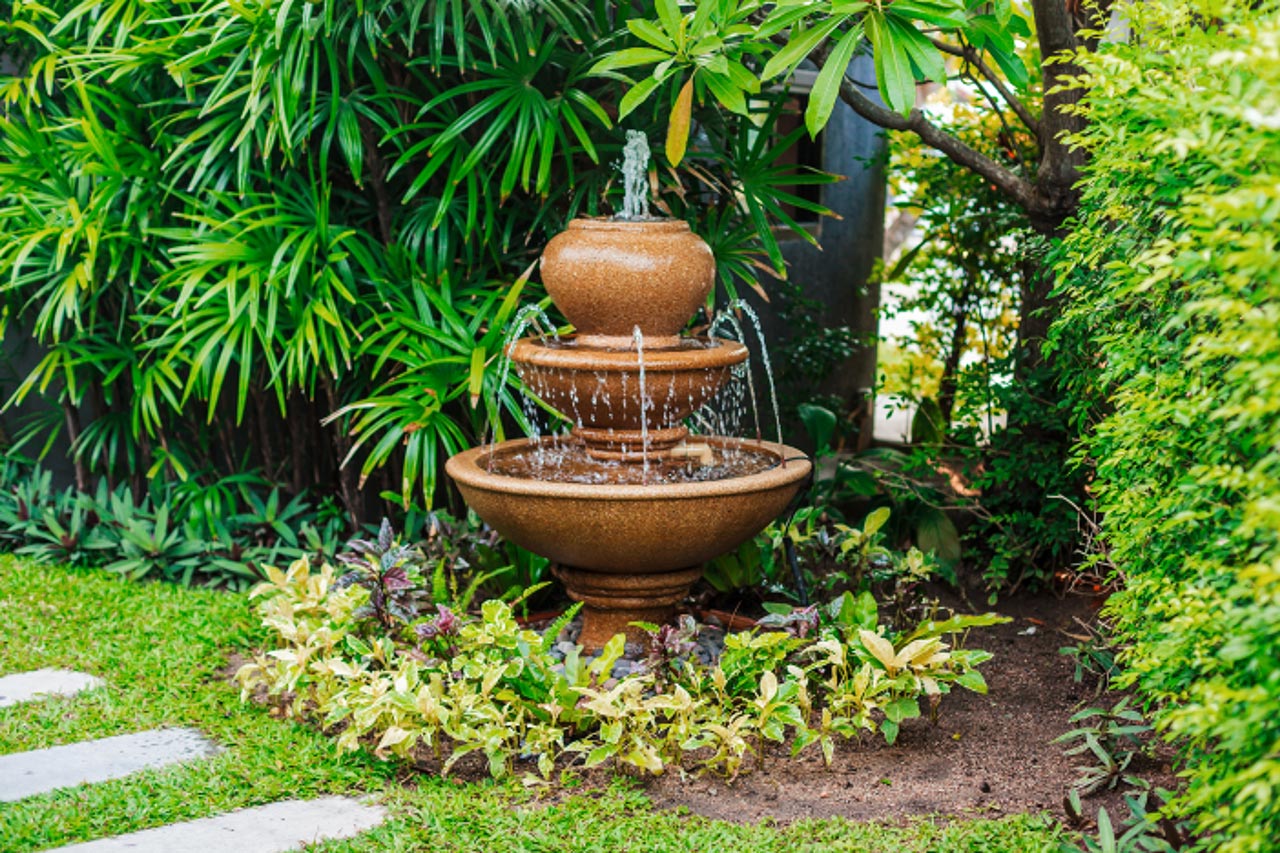
Fountains become a part of your landscaping. They add a functional and beautiful touch to your outdoor space design and no one wants them ruined by a filthy, ugly fountain plagued with algae. Therefore, a reliable water fountain repair service is what you’ll need to keep your aquascape pristine.
Algae is a common irritant for outdoor water fountains. In humid weather, sunlight is strong, and water is present chances are you will have them growing in your fountain basin.
A combination of overuse, improper maintenance, and old age may also trigger algae growth.
We’re here to let you know that things don’t get to be that way! Below we will share proven methods to keep algae out of your outdoor fountain, leaving your water blissfully algae-free.
Place Your Fountain in the Shade.
The right environment can prevent or deter many problems when it comes to using garden fountains. Placing your fountain in the shade does more than just protect it from harsh sunlight.
The reason for this is because when water is shaded by objects—usually other plants—it seems harder for algae to cling to the body of water. This is because there is no direct light source that is an active ingredient to an algae oasis, which penetrates through the other plant material or other water features holding the shade.
By placing it in the shade, you reduce the temperature of the water, which slows down or even halts algae growth.
Light Cleaning and Deep Cleaning
A clean waterfall fountain instantly makes your outdoor space look better. Nobody likes to see green stains on their ceramic or rock, so keep it clean with this simple cleaning routine.
The fountain water clears up nicely when you clean the whole feature and filters on your fountain pump or filtration system regularly, but if algae have taken roo, use a bleach solution for this tougher algae to scrub.
Once this is done, apply white vinegar directly on the areas with algae to remove them.
Preventative Products.
Protect your fountain against algae growth by adding preventive products to your water.
These algae-prevention products are added to the water in fountains—effectively eliminating existing algae in the water, preventing future blooms, and helping keep the fountain clean.
They are designed to work with live plants and do not harm your pets but will kill any algae that may be in your water fountains.
Use Fresh Distilled Water to Prevent Algae.
The healthy waters of your water fountain are influenced by the water you use. Switching to distilled water will give you cleaner, clearer, healthier water. Treat your water fountain with fresh distilled water to help maintain its beauty.
Debris, minerals, and other impurities found in tap water may feed algae growth. Distilled water is free of these impurities which can lead to an extra edge in preventing algae growth.
Call Us Today
We are a renowned water fountain contractor serving the residential, commercial, and industrial worlds in Orange County.
Our product offering features custom design and fabrication of an unlimited assortment of water features including self-priming fountains, ornamental fountains, water features, water features for large areas, waterfall fountains, fountain covers, and protection systems.
We put all our heart into every aspect of design, manufacture, testing, and fountain repair, Orange County residents can rely on. These ensure each one of our products is built with the highest quality materials to create a product that will not only last for years but be an heirloom for generations.
If you’re thinking of where to find a trusted fountain repair near me, think no more, contact us at OC Pond today!
How Do I Keep My Outdoor Fountain Algae Free? 4 Things You Need to Know to Maintain Water Health was last modified: January 23rd, 2023 by Admin





 Including an outdoor water fountain in your exterior space is an excellent way to create a relaxing environment. But, once you’ve installed your water fountain, how do you keep it in good condition without the help of
 Decreasing pond water levels is a common issue that many water feature owners face, and it can be quite concerning—which leads them to look for
 An outdoor water fountain not only adds aesthetic value to your home, garden, or business but also improves curb appeal. While it is a beautiful water feature to have in your exterior space, it can also be aggravating when it begins to leak, requiring the help of professional

 There are a few aspects of your home that are as breathtakingly lovely as an expertly crafted water fountain. This aquascape feature adds a touch of grace and serenity to your home. However, all these benefits will go to waste when they don’t work, which is why you need a trusted
 Fountains become a part of your landscaping. They add a functional and beautiful touch to your outdoor space design and no one wants them ruined by a filthy, ugly fountain plagued with algae. Therefore, a reliable