A fountain that constantly needs topping off is frustrating. The water level drops faster than expected, the pump starts making noise as it sucks air, and you’re hauling the hose out every other day. Most homeowners assume something is wrong with the fountain itself, but in many cases the answer is simpler: water evaporation. A water feature in a sunny, dry, breezy outdoor space can lose 1/4 to 1/2 inch of water per day to evaporation alone, and that adds up quickly. Knowing how to keep fountain water from evaporating reduces refill chores, protects the pump, and supports better water conservation across the property. For homeowners who suspect the problem may be a leak rather than weather, our step-by-step guide on why your fountain keeps losing water walks through the diagnostic process.
Here’s what we break down in this guide: what causes fountain water to evaporate faster than normal, six practical adjustments that slow it down, the warning signs that point to a leak instead of evaporation, and the common mistakes that quietly make the problem worse. We also cover when an auto-fill system makes sense, how a fountain cover changes the math during hot weather, and the placement tweaks that reduce wind-driven loss. For homeowners with active maintenance routines, our outdoor water fountain maintenance tips post is a useful companion read.
Key Takeaways
- Knowing how to keep fountain water from evaporating starts with identifying the four main culprits: direct sun exposure, hot weather, wind, and splash from overspray, each of which calls for a different fix.
- Simple, low-cost adjustments to spray height, basin position, and shade placement cut daily water evaporation by 30 to 50 percent without changing the look of the fountain.
- A fountain cover or lid used during off hours and overnight protects against the heaviest evaporation losses, especially during summer months when surface water temperatures stay high after sundown.
- Auto-fill valves and refill systems tied into the home’s water supply system handle the inevitable losses without manual refilling, which keeps the recirculating system from running dry and damaging the pump.
- When water loss exceeds normal evaporation rates, the cause is usually a leak, crack, or plumbing system issue rather than the weather, and our specialists at Orange County Pond Services can pinpoint the source quickly.
How to Keep Fountain Water From Evaporating Starts With Knowing the Causes
Before changing anything, understand what’s pulling water out of the basin. Evaporation isn’t a single problem; it’s a combination of physical conditions acting on the water surface every minute the fountain runs. The bigger the surface area exposed, the faster the water drops.
Four factors drive most fountain water evaporation:
- Sun exposure. Direct sunlight raises the water temperature, which speeds the conversion of liquid to vapor. A fountain in full afternoon sun can lose twice the water of a shaded one.
- Air temperature. Hot weather increases the air’s capacity to hold moisture, which accelerates evaporation off the water surface. Days above 85°F push losses sharply higher.
- Wind and air movement. Moving air carries away the humid layer that forms just above the water, allowing more evaporation to take its place. Even a light breeze doubles the evaporation rate compared to still air.
- Splash and spray loss. Water that leaves the basin as spray, mist, or spill over never returns. This is technically not evaporation but it shows up the same way: a lower water level than yesterday.
Most homeowners are dealing with two or three of these at once. A fountain in a sunny spot with a tall spray pattern and an exposed basin is going to lose water no matter how well-built the unit is. The fix isn’t a single change; it’s a combination of small adjustments that each chip away at the loss.
How to Keep Fountain Water From Evaporating: Reduce Sun and Shade Exposure
Sun exposure is the biggest factor in fountain water evaporation, and it’s often the easiest to address. Even partial shade during the hottest hours, roughly 11 a.m. to 4 p.m., can cut evaporation losses by 30 to 40 percent.
Practical shade options:
- Plant a shade tree or tall shrub on the south or southwest side of the fountain. Native species in Orange County, like coast live oak or California lilac, deliver shade without becoming high-maintenance.
- Add a pergola, gazebo, or shade sail above the fountain. These work well for architectural water features that anchor a patio or seating area.
- Position a freestanding umbrella during peak summer days. This is the lowest-commitment option and works for tabletop or smaller backyard fountains.
- Move portable fountains to a shadier corner of the outdoor space if the original placement was too exposed.
Shade also benefits the fountain in other ways. Less direct sun means less algae growth, slower mineral buildup, and a longer life for the pump and electrical components. For more on how shade interacts with algae control, our post on eco-friendly, bird-safe algae control solutions covers the full picture.
If shade isn’t an option because the fountain anchors a sunny patio, focus on the other adjustments below. The combined effect can match or exceed what shade alone delivers.
Lower the Spray Height to Reduce Splash and Spill Over Loss
Tall spray patterns look impressive but they’re also the largest source of non-evaporation water loss. Water shot 18 inches above the basin breaks into smaller droplets that evaporate before returning, get carried away by wind, or splash beyond the basin edge. Lowering the spray height alone can cut daily losses by 20 to 30 percent.
Most fountains let you adjust spray patterns through one of these methods:
- The flow control valve on the pump or in-line with the supply tubing
- The nozzle or spray jet at the spray point, which often has interchangeable inserts for different patterns
- The pump speed setting if the pump has a variable speed control or rheostat
Reduce the height in small increments, watching the basin’s water line over a few days. The goal is the lowest spray that still looks the way you want and keeps the water sound. Pair the lower spray with a check of the basin perimeter for spill over points where water leaves the catchment area. Low spots on the rim, gaps between stones, or worn caulking can let water escape during normal operation.
For fountains with a pond as the catch basin, a slightly raised lip or a strip of native stone along the perimeter contains splash and keeps it inside the recirculating system. Small bog plants or marginal aquatic plants placed along the edge also absorb the splash and look natural in the process.
Add a Fountain Cover for Off Hours and Hot Weather
A fountain cover or lid placed over the basin when the fountain isn’t running is one of the most effective single moves you can make against water evaporation. A cover blocks sun, slows wind across the water surface, and traps the humid layer just above the water, which together cut evaporation by 60 to 80 percent during covered hours.
Cover options range from simple to integrated:
- Pre-fabricated fountain covers sized to common basin shapes, available from outdoor home stores
- Custom-made vinyl or canvas covers for unusual basin shapes or larger water features
- Hinged wooden lids for tabletop and smaller pedestal fountains, which double as a decorative finish when closed
- Pool-style mesh covers for larger pond-like fountains, which catch debris while still allowing some air exchange
Use the cover overnight, during heat waves when daily temperatures climb above 90°F, and during longer absences like vacations. A weighted edge or strap system keeps the cover in place during wind. For fountains in regions with significant temperature swings, a cover also reduces the strain on the pump from cycling through hot, oxygen-depleted water.
If you don’t want a removable cover, a partial floating cover, like a sheet of foam or a few aquatic plants on the surface, achieves a similar effect during the day. Floating plants in particular reduce evaporation by 40 to 50 percent on the area they cover and look natural in most fountain styles.
Install an Auto-Fill or Automatic Refill System
Even with shade, lower spray, and a cover, some evaporation is unavoidable. An auto-fill valve or automatic refill system tied into the home’s water supply system handles the small daily refills, which protects the pump from running dry and saves the manual refill routine.
A typical auto-fill setup includes:
- A float valve mounted in the basin, set to maintain a target water level
- A 1/4-inch supply line from a nearby outdoor spigot or irrigation hookup
- A shutoff valve and pressure regulator at the connection point
- An optional water filter or softener cartridge to reduce mineral buildup
The float valve releases a trickle of fresh water whenever the basin level drops below the set point. Most setups use less than 5 gallons per week even on hot summer months in sunny locations, which is well within most municipal water budgets. The system runs quietly in the background and keeps the fountain looking right without homeowner intervention.
For homeowners with existing irrigation systems, the auto-fill line can tap into a drip zone, which makes the install simpler and avoids new plumbing system work. A licensed plumber can handle more complex setups that involve a dedicated supply line. Pairing the auto-fill with a slow-drip overflow drain prevents flooding if the float valve ever sticks.
Address Wind Exposure to Slow Fountain Water Evaporation
Wind drives evaporation by sweeping away the humid air that builds up just above the water surface. Replace that humid layer with dry incoming air, and the evaporation rate jumps. Reducing wind exposure around the fountain is a quieter improvement than the others on this list, but it’s surprisingly effective.
Practical wind reduction:
- Plant a hedge or windbreak on the side facing prevailing winds. In most of Orange County, that’s the southwest. Native shrubs like ceanothus or toyon work well.
- Add a screen, lattice panel, or low wall between the fountain and the wind source. Anything that breaks the wind without fully blocking airflow helps.
- Reposition the fountain against an existing wall, fence, or building corner that already blocks wind from one or two sides.
- Drop the spray height as discussed above, since taller spray catches more wind than shorter spray.
Wind protection also keeps debris like leaves, dust, and pollen from blowing into the basin, which means less cleaning between maintenance cycles. The same windbreak that slows evaporation extends the life of the water and reduces filter loading.
In coastal Orange County areas where afternoon winds are predictable, timing also matters. Running the fountain during calm morning hours and pausing it during the windiest part of the day cuts daily losses without affecting the times you actually enjoy the water feature.
When Water Loss Isn’t Evaporation: Leaks, Cracks, and Pump Issues
Sometimes the problem isn’t evaporation at all. A fountain losing more than an inch of water per day in moderate weather almost certainly has a structural issue rather than a weather one. Knowing how to tell them apart saves time and gets you to the actual fix faster.
Signs the loss is a leak or crack:
- Water level drops at the same rate even on cool, overcast days
- Wet patches or persistent moisture in the soil around the fountain base
- Mineral deposits or white residue along visible cracks in the basin
- The water level always drops to the same line, suggesting a crack at that height
- Drop continues even when the pump is off for 24 to 48 hours
The 24-hour test is the simplest diagnostic. Turn the pump off, mark the water line with a piece of tape, and check it again the next day. Normal evaporation in mild weather should be less than 1/4 inch in 24 hours with the pump off. More than that points to a leak. For a more thorough method, our post on diagnosing fountain water loss walks through dye testing and other techniques.
Pump issues are another non-evaporation cause. A pump that pulses, runs hot, or makes new noises may be losing prime, splashing water unevenly, or pushing water past the intended catchment area. Our guide on why a water fountain pump might not be working covers the diagnostic steps.
Common Mistakes That Speed Up Fountain Water Evaporation
Several common habits work against water conservation efforts. Avoiding these keeps the other adjustments working as intended.
| Mistake |
What Goes Wrong |
How to Avoid It |
| Running the fountain 24/7 in summer |
Maximum daily evaporation, pump stress |
Run during peak enjoyment hours; cover or pause during peak heat |
| Topping off with cold water |
Splashing increases as cold water hits warm basin |
Add water gradually; let it warm to ambient before refilling fully |
| Skipping basin cleaning |
Mineral buildup roughens the surface, increasing evaporation area |
Clean every 4 to 6 weeks during summer |
| Leaving the basin lip unsealed |
Water wicks over rough edges and evaporates from outside the basin |
Seal the rim with outdoor-rated sealant; replace worn caulk |
| Choosing a tall spray pattern in windy areas |
More splash loss, more wind-driven evaporation |
Match spray pattern to wind exposure; lower it during windy weeks |
| Using untreated tap water |
Mineral deposits accelerate algae and increase cleaning |
Use a basic filter cartridge or treat with dechlorinator |
The cleaning frequency one is often overlooked. A fountain basin coated in algae or mineral scale has more surface area exposed to air than a smooth basin, which compounds the evaporation problem. Regular cleaning keeps both the visual quality and the water level stable.
When to Call Orange County Pond Services for Fountain Water Loss Help
DIY adjustments handle most evaporation issues, but some situations call for professional diagnosis and repair. Signs that the problem has moved beyond a weekend fix:
- Water loss continues at the same rate after shade, cover, and spray adjustments
- Visible cracks or wet patches around the fountain base that don’t dry out
- Pump that runs hot, shuts off, or won’t restart
- Older fountains where the original sealant has degraded
- Auto-fill valve or plumbing system installation in a complex layout
- Fountains in custom landscapes where shade or windbreaks need to fit a specific design
Orange County Pond Services has been handling fountain water-loss problems across Orange County since 2001. With more than 25 years of hands-on experience on garden fountains, wall fountains, pond-style features, and custom architectural water features, our team brings the diagnostic equipment and repair experience that get to the actual cause quickly.
Trust our specialists with the work that goes beyond a quick adjustment. Call 949-653-2305 or request a free quote online. Whether the problem turns out to be evaporation, a slow leak, or a pump issue, we’ll diagnose it and recommend the simplest path back to a fountain that holds its water.
Frequently Asked Questions
Q1. How much water should a fountain lose per day to evaporation?
A. Normal fountain water evaporation runs about 1/4 to 1/2 inch per day in mild weather, with rates climbing to 1/2 to 1 inch per day during hot weather above 85°F. Smaller basins lose proportionally more because the surface area is large relative to the total water volume. If you’re losing more than 1 inch per day in moderate weather, the cause is likely splash, wind, or a leak rather than evaporation alone. Tracking losses over a week with a simple tape mark gives a clearer picture than day-to-day readings.
Q2. Does covering a fountain at night actually save water?
A. Yes, a fountain cover used overnight reduces evaporation by 60 to 80 percent during covered hours. Even though air temperatures drop at night, water in the basin retains heat and continues evaporating, especially in summer months when basin temperatures stay above 70°F until morning. A cover blocks the air movement that drives the loss and traps the humid layer above the water. For homeowners who only run the fountain during the day, covering it the rest of the time can cut weekly refill needs in half.
Q3. What’s the right fountain placement to minimize evaporation?
A. A spot with afternoon shade, partial wind protection, and proximity to a water source for refills covers most of what matters. East-facing locations get morning sun and afternoon shade, which is ideal for the fountain and the surrounding plants. Avoid placing fountains in open lawn areas where wind has unbroken access to the basin. A spot near a wall, fence, or hedge gives natural wind protection without requiring extra structures. Plan for a nearby outdoor spigot if you’re considering an auto-fill system later.
Q4. Should I use distilled water or tap water in my fountain?
A. Tap water works fine for most fountains as long as you account for chlorine and minerals. Distilled water reduces mineral buildup and is worth using in indoor fountains or fountains with sensitive metal finishes. For typical outdoor fountains, treated tap water is more practical, especially with auto-fill systems where distilled water isn’t feasible. Adding a basic dechlorinator or using a hose-end filter handles the chlorine, and the small mineral buildup that does occur cleans off easily during regular maintenance.
Q5. How can I tell evaporation loss from a leak?
A. Run the 24-hour test. Turn the pump off, mark the water line with tape, and check the level the next day. Normal evaporation with the pump off is less than 1/4 inch in mild weather. More than that, especially in cool or overcast conditions, points to a leak. Wet soil around the fountain base, persistent water level drops to a specific line, and mineral deposits along visible cracks all confirm a leak rather than evaporation. If the test points to a leak, locate the source before the next refill so you’re not topping off into a problem that’s getting worse.
 Even if you are able to fix some fountain issues on your own, there are some types of damages or major cracks that should be fixed by a professional. A trusted
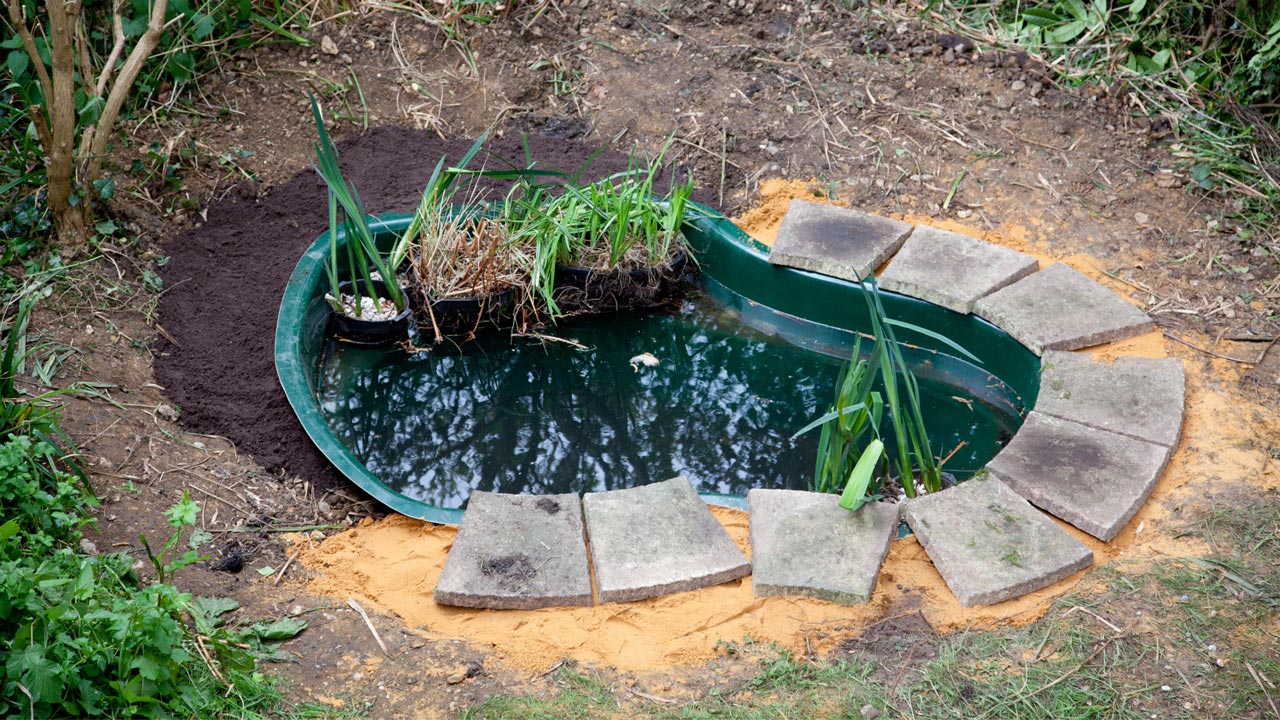 Specifically, preformed molded ponds utilize butyl rubber liners or plastic liners to establish the shape of the pond. This kind of