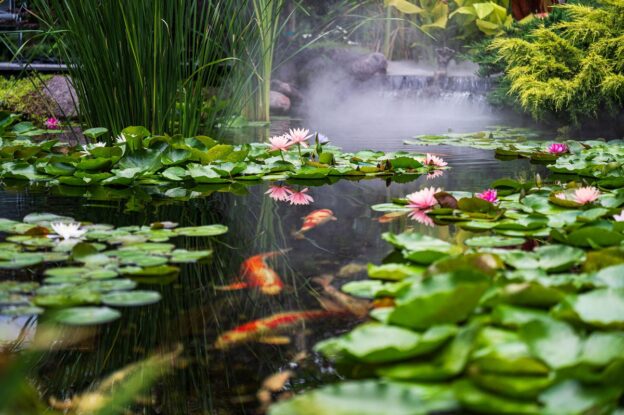
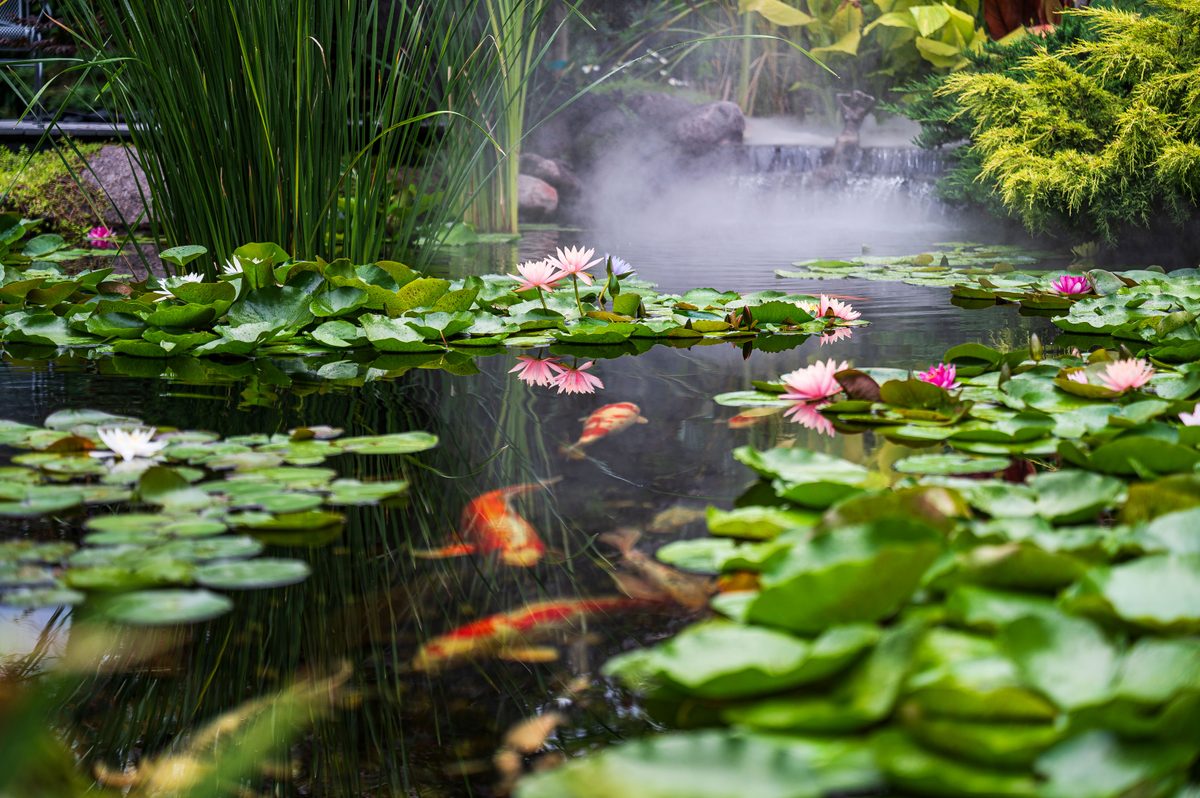
 Orange County’s Mediterranean climate creates exceptional conditions for incorporating water plants that thrive in hot, dry summers and mild, wet winters. The region’s USDA hardiness zones 9b-11a eliminate harsh temperature extremes, allowing year-round pond cultivation with strategic selections.
Climate-suited pond fish & aquatic plants require careful matching to local conditions for sustained health. Southern California’s 40°F-100°F+ temperature range demands species that tolerate occasional winter chills and extended summer heat without extensive artificial climate control. Understanding which plants and fish naturally adapt prevents costly replacements and establishes low-maintenance ecosystems.
Key Takeaways
- Orange County’s USDA zones 9b-11a support hardy water lilies, lotus, and select floating plants year-round without extensive winter protection
- Summer temperatures reaching 100°F+ require 30-50% shade coverage from plants to maintain 65°F-75°F water temperatures for fish health
- California bans water hyacinth, parrot’s feather, and anacharis due to invasive potential; verify all selections with the California Invasive Plant Council before purchase
- Strategic plant density balances ecosystem needs: 1 lily per 50-100 square feet, 30-50% marginal coverage, and 20-30% floating plant limits prevent overgrowth
- Native species like Pacific Fairy Fern provide ecological benefits while reducing invasive species risk and supporting regional biodiversity goals
What Defines Orange County’s Mediterranean Climate for Pond Cultivation?
Orange County’s Mediterranean climate creates distinct advantages through mild winters and extended growing seasons. Summers frequently exceed 85°F and reach 100°F+ during heat waves, while winter temperatures rarely drop below 40°F. This stability allows year-round aquatic ecosystems without freeze protection.
USDA hardiness zones 9b-11a support broader aquatic species ranges than most North American regions. Low humidity in inland areas increases evaporation rates, requiring attention to water levels during summer. California’s recurring droughts make recirculating aquaculture systems valuable, reducing water usage by 90% compared to traditional designs.
How Do Temperature and Seasonal Patterns Affect Pond Life?
Southern California’s summer temperature range of 75°F-100°F+ creates thermal stress when shade and aeration are insufficient. Ideal pond temperature of 65°F-75°F supports optimal fish metabolism and plant growth, but surface water can exceed 85°F during heat waves. Winter temperatures between 40°F-65°F rarely threaten fish survival but slow biological processes enough to warrant reduced feeding.
Seasonal patterns concentrate rainfall in winter while summers remain dry. This affects pond oxygen levels as warmer water holds less dissolved oxygen, requiring increased aeration during summer. Temperature fluctuations between day and night can span 20-30°F, creating stress without adequate thermal refuges in deeper pond zones.
What Water Management and Regulatory Factors Influence Pond Plant Selection?
Projects disturbing the ground require permits costing $150-$485 in Orange County. The California Invasive Plant Council maintains a prohibited species list eliminating water hyacinth, parrot’s feather, and anacharis from aquatic plant selection despite their popularity elsewhere. Compliance protects local waterways from invasive species that could disrupt native ecosystems.
Recirculating aquaculture systems reduce water usage by 90%, addressing California’s water scarcity concerns. Low humidity in inland areas increases evaporation rates by 10-20% compared to coastal zones, requiring regular monitoring. These factors make drought-tolerant plant selections and efficient circulation systems practical requirements.
Which Pond Plants Thrive in Mediterranean Climates?
Well-suited pond plants for Mediterranean climates include hardy water lilies, lotus, and select marginal species that tolerate temperature extremes. These plants provide essential shade coverage, nutrient absorption, and habitat structure supporting fish health throughout seasonal transitions. Proper selection balances aesthetic appeal with functional ecosystem contributions while avoiding invasive species prohibited under California regulations.
Climate adaptability emerges as the primary selection criterion for OC Mediterranean climate conditions where summer heat and winter mildness create unique growing patterns. Plants suited to USDA zones 9b-11a establish quickly, require minimal winter protection, and sustain vigorous growth through extended warm seasons.
What Are the Characteristics of Hardy Water Lilies and Lotus?
Hardy water lilies (Nymphaea species) thrive in USDA zones 4-11, making them exceptionally suited for Orange County. These perennials bloom from spring through fall in white, pink, red, yellow, and bi-color varieties. Tropical water lilies suitable for zones 8-11 offer expanded color ranges, including blue and purple, but require water temperatures above 70°F.
Lotus (Nelumbo species) adapted to zones 4-11 produces dramatic flowers and distinctive circular foliage rising above water surfaces. These plants establish more slowly than water lilies but reward patience with decades of reliable performance. The table below breaks down planting depth and typical pricing for each option.
| Plant Type | USDA Zones | Planting Depth | Price Range |
|---|---|---|---|
| Hardy Water Lily | 4-11 | 1-3 ft | $4-$45+ |
| Tropical Water Lily | 8-11 | 1-3 ft | $10-$50+ |
| Lotus | 4-11 | 2-4 ft | $15-$60+ |
Which Floating Plants Suit Orange County Ponds Without Environmental Risks?
Water lettuce (Pistia stratiotes) provides rapid surface coverage and attractive rosette formations without invasive behavior. Floating heart (Nymphoides species) offers delicate flowers and moderate growth rates suitable for smaller ponds. Water poppy (Hydrocleys nymphoides) displays yellow blooms and compact growth patterns ideal for controlled applications.
Pacific Fairy Fern (Azolla filiculoides) represents a native California submerged floater that suppresses algae while adding red-tinged coloration during cooler months. Verification with the California Invasive Plant Council before purchase prevents accidental introduction of prohibited species (see table below).
What Are Ideal Marginal and Submerged Plants for Local Conditions?
Pickerelweed (Pontederia cordata) grows 2-3 feet tall with purple-blue flower spikes that attract pollinators while filtering nutrients. Iris species adapted to aquatic environments offer stunning blooms in various colors and demonstrate drought tolerance. Cattails (Typha species) provide excellent water filtration but require regular trimming to prevent aggressive spreading.
Papyrus (Cyperus species) creates tropical aesthetics with umbrella-like foliage reaching 3-8 feet in standard varieties or 1-2 feet in dwarf forms. Water canna (Thalia dealbata) produces purple flowers and dramatic foliage between 2-6 feet tall, thriving in warm water conditions. These marginal plants establish filtration zones around pond perimeters while adding vertical structure that enhances visual interest and wildlife habitat.
How Do Pond Plant Choices Affect Pond Ecosystems and Water Quality?
Pond plant choices directly influence balancing your pond ecosystem through oxygen production, nutrient absorption, and habitat creation. Submerged plants grow entirely underwater and generate dissolved oxygen through photosynthesis, supporting fish respiration and beneficial bacterial populations. Strategic aquatic plant selection maintains ammonia and nitrite at 0 ppm while keeping nitrate below 40 ppm through natural biological filtration.
Plant combinations create layered ecosystems where surface coverage regulates temperature, floating species absorb excess nutrients, and marginal plants filter runoff. Optimal pH levels between 6.5-7.5 support both plant growth and fish health when maintained through proper plant density and circulation.
What Role Do Plants Play in Oxygenation and Nutrient Balance?
Submerged plants generate oxygen during daylight photosynthesis while absorbing carbon dioxide and excess nutrients that would otherwise fuel algae blooms. Maintaining proper plant density ensures dissolved oxygen levels remain adequate for fish respiration, particularly during hot summer nights when oxygen solubility decreases. These plants compete directly with algae for nutrients, creating natural biological control reducing chemical treatment requirements.
Nitrogen cycle management depends heavily on plant uptake of ammonia and nitrate produced by fish waste and decomposing organic matter. Keeping ammonia and nitrite at 0 ppm prevents fish stress while nitrate levels below 40 ppm support plant growth without triggering excessive algae. The pH range of 6.5-7.5 optimizes nutrient availability for plants while remaining within fish tolerance ranges.
How Do Different Plants Provide Shade and Habitat for Fish?
Providing 30-50% shade coverage regulates summer temperatures by reducing direct solar heating. Water lilies and lotus create floating leaf coverage blocking sunlight while their underwater stems and roots offer hiding places where fish retreat from predators and temperature extremes. Maintaining deep zones of 2.5-3 feet minimum provides thermal refuge where fish access cooler water during heat waves.
Proper plant density (see table below) achieves optimal shade without overcrowding. Dense plant growth along margins creates protected breeding areas and reduces stress by offering escape routes from aerial predators like herons and egrets.
What Are the Ecological Benefits of Using Native Plant Species?
Pacific Fairy Fern (Azolla filiculoides) serves as California’s native submerged floater, supporting local biodiversity while providing the same filtration benefits as non-native alternatives. Native species typically require less maintenance because they evolved under regional climate conditions. These plants integrate into existing ecological networks, supporting native insects and wildlife.
Native plant selections reduce invasive species risk by eliminating non-native specimens that could escape cultivation and disrupt natural waterways. California’s regulatory framework encourages native species adoption through streamlined permitting. The ecological stability provided by native plants creates resilient pond ecosystems that recover more quickly from disturbances.
What Are the Best Practices for Integrating Pond Plants in Southern California?
Practical steps for aquatic plant selection begin with matching plant requirements to specific pond conditions, including depth, light exposure, and water temperature ranges. Starting with proper density calculations prevents both undercrowding and overcrowding that restrict fish movement. Southern California’s extended growing season allows strategic planting schedules, establishing plants during optimal spring temperatures.
Integration success depends on pond maintenance tips addressing plant care alongside water quality monitoring and equipment servicing. Plant density adjustments throughout the growing season maintain ecological balance as lilies spread and marginals expand.
How Should Pond Size and Plant Density Be Balanced?
The density ratios below establish filtration zones and habitat while leaving open water for fish movement and preventing oxygen depletion from overgrowth.
Minimum pond volume of 1,000 gallons for 4 mature koi establishes baseline capacity calculations. Goldfish ponds require a minimum 500-gallon volume but benefit from similar plant density ratios scaled to surface area.
| Element | Recommended Ratio | Purpose |
|---|---|---|
| Water Lilies | 1 per 50-100 sq ft of surface | Shade density without overcrowding |
| Marginal Plants | 30-50% of perimeter | Filtration zones and habitat |
| Floating Plants | 20-30% of surface | Prevents nighttime oxygen depletion |
| Deep Zone Depth | 2.5-3 ft minimum | Thermal refuge during heat waves |
What Maintenance Strategies Optimize Plant Health and Pond Stability?
Testing pH, ammonia, and nitrate weekly during summer identifies water quality shifts before they harm fish or stress plant growth. Scheduling professional cleaning and filter maintenance every 3-4 months ensures mechanical systems continue supporting biological filtration. Using de-icers during cold snaps maintains gas exchange at the water surface.
Reducing feeding when temperatures drop below 50°F acknowledges decreased fish metabolism. Annual maintenance costs of $1,000-$2,000 for professional services provide comprehensive system checks, plant trimming, and equipment optimization. Strategic plant trimming removes dead foliage before decomposition consumes oxygen and releases nutrients, triggering algae blooms.
How Can Invasive Species Be Avoided and Controlled?
Verifying all plants with the California Invasive Plant Council before purchase prevents the accidental introduction of prohibited species. Disposing of unwanted plants through proper channels rather than into waterways eliminates the primary pathway for invasive species establishment.
Regular inspection of plant purchases identifies unlabeled invasive species before entering pond systems. The table below lists California’s prohibited aquatic plants and why each poses a risk.
| Prohibited Plant | Scientific Name | Why It’s Banned |
|---|---|---|
| Water Hyacinth | Eichhornia crassipes | Can double surface coverage every two weeks |
| Parrot’s Feather | Myriophyllum aquaticum | Spreads aggressively through waterways |
| Anacharis (Waterweed) | Egeria densa | Outcompetes native aquatic vegetation |
| Creeping Water-Primrose | Ludwigia hexapetala | Clogs waterways and irrigation channels |
| Yellowflag Iris | Iris pseudacorus | Displaces native wetland plants |
| Giant Salvinia | Salvinia molesta | Forms dense mats that block sunlight and oxygen |
How Does Pond Design Complement Plant Selection for Orange County?
Pond design features supporting plant growth include varied depth zones accommodating different species’ requirements and circulation patterns preventing stagnant areas. Maintaining deep zones of 2.5-3 feet minimum provides thermal refuge for fish during temperature extremes while creating appropriate depths for lotus placement. Hardy water lilies require depths of 1-3 feet, while lotus plants need 2-4 feet of water above their root containers.
Design specifications for keeping your pond clean and healthy in California integrate plant placement with filtration system flow paths. Minimum pond depth of 4 feet supports koi populations through summer heat, with 6-8 foot depths recommended for jumbo koi. Installing netting or fencing protects plants and fish from predators while allowing maintenance access.
What Pond Features Support Plant Growth and Fish Health?
Maintaining deep zones of 2.5-3 feet minimum creates temperature-stable water volumes where both plants and fish find refuge during heat waves. Hardy water lilies require depths of 1-3 feet for optimal root development. Lotus plants need 2-4 feet of water depth to support their substantial root systems.
Minimum pond depth of 4 feet prevents complete water column heating during summer, while 6-8 foot depths accommodate jumbo koi. Installing netting or fencing protects valuable koi and plants from herons, raccoons, and other predators. Shallow planting shelves around pond perimeters provide ideal placement zones for marginal plants at 6- to 12-inch depths.
How Can Shade and Aeration Be Maximized to Protect Plants?
Providing 30-50% shade coverage regulates summer temperatures through combined plant coverage and structural elements like pergolas or shade sails. Limiting floating plants to 20-30% of the pond surface maintains a balance between shade provision and light penetration, supporting submerged plant photosynthesis. Strategic placement of water lilies in western and southern exposures blocks afternoon sun.
Aeration through fountains and waterfalls supplements oxygen production from submerged plants during hot summer nights when respiration exceeds photosynthesis. Circulation systems creating gentle surface movement prevent thermal stratification. Multiple aeration points distributed across pond surfaces ensure adequate dissolved oxygen throughout the water column.
What Are Optimal Filtration and Circulation Practices for Plant Sustainability?
Cycling the entire pond volume every 3 hours with properly sized pumps maintains water quality without creating excessive currents uprooting plants. Using mechanical and biological filters with capacity 1.5x pond volume per hour ensures adequate processing of fish waste and organic debris.
Bottom drain placement away from plant containers prevents root intrusion while maintaining efficient waste removal. Typical equipment costs appear below.
| Equipment | Typical Cost Range |
|---|---|
| Filtration System | $150-$5,000 |
| Water Pump | $50-$2,000 |
| UV Sterilizer | $55-$600 |
What Consumer Preferences and Demographics Influence Pond Plant Demand?
Consumer preferences for pond plants reflect clear demographic patterns, detailed in the table below. Younger consumers typically prefer low-maintenance systems, while older buyers increasingly prioritize turnkey solutions with professional maintenance contracts.
| Segment | Interest / Preference |
|---|---|
| Age 46-55 | 72% interest in water features |
| Age 18-35 | 35-52% interest; prefers low-maintenance systems |
| Age 65+ | 48% interest; prefers turnkey maintenance plans |
| Suburban Residents | 60% prefer koi ponds; 50% prefer ecosystem ponds |
| Urban Residents | 25% prefer koi ponds; 20% prefer ecosystem ponds; 65% prefer aquariums |
Suburban residents show a much stronger preference for koi and ecosystem ponds than urban residents, who more often face space constraints (see table above).
How Do Homeowners Prioritize Plant Adaptability and Aesthetic Appeal?
Homeowners consistently rank climate adaptability as the highest priority when selecting plants, with 95% identifying regional suitability as essential. Aesthetic appeal follows at 92% importance, reflecting pond ownership motivations centered on property enhancement. Maintenance requirements score 88% importance as homeowners seek beauty without excessive time commitments.
Cost considerations rank at 75% importance, with consumers willing to invest in premium specimens when durability and low maintenance justify higher initial expenses. Water quality impact scores 85% importance as homeowners recognize that plant selection directly affects fish health.
What Budget Ranges and Maintenance Levels Are Most Popular?
Pricing (detailed earlier) spans budget-conscious to premium tiers depending on variety and color selection, with lotus positioned as a centerpiece feature justifying premium investment.
Small ponds measuring 7×8 feet cost $2,800-$7,280 installed, appealing to homeowners seeking entry-level water features. Mid-sized ponds at 11×16 feet range from $8,800-$22,880, representing the most popular size category. These cost structures inform plant selection budgets where consumers typically allocate 10-15% of total pond installation costs toward initial plantings.
How Does Urban Versus Suburban Living Impact Plant Selection?
Urban pond owners consistently choose aquariums over outdoor ponds due to space limitations, though compact water features still attract meaningful urban interest.
This urban-suburban divide reflects space requirements for naturalistic designs, and with more than half the global population now living in urban areas, compact water features represent a growing market segment.
Which Market Trends and Business Opportunities Exist for Pond Plants in Orange County?
Market trends driving pond plant demand include global e-commerce projected to reach $6.38 trillion by 2024, as consumers shift toward online purchasing for specialized aquatic plants. Online sales are growing from 15% in 2019 to a projected 76% in 2026, creating opportunities for Orange County suppliers to establish digital storefronts.
Business opportunities emerge where consumer demand exceeds local supply capacity, particularly for native California species and climate-adapted varieties.
How Are E-Commerce and Subscription Models Shaping Consumer Access?
Global e-commerce is projected to reach $6.38 trillion by 2024, enabling Orange County consumers to access specialized plant varieties unavailable through local garden centers. Online sales are growing from 15% in 2019 to a projected 76% in 2026, reflecting consumer comfort in purchasing living plants through digital channels. Direct-to-consumer models eliminate distributor markups while providing access to rare cultivars.
Subscription services, growing from 2% in 2019 to a projected 28% in 2026, deliver seasonal plant replacements, fertilizers, and care supplies on automated schedules.
What Sustainable Practices Drive Supplier and Producer Innovation?
Recirculating aquaculture systems reduce water usage by 90%, addressing California’s drought concerns. Approximately 90% of freshwater ornamental fish are bred in captivity, establishing sustainability precedents that aquatic plant producers increasingly adopt through controlled propagation programs. Native plant production eliminates import costs while supporting regional biodiversity goals.
Organic growing practices eliminate chemical fertilizers and pesticides that could transfer to customer ponds and harm fish populations. Energy-efficient greenhouse operations reduce production costs while demonstrating environmental stewardship.
Where Are the Gaps in Local Supply and Services for Pond Plants?
Inland Koi Fish, Plants, & Pond Supply in Fountain Valley serves as a regional supplier, but its limited native plant inventory creates sourcing challenges. Andrews Koi Fish & Plant Supply in Anaheim provides comprehensive selections, yet seasonal availability gaps leave customers waiting months for specific varieties.
California Waterscapes and Lake Management Inc. provides aquatic plant expertise in Southern California and Orange County, respectively, yet service coverage gaps exist in inland communities. Educational resources addressing pond water clarity causes and solutions specific to Orange County’s Mediterranean climate remain limited despite strong consumer demand.
Strategic Recommendations for Selecting and Managing Pond Plants in Orange County’s Mediterranean Climate
Strategic plant selection for Orange County ponds begins with verification against the California Invasive Plant Council’s prohibited species list before any purchase. Prioritizing hardy water lilies, lotus, and native marginals establishes low-maintenance ecosystems adapted to regional temperature patterns. Climate-suited pond fish & aquatic plants work synergistically when density calculations maintain 30-50% shade coverage and 20-30% floating plant limits.
Long-term success depends on matching plant requirements to specific pond depths, light exposures, and seasonal maintenance protocols addressing Orange County’s hot, dry summers. Professional consultation identifies eco-friendly backyard pond opportunities where native plant integration reduces water consumption while supporting regional biodiversity. Annual maintenance planning prevents plant overgrowth and ensures biological filtration capacity scales with fish populations.
Get Expert Pond Plant Selection and Installation Services
Transform your Orange County pond into a thriving ecosystem with professional plant selection and installation services from Orange County Pond Services. Our specialists bring over 25 years of experience matching climate-suited pond fish & aquatic plants to Southern California’s unique Mediterranean conditions. We diagnose existing plant health issues, recommend strategic replacements, and establish maintenance protocols.
Ready to restore clarity and balance to your pond? Contact Orange County Pond Services at (949) 653-2305 or visit our services page to schedule a consultation. Our mobile service brings expertise directly to your property, and every installation includes our one-year warranty on materials and labor. Let us help you select pond plants suited to your specific conditions while avoiding costly mistakes.
Frequently Asked Questions
Which pond plants are banned in California?
California prohibits water hyacinth (Eichhornia crassipes), parrot’s feather (Myriophyllum aquaticum), anacharis/waterweed (Egeria densa), creeping water-primrose, yellowflag iris, and giant salvinia due to invasive potential. The California Invasive Plant Council maintains the complete prohibited species list. Always verify plant selections before purchase to avoid legal penalties and ecological damage.
How many water lilies should I plant in a 1,000-gallon pond?
Plant 1 hardy water lily per 50-100 square feet of pond surface area to achieve optimal 30-50% shade coverage without overcrowding. A 1,000-gallon pond typically measures 10×10 feet (100 square feet), requiring 1-2 lilies initially. Monitor coverage during the first growing season and add additional plants if shade falls below 30%.
Do I need different plants for summer versus winter in Orange County?
Orange County’s mild winters allow most hardy aquatic plants to remain in ponds year-round without removal. Hardy water lilies (zones 4-11), lotus (zones 4-11), and marginals like pickerelweed overwinter successfully without special protection. Tropical water lilies may decline during occasional cold snaps below 40°F in inland areas, but coastal zones typically maintain adequate temperatures for year-round survival.
What are the best native California pond plants for Orange County?
Pacific Fairy Fern (Azolla filiculoides) serves as California’s primary native submerged floater, providing natural algae suppression. While limited native aquatic plant options exist for ornamental ponds, native marginals adapted to riparian zones can transition to pond edges with proper placement. Consult regional native plant societies for specific recommendations balancing ecological benefits with aesthetic appeal.
How often should I trim pond plants to maintain water quality?
Trim marginal plants monthly during the active growing season (April-October) to prevent excessive foliage decomposition that depletes oxygen. Remove dead lily pads and lotus leaves weekly as they yellow and begin sinking to prevent nutrient release. Fall trimming before the first cold snaps reduces winter maintenance, while spring trimming in March prepares plants for vigorous summer growth by removing winter-damaged foliage.
