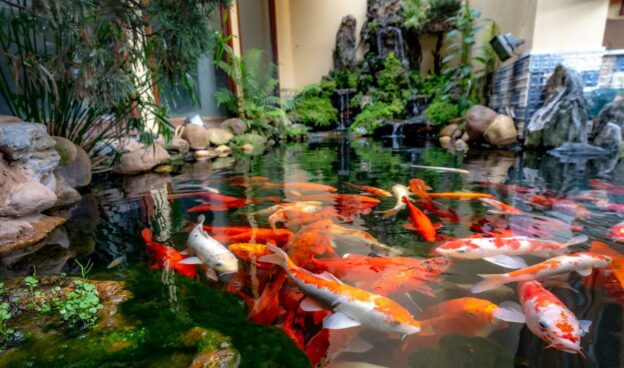
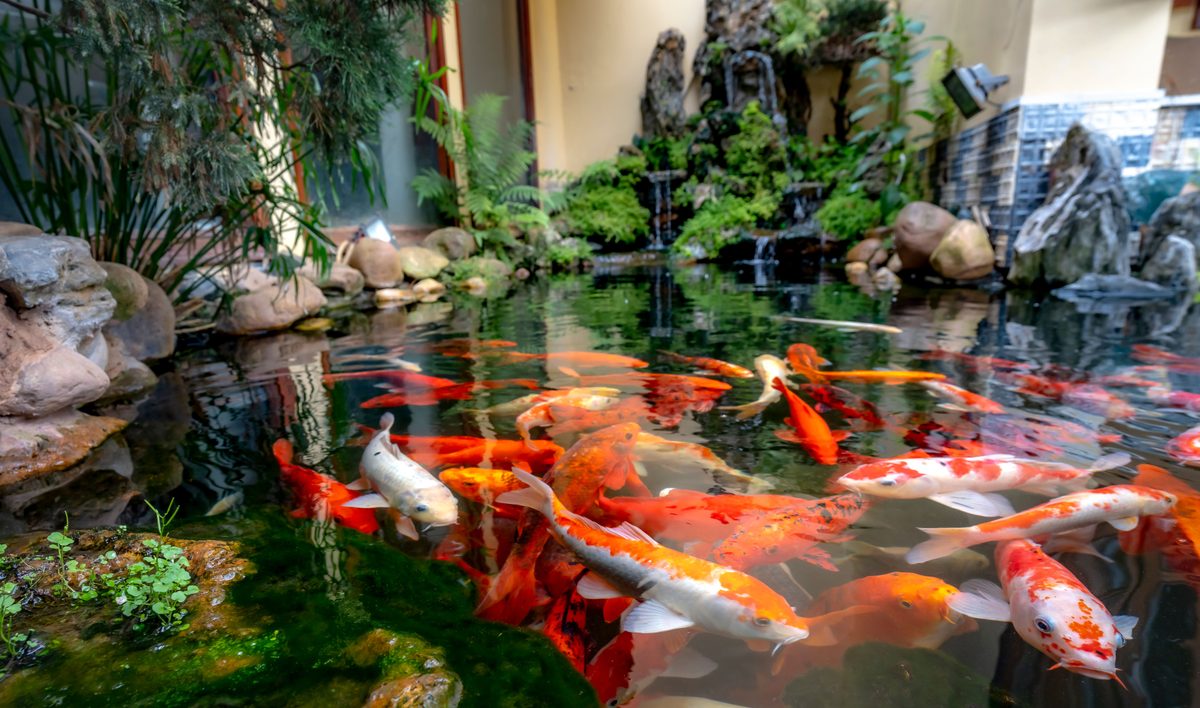
 Selecting the right pond pump for a koi pond under 1000 gallons requires understanding how pump types interact with filtration systems and affect water quality. The global pond pump market reached $1.49 billion in 2025 and continues expanding as residential water gardening gains popularity across Southern California and nationwide. Proper koi fish ponds depend on matched pump and filter combinations that maintain circulation, oxygenation, and biological balance without excessive turbulence or energy costs.
Small pond pumps face unique challenges because every gallon counts toward biological capacity. A system that works at 500 gallons may struggle when fish loads increase or seasonal debris accumulates. Understanding technical specifications, maintenance requirements, and realistic performance expectations helps homeowners avoid costly replacements and maintain healthy ecosystems year-round.
Key Takeaways
- Submersible pumps dominate small pond installations with a 50-58% market share due to affordability and simple installation.
- Energy efficiency and durability rank as key priorities, with external pumps offering 8-12 year lifespans versus 5-7 years for submersible models.
- Proper pump and filter selection must account for fish load, with typical biological filters handling 200-1000 gallons effectively.
- Solar and variable-speed pumps are growing 15-20% annually among eco-conscious buyers despite higher upfront costs.
- Budget systems start at $500-800 for submersible pumps with biological filters, while professional installations exceed $3,000.
What Are the Main Types of Pond Pumps for Small Koi Ponds?
Three primary pump categories serve the under-1000-gallon market, each with distinct installation methods and performance characteristics. Submersible pumps lead the market share at 50-58%, followed by external pumps at 18-24% and solar systems at 12-18%. Hybrid battery-backup models represent an emerging 2-4% segment for applications requiring continuous operation during power outages.
Flow rate requirements typically range from 500 to 3000 gallons per hour for residential koi ponds under 1000 gallons. Matching pump capacity to pond volume ensures adequate water turnover without creating excessive current that stresses fish or disturbs beneficial bacteria colonies.
| Pump Type | Market Share | Flow Rate (GPH) | Price Range | Typical Lifespan |
| Submersible | 50-58% | 500-3,000 GPH | $80-600 | 5-7 years |
| External | 18-24% | 2,000-8,000 GPH | $300-1,500 | 8-12 years |
| Solar | 12-18% | Up to 1,500 GPH | $150-250+ (entry kits) | Varies with sunlight exposure |
| Hybrid battery-backup | 2-4% | Varies by configuration | $600-2,000 | Battery replaced every 3-5 years |
How Do Submersible Pumps Work and When Are They Ideal?
Submersible pumps are installed directly underwater within the pond basin and draw water through intake screens while remaining completely submerged. These units typically deliver 500-3000 GPH flow rates with price points ranging from $80-600 depending on construction quality and motor efficiency. The design eliminates external housing requirements and simplifies initial setup for beginners.
Maintenance access presents the primary disadvantage since technicians must enter the water and disconnect plumbing to reach internal components. Most submersible models achieve 5-7 year lifespans under continuous duty cycles before motor seals degrade or impellers wear. Small ponds under 500 gallons with moderate fish loads benefit most from submersible installations where simplicity outweighs serviceability concerns.
What Are the Features and Uses of External Pumps?
External pumps mount outside the pond in weatherproof enclosures and connect via plumbing lines that draw water from bottom drains or skimmers. These systems provide 2000-8000 GPH flow capacity with superior efficiency for multi-stage filtration applications. Installation complexity increases substantially compared to submersible units, but it allows immediate access for impeller cleaning and seal replacement.
Operating noise requires sound-dampening measures in residential settings since motor vibrations transmit through mounting surfaces. External pumps deliver 8-12 year service lives with proper maintenance and represent the professional standard for ponds exceeding 800 gallons. Higher upfront costs, ranging from $300-1500 offset against reduced electricity consumption and extended replacement intervals.
When Should You Consider Solar and Hybrid Pump Options?
Solar pumps eliminate operating costs by powering circulation through photovoltaic panels that convert sunlight directly into mechanical flow. Performance varies with weather conditions and seasonal sun angles, producing reduced output during cloudy periods and winter months. The 12-18% market adoption reflects growing environmental consciousness despite flow limitations that restrict these systems to a 200-1500 GPH maximum capacity.
Hybrid systems combining grid power with battery backup ensure continuous operation during outages but require battery replacement every 3-5 years at significant expense. Solar installations suit solar fountain benefits in remote locations lacking electrical infrastructure or eco-conscious buyers accepting variable performance. Market growth projections indicate 15-20% annual expansion for solar segments as panel efficiency improves and costs decline.
How Do Pond Pumps Impact Filtration and Water Quality?
Pumps serve as the heart of pond ecosystems by driving water through filtration stages that remove debris and process fish waste. Biological, mechanical, and chemical filtration depend entirely on adequate flow rates that deliver contaminated water to filter media without creating dead zones or short-circuiting. Improving pond water quality requires understanding how pump selection affects each filtration stage and overall system performance.
Undersized pumps fail to process pond volume adequately while oversized units waste electricity and create excessive turbulence. Professional installations calculate flow requirements based on fish biomass, feeding rates, and desired water turnover frequency to ensure biological balance.
What Filter Types Pair Best with Different Pump Systems?
Biological waterfall filters capture 35-42% of the small pond market by combining mechanical screening with beneficial bacteria colonization surfaces. These units mount at pond edges and create attractive water features while processing 200-1000 gallon capacities through foam pads and biological media. Regular cleaning requirements suit homeowners comfortable with weekly maintenance and visible filter access.
Pressurized bead filters handle 500-2000 gallons using spherical plastic media that provides a massive surface area for bacterial growth within compact chambers. Backflush systems simplify maintenance by reversing water flow to expel accumulated waste without disassembling filter housings. The 20-28% market share reflects professional preference for reliability despite $400-1500 price points that exceed budget alternatives.
How Do UV Clarifiers Enhance Pond Water Clarity?
UV clarifiers are installed inline between pumps and biological filters to expose water to ultraviolet light that destroys free-floating algae cells and waterborne pathogens. These 40-100 watt units eliminate green water conditions within days by preventing algae reproduction while allowing beneficial bacteria colonies to thrive. Market adoption reaches 40-50% of pond systems as homeowners recognize the dramatic clarity improvements UV provides.
Turbidity blocks ultraviolet penetration, so mechanical pre-filtration must remove suspended particles before water enters clarifier chambers. Annual bulb replacement costs $50-150 depending on wattage since UV output degrades approximately 30% per year even when lamps continue illuminating. Clearing ponds with UV lights requires understanding these limitations and addressing root causes like excessive nutrients alongside UV treatment.
What Are the Maintenance Needs for Combined Pump and Filter Systems?
UV bulb replacement occurs annually regardless of visual lamp condition since germicidal effectiveness diminishes well before visible failure. Bead media requires replacement every 3-5 years at $200-500 per change as plastic surfaces become clogged with mineral deposits and organic films. Battery-powered hybrid systems demand new cells every 3-5 years, adding substantial long-term costs.
Biological waterfall filters clog rapidly in high-debris environments, requiring twice-weekly cleaning during autumn leaf fall seasons. Skimmer baskets fill quickly with surface debris and require daily checks to prevent pump starvation and impeller damage.
What Should Buyers Prioritize When Choosing a Pump?
Consumer research indicates durability and reliability rank highest in equipment selection with a 93/100 editorial priority index. Long-term performance matters more than initial cost since pump failures cascade into water quality problems and fish health emergencies. Understanding trade-offs between upfront investment and lifetime operating expenses helps buyers select appropriate systems for specific pond conditions.
Energy efficiency follows closely at 91/100 priority rating as electricity costs accumulate over 5-10 year ownership periods. Maintenance accessibility rates 85/100 in importance because difficult service procedures lead to deferred maintenance and premature equipment failure.
How Important Are Durability and Reliability?
Equipment longevity directly affects total ownership costs since replacement expenses include both new hardware and installation labor charges. Submersible pumps typically deliver 5-7 year service lives while external units extend to 8-12 years under equivalent duty cycles. Quality construction materials and proven motor designs justify premium pricing for buyers prioritizing long-term reliability over initial savings.
Market research shows 82-88% of DIY buyers cite quality as the primary brand driver when selecting outdoor equipment. Hybrid battery systems lack proven long-term reliability data in residential applications, creating uncertainty for buyers considering these emerging technologies.
What Role Does Energy Efficiency Play?
Variable-speed pumps reduce electricity consumption by 30-50% compared to single-speed alternatives through motor controls that adjust flow rates dynamically. Operating costs accumulate substantially over multi-year ownership periods, with a 100-watt pump consuming approximately $130 annually at typical residential electricity rates. National surveys indicate 76% of consumers support appliance efficiency standards, reflecting widespread awareness of operating cost implications.
Solar installations eliminate electricity expenses entirely after the initial panel purchases, despite performance limitations during cloudy weather and winter months. Choosing the right pond filtration system requires calculating lifetime operating costs alongside purchase prices to determine true value propositions.
How Does Ease of Maintenance Influence Selection?
Submersible pumps require pond entry and plumbing disconnection for routine impeller cleaning and seal inspection. External installations provide immediate access to all serviceable components without disturbing pond ecosystems or removing fish. The 85/100 maintenance priority rating reflects homeowner preferences for low-touch systems that minimize time investment and technical complexity.
Annual UV bulb changes and battery replacements demand owner attention regardless of system type. External pump noise may require sound-dampening installations that add complexity and cost to initial setups but prevent ongoing disturbances in residential settings.
How Do Pond Size and Fish Load Affect Pump Selection?
Biological filter capacity ranges from 200-1000 gallons for waterfall systems and 500-2000 gallons for pressurized bead units under optimal stocking densities. Exceeding these limits overwhelms bacterial colonies and causes water quality deterioration despite adequate pump flow rates. How many koi can you safely keep in a 1000-gallon pond depends on filtration capacity more than pump specifications alone.
Fish biomass generates ammonia waste that beneficial bacteria must process continuously to prevent toxic accumulation. Pump selection must account for current and future fish populations since koi grow substantially over their lifetimes and increase biological loading proportionally. Undersized systems fail prematurely when owners add fish without upgrading filtration capacity to match increased waste production.
Which Pumps Fit Different Budgets and User Experience Levels?
Budget constraints significantly influence equipment selection despite the importance of quality and reliability. Entry-level systems starting at $500-800 combine submersible pumps with biological filters and provide adequate performance for lightly stocked ponds under 500 gallons. Professional installations exceeding $3000 integrate external pumps, pressurized bead filters, UV clarifiers, and mechanical skimmers for maximum reliability and minimal maintenance.
Market segments reflect diverse buyer priorities ranging from cost minimization to performance optimization. Understanding equipment capabilities and limitations within each price tier helps match systems to specific pond requirements and owner experience levels.
| Budget Tier | Total Investment | Typical Components |
| Entry-Level (Budget) | $500-800 | Submersible pump ($80-150) plus a biological waterfall filter ($200-1,000) |
| Intermediate (Enthusiast) | $700-3,000 | External or variable-speed pump ($300-1,500) plus a pressurized bead filter ($400-1,500) |
| Professional | $3,000+ | External pump, pressurized bead filter, UV clarifier, and mechanical skimmer combined |
What Are Good Options for Budget-Conscious Beginners?
Complete budget systems totaling $500-800 pair submersible pumps delivering 1200-1500 GPH with biological waterfall filters handling 200-600 gallon capacities. Submersible units in the $80-150 range provide basic functionality for small pond pumps with minimal fish loads and seasonal operation patterns. Solar options start at $150-250 for entry-level kits producing 200-600 GPH in direct sunlight.
Biological filters cost $200-1000 depending on capacity and media quality, with budget models lacking advanced features like integrated UV housings or automatic backflush systems. New pond keepers benefit from simple equipment combinations that minimize technical complexity while providing adequate filtration for light stocking densities.
Which Pumps Suit Intermediate and Enthusiast Pond Keepers?
External pumps ranging from $300-500 at budget tiers to $900-1500 at premium levels deliver professional-grade performance for serious koi enthusiasts. Variable-speed models priced at $400-1500 provide adjustable flow control and significant energy savings over fixed-speed alternatives. Pressurized bead filters costing $400-1500 handle heavy fish loads and require minimal maintenance compared to mechanical alternatives.
Mechanical skimmers paired with biological filters create effective two-stage systems for $300-800 total investment. The 8-12% market adoption of variable-speed pumps reflects growing awareness among experienced pond keepers seeking efficiency improvements and operational flexibility.
What Are Recommendations for Eco-Conscious or Professional Users?
Professional systems exceeding $3000 integrate external pumps with pressurized bead filters, UV clarifiers, and mechanical skimmers for comprehensive water treatment. Solar pumps are growing 15-20% annually and appeal to environmentally conscious buyers despite higher upfront costs and performance variability. Variable-speed technology, expanding 10-15% annually, attracts energy-focused owners in high electricity cost regions.
Planted bog filters, gaining 10-15% annual adoption, provide natural filtration aesthetics for eco-conscious installations. Hybrid battery systems priced at $600-2000 serve critical applications protecting valuable koi collections during power outages.
What Regional and Demographic Trends Influence Pond Pump Choices?
Geographic location affects pump selection through climate considerations, water scarcity awareness, and regional adoption patterns that vary substantially. West Coast markets show 10-15% household adoption rates with strong preferences for solar and variable-speed technologies reflecting environmental consciousness. Northeast regions maintain 8-12% adoption, emphasizing reliability and cold-weather performance over efficiency innovations.
Demographic factors, including age, income, and research habits, shape equipment preferences and purchasing decisions. Generational differences in spending capacity and technology adoption create distinct market segments requiring focused product positioning.
How Do Generational Spending and Research Habits Affect Preferences?
Millennials spend an average of $5173 annually on home improvement projects compared to $4521 for Gen X and $3595 for Baby Boomers. Younger buyers demonstrate higher propensities for solar technology and smart controls while conducting extensive online research using social media platforms. The 39% of Millennials using social media for product research contrasts with 9% of Baby Boomers preferring in-store consultations and personal recommendations.
Baby Boomers represent 41% of U.S. homeowners despite lower per-capita spending and constitute a substantial market segment for established brands emphasizing reliability and proven performance. Technology adoption patterns influence receptiveness to variable-speed pumps, hybrid systems, and app-based monitoring features that appeal primarily to younger demographics.
What Are the Differences in Urban, Suburban, and Rural Pond Equipment Adoption?
Urban and suburban settings show 7-12% household adoption rates, with space constraints driving preferences for compact submersible pumps and combination filter units. Rural properties achieve 5-10% adoption despite abundant land availability due to infrastructure limitations and maintenance distance considerations. Lot size restrictions and homeowner association regulations significantly impact equipment selection in urban environments where noise and visibility concerns favor submersible installations.
Rural buyers select larger external pumps and gravity-fed systems that leverage natural topography for efficient water movement. Solar adoption rates increase in rural areas lacking convenient electrical access or seeking off-grid operation capabilities.
Which Regional Factors Drive Solar and Variable-Speed Pump Popularity?
West Coast adoption reaches 10-15% of households with strong preferences for solar and variable-speed technologies, reflecting regional environmental awareness and high electricity costs. Northeast markets at 8-12% adoption emphasize cold-weather reliability and established infrastructure. Southeast regions show 6-10% adoption with growing interest in solar options suitable for year-round warm climates.
Southwest households at 4-7% adoption face water scarcity concerns, driving efficiency focus and low-flow system preferences. Midwest adoption levels of 5-8% reflect agricultural heritage and DIY culture favoring practical solutions over premium technologies.
How Is the Market for Pond Pumps Evolving and Growing?
Global pond pump market valuation reached $1.49 billion in 2025, with projections indicating growth to $2.09 billion by 2031. The 5.8% compound annual growth rate reflects expanding residential water gardening interest, solar technology adoption, and commercial fountain installations worldwide. Solar segments lead growth at 8.3% CAGR as the fastest-expanding product category, driven by environmental consciousness and improving panel efficiency.
Residential applications account for 48.2% of global revenue despite commercial and industrial segments contributing substantial market volumes. North American markets represent 28.5% of global sales, with established distribution networks and high per-capita spending supporting premium equipment adoption.
Expert Insights and Comprehensive Recommendations for Selecting Pumps Under 1000 Gallons
Successful koi pond pump selection balances technical specifications against practical ownership factors including installation complexity, maintenance accessibility, and long-term operating costs. Entry-level buyers benefit from submersible systems paired with biological waterfall filters that provide adequate performance while minimizing upfront investment and technical complexity. Choosing the right fountain pump for your needs requires evaluating current requirements alongside anticipated future expansion plans.
Intermediate enthusiasts should consider external pumps or variable-speed models that offer superior serviceability and efficiency despite higher initial costs that are offset through reduced electricity consumption and extended service lives. Professional-grade installations integrate multiple filtration stages with backup power options, protecting valuable fish collections and minimizing long-term maintenance burdens. Pond pump maintenance guide resources help owners maximize equipment longevity through proper cleaning schedules and component inspections, regardless of system complexity.
Climate considerations affect pump selection substantially, with Southern California installations requiring different specifications than cold-weather regions experiencing seasonal freezing. Solar viability depends on consistent sunlight exposure free from tree shading or structural obstructions that reduce panel output. Market trends indicate accelerating adoption of energy-efficient technologies as electricity costs increase and environmental awareness grows across all demographic segments.
Get Professional Pond Equipment Guidance
Selecting optimal pump and filter combinations for your specific pond conditions requires understanding how equipment specifications translate into real-world performance and long-term reliability. Orange County Pond Services has helped Southern California homeowners achieve crystal-clear water quality and healthy koi environments since 2001 through honest equipment assessments and repair-focused solutions. Our mobile service teams provide comprehensive system evaluations that identify upgrade opportunities without unnecessary replacement recommendations.
Contact us at (949) 653-2305 or request a consultation to discuss your koi pond pump needs. Our expertise with all equipment makes and models ensures you receive unbiased recommendations matching your budget, fish load, and maintenance preferences.
Frequently Asked Questions
What size pump do I need for a 1000 gallon koi pond?
A 1000-gallon koi pond typically requires a pump delivering 1000-2000 GPH to achieve complete water turnover every 30-60 minutes. Higher flow rates up to 3000 GPH benefit heavily stocked ponds with substantial fish biomass, generating increased waste loads requiring more aggressive filtration.
How long do pond pumps last in continuous operation?
Submersible pumps operating continuously typically last 5-7 years before motor seals fail or impellers wear excessively. External pumps extend service life to 8-12 years under equivalent duty cycles due to superior cooling and easier maintenance access that prevents minor issues from escalating into catastrophic failures.
Are solar pumps reliable enough for koi ponds?
Solar pumps provide adequate performance for lightly stocked ponds under 600 gallons in regions receiving consistent sunlight throughout the year. Performance degradation during cloudy weather and winter months limits their suitability for heavily stocked systems requiring continuous circulation to maintain water quality and fish health.
What maintenance do pond pumps require?
Submersible pumps need impeller cleaning every 3-6 months depending on debris levels, while external units require monthly inspection of inlet screens and quarterly seal checks. UV clarifiers demand annual bulb replacement regardless of visual lamp condition, and pressurized bead filters benefit from monthly backflush cycles to maintain optimal biological performance.
Can I use one pump for both filtration and waterfalls?
Single pumps can power both filtration and waterfall features when adequately sized for combined flow requirements totaling the sum of each component’s specifications. Many installations benefit from separate dedicated pumps, allowing independent flow control and preventing filtration compromise when adjusting waterfall aesthetics or seasonal operation schedules.