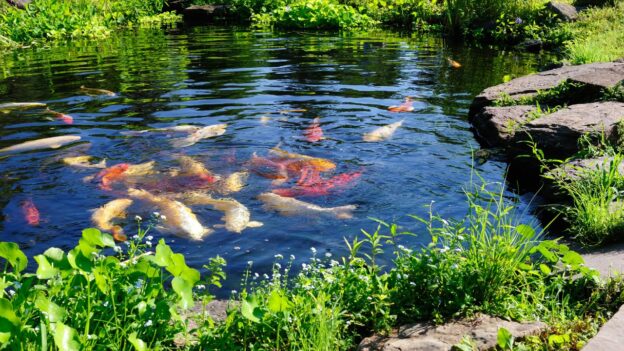
Green water and recurring algae can make a pond look neglected even when pumps and filters run correctly. In Orange County’s warm climate with 300+ days of intense sunlight, algae control is often a system decision rather than a simple product purchase.
UV sterilizers work well for free-floating planktonic algae that cause green water, while algaecides can target some algae types faster but require water chemistry, oxygen, and fish cautions. Read on for where each option works, where each fails, and when professional pond maintenance or equipment diagnosis is the safer path.
Key Takeaways
- UV sterilizers damage algae DNA at 254 nanometers to control free-floating planktonic algae that create green water
- UV equipment has zero effect on string algae, attached growth, or suspended sediment
- Algaecides can target planktonic, filamentous, and blue-green algae but require alkalinity testing and oxygen-depletion caution
- Rapid algae decomposition reduces dissolved oxygen and can create fish stress if not managed in sections with aeration
- Long-term water clarity depends on algae-type diagnosis, filtration, circulation, nutrient management, and equipment maintenance
What Are UV Sterilizers and How Do They Control Algae?
UV sterilizers and clarifiers use ultraviolet light to damage algae DNA at 254 nanometers as water flows through the chamber. This DNA disruption prevents algae reproduction and causes cells to clump for easier filter removal. The technology works only on organisms passing through the UV chamber, making it effective for suspended algae but ineffective for attached growth.
Water clarity improvement depends on proper equipment sizing, clean quartz sleeves, and adequate flow rates. A UV clarifier must receive continuous water circulation to treat the entire pond volume over time. The approach is equipment-based rather than chemical, requiring ongoing maintenance but avoiding direct product dosing.
How UV Sterilizers Target Free-Floating Planktonic Algae
UV clarification specifically targets free-floating algae creating green pond water. Planktonic algae are suspended, single-celled organisms including Chlamydomonas, Chlorella, Euglena, and Anacystis that float throughout the water column. These microscopic cells multiply rapidly in warm, nutrient-rich water and create the classic “pea soup” appearance.
Water must pass through the UV chamber for treatment to occur, meaning the technology cannot affect algae attached to surfaces. Understanding UV light mechanics helps pond owners set realistic expectations about what the equipment can and cannot accomplish. The UV sterilizer approach works well when algae is suspended and circulating rather than fixed in place.
What Maintenance Does a UV Sterilizer Require for Effectiveness?
Clean quartz sleeves every 4-8 weeks to prevent mineral buildup and organic films from blocking UV penetration. Dirty quartz sleeves can block 50-80% of UV light, drastically reducing effectiveness even when the bulb operates. Regular cleaning with a soft cloth and vinegar solution restores full UV transmission.
Replace UV bulbs annually for consistent results because ultraviolet output declines over time even if visible light remains. UV lights can clear green water in 10 days under proper conditions, including correct sizing and flow rates. Clarifiers need 10 watts per 1,000 gallons, while sterilizers require 30 watts per 1,000 gallons for pathogen control in koi ponds.
| Task or Specification | Requirement |
|---|---|
| Quartz sleeve cleaning | Every 4 to 8 weeks |
| Bulb replacement | Annually |
| Clarifier wattage | 10 watts per 1,000 gallons |
| Sterilizer wattage (koi pathogen control) | 30 watts per 1,000 gallons |
| Water flow through UV chamber | Every 2 to 3 hours for effective treatment |
| Typical time to clear green water | About 10 days under proper sizing and flow |
What Are the Limitations of UV Sterilizers in Pond Algae Control?
UV has zero effect on string algae, filamentous mats, or any attached growth on rocks, liner, or plants. The technology only works on organisms passing through the chamber, leaving surface algae untreated. Pond owners expecting UV to remove existing string algae or wall coatings will be disappointed.
UV has zero effect on suspended sediment, tannins, or water discoloration caused by decaying leaves and organic matter. UV does not remove solids or nutrients, requiring mechanical and biological filtration to handle those tasks. UV does not fix nutrient overload, fish-waste accumulation, or circulation dead zones that fuel recurring algae blooms.
What Are Algaecides and Their Role in Algae Management?
Algaecides are chemical treatments formulated to kill or suppress algae growth in ponds. These products contain active ingredients that disrupt algae cell function, membrane integrity, or photosynthesis. Algaecides offer faster visible knockdown compared to equipment-based approaches but require careful product selection and application protocols.
Chemical treatments function as targeted interventions rather than continuous control systems like UV equipment. Effectiveness depends on matching the correct active ingredient to the specific algae type, water chemistry, and pond conditions. Algaecide use requires understanding label instructions, alkalinity levels, oxygen-depletion risks, and fish sensitivity.
Which Algae Types Can Algaecides Target Effectively?
Texas A&M rates copper sulfate and copper chelated complexes as ‘Excellent’ for both planktonic and filamentous algae control based on aquatic herbicide trials. Texas A&M rates diquat, endothall salts, flumioxazin, and sodium carbonate peroxyhydrate as ‘Good’ for filamentous algae treatment.
Copper sulfate and copper chelated complexes serve as common algaecide active ingredients in many pond products. Endothall salts, sodium carbonate peroxyhydrate, diquat, and flumioxazin represent additional algaecide active ingredients for specific algae situations. Different formulations target planktonic, filamentous, and blue-green algae with varying effectiveness ratings.
| Active Ingredient | Texas A&M Rating | Algae Type(s) Rated |
|---|---|---|
| Copper sulfate / copper chelated complexes | Excellent | Planktonic and filamentous |
| Diquat | Good | Filamentous |
| Endothall salts | Good | Filamentous |
| Flumioxazin | Good | Filamentous |
| Sodium carbonate peroxyhydrate | Good | Filamentous |
What Safety and Environmental Cautions Are Needed When Using Algaecides?
Copper can be toxic to fish if used above labeled rates or in soft or acidic waters even at label rates, requiring alkalinity testing before treatment. Pond owners must test water chemistry before applying copper-based products to avoid fish kills and ecosystem damage.
Rapid algae kill-off and decomposition can reduce dissolved oxygen as bacteria break down dead biomass. Chemical treatments must be used carefully around pets, birds, and nearby plants that may contact treated water. Dead algae decomposition creates oxygen stress, making aeration and section treatment critical safety practices.
How Does Water Chemistry Affect Algaecide Use?
Test pond water alkalinity before using copper treatments because effectiveness and toxicity both depend on carbonate levels. Adjust copper treatments to alkalinity concentrations following product guidelines to prevent fish harm. Alkalinity below 50 ppm increases copper toxicity risk, while higher alkalinity may require higher dosing.
Test water chemistry before chemical treatment to verify pH, hardness, and ammonia levels that can affect algaecide performance. Follow product labels for application rates, timing, and re-treatment intervals to stay within safe parameters. Allow about two weeks of decomposition before treating another pond section to avoid compounding oxygen-depletion stress.
How Do UV Sterilizers and Algaecides Differ in Function and Results?
UV sterilizers provide ongoing equipment-based control targeting organisms passing through the chamber during normal circulation. Algaecides deliver immediate chemical intervention, killing existing algae across the entire pond volume at application. The fundamental difference lies in continuous prevention versus reactive treatment.
Both methods address algae control but operate through different mechanisms requiring different infrastructure, maintenance, and expertise. UV depends on flow rate, equipment sizing, and regular bulb/sleeve maintenance. Algaecides depend on correct product selection, label compliance, water chemistry testing, and decomposition management.
| Factor | UV Sterilizers | Algaecides |
|---|---|---|
| Primary mechanism | Ultraviolet light damages algae DNA as water passes through the chamber | Active ingredients disrupt algae cell function or membrane integrity |
| Algae types treated | Free-floating planktonic algae only | Planktonic, filamentous, and blue-green algae, depending on the product |
| Visible results | Gradual, typically 7 to 10 days | Fast, typically 24 to 72 hours |
| Ongoing requirement | Quartz sleeve cleaning every 4 to 8 weeks and annual bulb replacement | Water chemistry testing and repeat applications as algae returns |
| Fish and ecosystem risk | Low, since no chemical dosing occurs | Requires alkalinity testing and aeration to manage oxygen depletion |
Which Method Is Faster for Visible Algae Reduction?
Algaecides typically produce faster visible algae reduction with noticeable color change and biomass decline within 24-72 hours. UV sterilizers work more gradually as water cycles through the chamber, with visible clearing occurring over 7-10 days. The speed difference reflects immediate kill versus cumulative DNA damage preventing reproduction.
Clearing green water with UV technology requires patience as the equipment processes the entire pond volume multiple times before algae populations collapse. Chemical treatments deliver faster cosmetic improvement but create sudden oxygen demand as dead algae decomposes. Pond owners seeking immediate results often prefer algaecides, while those prioritizing long-term clarity choose UV equipment.
How Do Both Methods Impact Fish, Pets, and Pond Ecosystems?
UV generally avoids direct chemical dosing, making it a lower-risk option for fish and beneficial bacteria when properly sized. Algaecides carry product, water chemistry, and oxygen risks requiring label compliance and careful monitoring during decomposition. High biomass blooms can lead to hypoxia or anoxia when algae die rapidly and consume oxygen during bacterial breakdown.
Hypoxia and anoxia can alter biochemical reactions that exacerbate algal blooms and release pollutants from sediments. Blue-green algae cyanotoxins pose serious threats to fish, livestock, companion animals, and humans. Safe algae control solutions consider ecosystem health alongside visual improvement to protect all pond inhabitants.
How Does Maintenance Burden Compare Between UV Sterilizers and Algaecides?
UV is ongoing equipment-based control requiring quartz sleeve cleaning every 4-8 weeks and annual bulb replacement. Algaecides are product interventions requiring water testing, correct dosing calculations, and post-treatment aeration monitoring. Equipment maintenance follows a predictable schedule while chemical treatments require situational judgment and repeated application.
Repeated algaecide dosing without root-cause work can create recurrence as nutrients, sunlight, and warmth continue fueling new blooms. UV maintenance becomes routine once the system is correctly sized and installed. Both approaches demand attention, but UV shifts burden toward equipment upkeep while algaecides demand water chemistry expertise and application timing.
When Should a Pond Owner Choose UV Sterilizers or Algaecides?
The choice depends on algae type, pond conditions, and long-term maintenance goals. UV sterilizers excel at controlling free-floating planktonic algae when water circulates through properly sized equipment at correct flow rates. Algaecides offer broader algae-type coverage, including filamentous and blue-green species, but require careful water chemistry management and safety protocols.
Neither method solves every algae problem, and some situations benefit from sequential or combined approaches under professional guidance. Pond owners must identify whether green water, string algae, or cyanobacteria is the primary issue before selecting equipment or chemicals. The right approach often involves pond maintenance, filtration upgrades, circulation correction, and nutrient reduction alongside targeted algae treatment.
How Does Algae Type Influence the Best Control Approach?
UV sterilizers work on free-floating algae while algaecides can target planktonic, filamentous, and blue-green types with appropriate formulations. Filamentous algae are string or mat-forming species that attach to rocks, liner, plants, and other surfaces. Planktonic algae cannot be mechanically or physically controlled except by replacing pond water or using UV treatment.
Methods for controlling algae in Orange County vary based on species identification and environmental conditions supporting growth. String algae requires manual removal, algaecide treatment, or nutrient reduction because UV light cannot reach attached growth. Green water responds well to UV clarification when combined with adequate filtration and circulation.
When Is Professional Pond Maintenance Needed for Diagnosis?
Professional diagnosis prevents costly equipment purchases or chemical applications that do not match the actual algae problem. Experienced technicians can identify algae species, test water chemistry, evaluate circulation patterns, and assess filtration adequacy in one visit. Equipment compatibility, flow-rate calculations, and safe chemical protocols require expertise beyond typical homeowner knowledge.
Orange County Pond Services, located at 5102 Bayonne Cir, Irvine, CA 92604, offers diagnostic evaluations and pond maintenance services. Contact phone 949-653-2305 to schedule an assessment before investing in UV equipment or algaecide products. Professional guidance helps pond owners avoid mismatched solutions and implement effective long-term strategies.
How Do Pond Conditions and Equipment Compatibility Affect the Choice?
Water must cycle through the UV every 2-3 hours for effective planktonic algae control and water clarity improvement. Total pond circulation should be 4-6 times per hour to ensure adequate filtration and gas exchange. Flow rate determines UV success because insufficient turnover leaves untreated water and allows algae to multiply faster than treatment occurs.
Sterilizers require 30 watts per 1,000 gallons for pathogen control in koi ponds beyond basic water clarity needs. Existing pump capacity, plumbing diameter, and filter flow ratings must support UV equipment, or upgrades become necessary. Preventing algae through proper pond design addresses circulation, filtration, and equipment sizing before algae becomes a recurring problem.
What Additional Pond Maintenance Practices Support Long-Term Algae Control?
Long-term algae control requires addressing root causes, including excess nutrients, inadequate circulation, insufficient filtration, and debris accumulation. UV sterilizers and algaecides treat symptoms but do not eliminate the conditions that allow algae to thrive. Pond maintenance practices remove organic waste, improve water flow, reduce nutrient availability, and create unfavorable conditions for rapid algae growth.
Equipment performance and water clarity depend on routine cleaning, filter maintenance, debris removal, and water testing. Combining multiple approaches creates layered protection against algae blooms. Successful ponds integrate mechanical and biological filtration, adequate circulation, nutrient management, and targeted algae treatment when needed.
How Do Filtration and Circulation Affect Algae Growth and Control?
Mechanical filtration removes solid particles but cannot catch individual algae cells that pass through most filter media. Biological filtration converts fish waste into less harmful compounds using beneficial bacteria that process ammonia and nitrite. Poor water circulation creates dead zones where algae thrive while bypassing filtration.
Standard filtration alone may not solve planktonic green water problems because microscopic algae cells remain suspended. Effective pond maintenance includes upgrading undersized filters, adding circulation pumps in dead zones, and cleaning filter media regularly. Standard pond kits are undersized for Southern California demands because manufacturers design for moderate climates, not Orange County conditions.
Why Is Nutrient Management Crucial for Preventing Recurring Algae?
Acceptable ammonia for UV use is 0 ppm to prevent filter strain and maintain water quality during clarification. Acceptable nitrite for UV use is 0 ppm because toxic nitrogen compounds indicate incomplete biological filtration. A moderate to high nitrate range of 20-80 ppm indicates active nutrient cycling but can fuel algae if not balanced.
Algaecides do not address nutrients, poor circulation, or filtration issues that cause recurring blooms after treatment fades. Fish waste, uneaten food, decaying leaves, and runoff continuously add nitrogen and phosphorus that algae consume for growth. Nutrient management through proper feeding, debris removal, plant balance, and water changes reduces the fuel source for algae.
What Routine Actions Enhance Equipment Performance and Water Clarity?
Remove debris and clean filters as part of pond maintenance to prevent organic buildup and nutrient accumulation. Rake or seine filamentous algae from the pond for physical removal before it decomposes and releases nutrients. Manual removal and regular cleaning are helpful but not enough alone to prevent recurring blooms in nutrient-rich conditions.
Treat ponds in sections rather than all at once to avoid overwhelming oxygen capacity during algae decomposition. Use aeration particularly at night for several days after algaecide treatment when photosynthesis stops, and decomposition accelerates oxygen consumption. Fountain algaecide application requires similar sectional treatment and aeration protocols to protect water features and surrounding wildlife.
How Does Orange County’s Climate Influence Algae Challenges and Control Strategies?
Orange County’s climate creates unique algae pressure that exceeds typical pond-equipment design assumptions from moderate-climate regions. Warm temperatures, intense sunlight, and long growing seasons accelerate algae reproduction and biomass accumulation year-round. Pond owners in Southern California face algae challenges requiring more robust equipment, more frequent maintenance, and more proactive nutrient management.
Climate conditions affect UV effectiveness, algaecide selection, and equipment sizing because warm water holds less dissolved oxygen during decomposition. Understanding local environmental pressures helps pond owners choose appropriate control strategies. Professional pond services familiar with Orange County conditions can recommend properly sized solutions that match regional demands.
What Makes Warm and Sunny Conditions Conducive to Algae Growth?
Orange County has 300+ days of intense sunlight providing abundant energy for photosynthesis and rapid algae multiplication. Warm water temperatures accelerate algae metabolism, reproduction rates, and nutrient uptake compared to cooler climates. Sunlight and warmth combine to create nearly year-round algae pressure without the natural winter die-back that occurs elsewhere.
High light intensity also reduces UV sterilizer efficiency if quartz sleeves accumulate mineral deposits or biofilm that blocks penetration. Algae growth rates can outpace UV treatment capacity when equipment is undersized for Southern California’s accelerated conditions. Temperature and light create continuous algae challenges requiring properly matched equipment rather than minimum-specification installations.
How Should Pond Equipment Be Adapted for Local Environmental Pressures?
Standard pond kits are undersized for Southern California demands because they assume moderate temperatures and seasonal dormancy. Manufacturers design for moderate climates, not Orange County conditions where algae grows vigorously across all seasons. Equipment upgrades, including larger filters, higher-wattage UV units, and increased pump capacity, help match local environmental pressures.
Flow rates, filter media volume, and UV contact time must account for faster algae reproduction in warm, sunny conditions. Undersized equipment struggles to keep pace with algae growth, creating recurring green water despite technically functional systems. Keeping outdoor fountains algae-free requires similar attention to equipment sizing and maintenance frequency adjustments for Southern California.
What Special Considerations Are There for Algae Control in Orange County?
Orange County ponds need more frequent UV bulb replacement and quartz sleeve cleaning due to year-round operation and mineral buildup. Algaecide treatments may require more conservative dosing or enhanced aeration because warm water holds less dissolved oxygen during decomposition. Water chemistry testing becomes more important because evaporation concentrates minerals and affects copper toxicity in hot, dry climates.
Nutrient management requires vigilance because warm conditions accelerate fish metabolism, feeding rates, and waste production throughout the year. Seasonal adjustments common in other regions do not apply when algae pressure remains constant. Professional maintenance helps pond owners adapt equipment operation, cleaning schedules, and treatment protocols to local conditions.
What Are the Most Common Questions and Concerns About Algae Control Methods?
Pond owners frequently question whether UV sterilizers justify the investment compared to simpler algaecide treatments. Confusion exists about filter capabilities, chemical safety, and realistic expectations for each control method. Understanding common concerns helps clarify decision factors and prevent costly mistakes from mismatched solutions.
Questions about safety, effectiveness, and long-term costs reflect legitimate concerns that deserve evidence-based answers. Both UV sterilizers and algaecides have appropriate uses when matched to specific algae types and pond conditions. Professional guidance addresses individual situations more effectively than general product recommendations.
Is UV Sterilization Worth the Investment Compared to Algaecides?
UV sterilization becomes worthwhile when planktonic green water is the primary problem and ongoing water clarity is the goal. Initial equipment costs are higher, but UV avoids repeated chemical purchases and reduces long-term treatment expenses. Algaecides cost less upfront but require repeated applications and may not prevent recurrence without addressing root causes.
Investment value depends on algae type, pond size, fish sensitivity, and willingness to maintain equipment versus managing chemicals. UV provides continuous treatment without dosing decisions, while algaecides offer targeted intervention for specific outbreaks. The strongest value often comes from combining approaches under professional guidance.
Can Algaecide Use Be Safe Around Fish, Pets, and Plants?
Algaecide use can be safe when products are selected correctly, water chemistry is tested, and label instructions are followed precisely. Copper-based products require alkalinity testing and careful dosing to avoid toxicity in soft or acidic water. Section treatment and aeration reduce oxygen-depletion risk during decomposition when algae biomass is high.
Fish, pets, and plants remain safe when algaecides are applied at appropriate rates for measured water chemistry conditions. Misapplication, overdosing, or treating without testing creates preventable risks including fish kills and ecosystem damage. Professional application ensures correct product selection, dosing calculations, and safety protocols for each specific pond.
Why Might Filters Alone Fail to Control Green Water Algae?
Filters alone might fail to control green water because planktonic algae cells are microscopic and pass through mechanical filtration. Biological filtration processes fish waste but does not remove suspended algae or prevent algae reproduction in nutrient-rich water. Poor circulation allows algae to thrive in dead zones while filtered water remains clear only in high-flow areas.
Filtration handles solids and converts ammonia but lacks the UV exposure or chemical action needed to kill planktonic cells. Green water requires algae-specific treatment through UV clarification or algaecide intervention combined with adequate filtration and circulation. Understanding filtration limitations helps pond owners add appropriate algae control rather than expecting filters to solve every water clarity issue.
Choosing between UV sterilizers and algaecides for algae control depends on accurate algae identification, water chemistry, and long-term maintenance goals. UV equipment provides continuous treatment for free-floating planktonic algae when properly sized and maintained, while algaecides offer faster knockdown for multiple algae types with careful safety protocols. Combining diagnostic expertise, pond maintenance, filtration upgrades, and targeted algae treatment creates the most effective long-term water clarity strategy.
Orange County Pond Services brings 25+ years of experience diagnosing algae problems, recommending properly sized equipment, and implementing safe, effective treatments. Professional evaluation prevents costly mismatches between algae type and control method while protecting fish and ecosystem health.
Get Algae Control Help From Orange County Pond Services
Guessing between UV equipment and algaecide products can waste time and money on the wrong fix. Orange County Pond Services brings over 25 years of hands-on experience diagnosing algae type, testing water chemistry, and recommending properly sized solutions for Southern California’s warm, sunny climate.
Ready for clear water again? Contact Orange County Pond Services for a free quote at 949-653-2305, or request your free quote online and our team will recommend the right approach for your pond, your fish, and your budget.
Frequently Asked Questions About Algae Control
Q1. How fast can I clear green pond water in Orange County?
A. Algaecides often produce visible improvement within 24 to 72 hours, while UV sterilizers typically clear planktonic green water over 7 to 10 days as equipment cycles the full pond volume. The right timeline depends on algae type, pond size, and whether equipment is properly sized for Southern California’s warm, sunny conditions. Combining both methods under professional guidance can shorten the wait when a pond needs fast results alongside long-term prevention.
Q2. Can UV sterilizers and algaecides be used together?
A. Yes, many ponds benefit from combining UV clarification for ongoing planktonic algae control with targeted algaecide treatment for string or blue-green algae outbreaks. Sequencing matters, since algaecide decomposition can temporarily lower dissolved oxygen and affect UV-treated water if not managed with aeration. A professional assessment can sequence both treatments safely around fish, filtration, and pond conditions.
Q3. How is string algae different from green water algae?
A. Green water comes from planktonic algae that float freely through the water column and respond to UV clarification. String algae, also called filamentous algae, attaches to rocks, liner, and plants, and UV light has no effect on it since the growth never passes through the treatment chamber. String algae typically requires manual removal, algaecide treatment, or nutrient reduction instead.
Q4. What does a professional pond algae assessment involve?
A. A technician identifies the algae species present, tests water chemistry including alkalinity and nutrient levels, and evaluates circulation and filtration adequacy for the pond’s size. This diagnosis prevents mismatched equipment purchases or chemical treatments that do not address the actual problem. Orange County Pond Services offers this evaluation as part of scheduling a free quote for algae control services.
Q5. How often should pond equipment be serviced to prevent recurring algae?
A. UV quartz sleeves need cleaning every 4 to 8 weeks and bulbs need annual replacement, while filters and pumps benefit from regular debris removal that prevents nutrient buildup. Orange County’s warm climate and 300-plus days of sunlight mean algae pressure continues year-round, so the seasonal gaps in maintenance common in other regions do not apply here. Consistent servicing, paired with nutrient management, keeps algae from returning after treatment.
