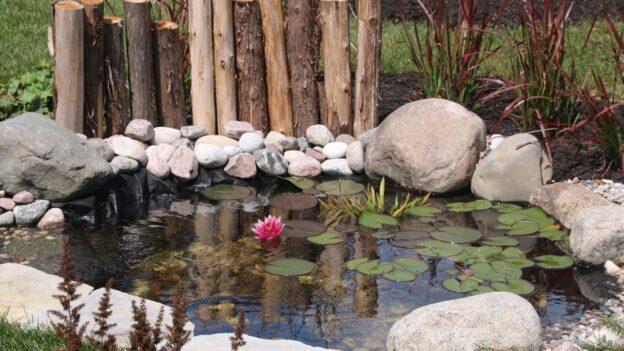
Choosing between a concrete pond and a liner pond affects how your water feature performs in California’s unique climate. Both systems can work in Orange County, but the right choice depends on site conditions, maintenance tolerance, repair access, and whether you plan to keep koi or other living organisms. If you’re just starting to plan a water feature, our guide to pond design and installation in California covers site prep and design basics before you compare materials.
Below, you’ll find a full comparison of durability, cost, and how California’s climate affects each material choice. A concrete pond can crack from soil movement or poor drainage, while a liner pond faces puncture risk and UV exposure at edges. Understanding these failure modes, alongside cost analysis factors such as initial build expense, repair complexity, and water-loss monitoring, helps homeowners make informed decisions suited to California climate stressors.
Key Takeaways
- Concrete ponds require proper waterproofing and crack control to prevent leaks, while liner ponds offer easier repair access
- Liner materials vary in lifespan: EPDM lasts 20–30 years, RPE lasts 20–40 years, and PVC lasts 3–10 years when exposed
- California heat and UV exposure increase evaporation rates up to 2 inches per week and accelerate exposed liner edge degradation
- Repair costs for liner ponds typically range from $125–$800, while concrete repairs may require invasive draining and resurfacing
- Replace liner when repair costs exceed 50% of new liner price or when damage exceeds 0.5% of liner surface
What Are Concrete and Liner Ponds?
Concrete ponds use poured or formed concrete shells finished with waterproofing coatings. Liner ponds rely on flexible sheets installed over excavated shapes with protective underlayment.
Characteristics of Concrete Ponds
Concrete ponds provide a rigid structure that supports highly customized architectural shapes and formal designs. The material allows integration with hardscape elements and raised edges that create a permanent visual appearance.
Concrete construction requires proper reinforcement, substrate preparation, drainage planning, and a fish-safe waterproofing layer. Without these engineering elements, the concrete shell can develop cracks or leaks that travel through hidden pathways.
Characteristics of Flexible Liner Ponds
Liner ponds use flexible sheets such as EPDM, RPE, or PVC to contain water within excavated or formed pond beds. These materials adapt to organic shapes and naturalistic designs more easily than rigid concrete.
EPDM is a flexible rubber pond liner material known for weather resistance. RPE is a reinforced polyethylene pond liner material offering extended lifespan in demanding conditions.
PVC is a polyvinyl chloride pond liner material with shorter exposure tolerance. Underlayment is a protective layer beneath the pond liner costing $0.30–$1.00 per square foot that cushions the membrane.
Typical Pond Uses in Orange County
Orange County homeowners install ponds for backyard water features, koi fish habitats, and garden focal points. Property owners value both aesthetic appeal and the ability to maintain stable water quality for living ecosystems.
Concrete ponds often serve formal or architectural projects where integration with patios and poolscapes matters. Liner ponds work well for naturalistic gardens, flexible installation timelines, and sites where future access matters.
How Do Durability Factors Compare Between Concrete and Liner Ponds?
Durability depends on system design, not just material strength. Concrete relies on waterproofing, crack control, and stable substrates, while liner durability requires proper underlayment, edge protection, and seam integrity.
Concrete Pond Durability and Failure Modes
Concrete can crack from site movement, settling, poor drainage, or improper waterproofing applied during construction. These cracks allow water to migrate through the structure and create hidden leak paths.
Concrete leaks can travel through cracks, plumbing penetrations, or hidden waterproofing failures that make diagnosis difficult. Concrete durability depends on reinforcement, substrate, drainage, waterproofing layer, crack control, finish compatibility, and movement expectations.
Liner Pond Durability, Lifespan, and Common Issues
EPDM liner lifespan ranges from 20–30 years under typical conditions. PVC liner lifespan falls between 3–10 years when exposed to sun and heat.
RPE liner lifespan extends from 20–40 years with proper installation and protection. Liner ponds are vulnerable to puncture, seam problems, animal damage, and deterioration with age.
Underlayment can increase liner lifespan by 30% through cushioning and puncture resistance. Material grade and installation quality influence whether a liner pond reaches its expected service life.
| Liner Material | Typical Lifespan | Key Characteristic |
|---|---|---|
| EPDM | 20–30 years | Flexible rubber, strong weather resistance |
| RPE | 20–40 years | Reinforced polyethylene, longest service life |
| PVC | 3–10 years (exposed) | Lower cost, shorter exposure tolerance |
Impact of California Climate Stressors on Pond Durability
California’s intense sun, heat, and dry periods create unique durability challenges for both concrete and liner systems. Heat accelerates concrete curing issues and increases water evaporation rates that stress pond ecosystems.
Liner durability depends on material grade, underlayment, edge protection, folds, seams, animal exposure, and sunlight reaching exposed edges. UV exposure degrades exposed liner faster in California climate than in cooler or cloudier regions.
What Are the Cost Considerations for Building and Maintaining These Ponds?
Total cost includes initial construction, ongoing maintenance, repair access, and water-loss expenses over time. Pond installation budget bands begin at $5,000–$10,000 for basic designs, scaling upward with complexity and materials.
Up-front Build Costs for Concrete Vs. Liner Ponds
Concrete ponds typically require higher initial investment due to forming, reinforcement, waterproofing layers, and finish work. Liner ponds offer lower material costs but still require excavation, underlayment, edge treatment, and proper filtration systems installation.
Site conditions and design complexity influence final cost more than material choice alone. Custom architectural shapes and integrated hardscape increase concrete costs, while larger surface areas increase liner material expenses.
Repair and Maintenance Costs Over Time
Liner repair typically costs $125–$800 in Orange County depending on damage location and access. Feature repairs can range from $100–$1,200 for waterfalls, edging, or plumbing components.
Pump repair often runs $50–$400 for most residential systems. Annual pond maintenance averages $2,000 and can range from $450 to $5,000 based on system complexity.
Emergency repairs cost 2–3 times more than preventive service. Concrete repairs may require draining, crack routing, resurfacing, and waterproofing repair, while liner repairs can often be localized patches.
| Service | Typical Cost Range |
|---|---|
| Liner repair | $125–$800 |
| Feature repair (waterfalls, edging, plumbing) | $100–$1,200 |
| Pump repair | $50–$400 |
| Annual pond maintenance | $450–$5,000 (average $2,000) |
| Diagnostic service call | $100–$300 per hour plus materials |
| Monthly maintenance plan | $150–$500 |
Water Loss and Evaporation Costs in California
Evaporation can reach up to 2 inches per week during summer months in inland Orange County areas. Outdoor water use accounts for more than 30% of total household water use on average and can be as much as 60% in arid regions.
The average family can waste 180 gallons per week, or 9,400 gallons annually, from household leaks. Separating normal evaporation from actual leaks requires monitoring and professional diagnosis to avoid unnecessary water bills.
How Does California’s Climate Influence Pond Material Performance?
California climate combines intense sun, heat waves, low humidity, and recurring drought conditions. These factors accelerate material aging, increase evaporation, and make water conservation a practical concern for pond owners.
Effects of Heat and UV Exposure
High temperatures increase water evaporation rates and stress fish populations during summer months. Exposed liner edges can degrade faster under UV and heat exposure, creating entry points for leaks.
Concrete surfaces can develop thermal stress when temperature swings cause expansion and contraction. Both materials require shade planning, proper edge treatment, and regular maintenance to manage California’s heat exposure.
Water Conservation and Leak Detection Challenges
Replacing a clock-based irrigation controller with a WaterSense-labeled controller can reduce average home irrigation water use by up to 30% and save up to 15,000 gallons annually. Similar conservation logic applies to pond water management.
Leak detection separates preventable water loss from natural evaporation. Monitoring water levels and system performance helps identify when repair rather than replacement makes economic sense.
Drought Implications for Pond Maintenance
Drought is a recurring feature of California’s climate according to California DWR. Pond owners must balance aesthetic and ecosystem goals with responsible water use during dry periods.
Well-maintained ponds with controlled evaporation and prompt leak repair support water conservation better than neglected systems. Professional diagnosis helps distinguish between acceptable evaporation and wasteful leaks that require immediate attention.
Why Do Koi and Living Ecosystems Affect Pond Material Choice?
Koi ponds require stable water volume, controlled temperature, reliable filtration, and safe water chemistry. Material choice influences how easily these conditions can be maintained and repaired without stressing fish.
Stability and Water Quality Needs for Koi Ponds
Koi require consistent water quality and protection from rapid volume loss or temperature swings. Raw concrete and curing chemistry can be unsafe in koi or planted ponds without proper fish-safe finish or waterproofing.
Liner systems provide inert surfaces that do not affect water chemistry once properly installed. Both concrete and liner ponds can support healthy koi populations when designed with appropriate filtration, circulation, and expert care protocols.
Repair Access and Filtration Considerations
Liner leaks are often easier to isolate and patch than structural concrete failures. Patch repairs can be completed without draining the entire pond if damage location allows safe access.
Concrete repairs may require draining, crack routing, resurfacing, and waterproofing repair that disrupts fish habitat. Planning for repair access during initial design reduces stress on living systems when maintenance becomes necessary.
Material Impact on Fish Health and Plant Growth
Pond fish suited to Southern California climate thrive when water chemistry remains stable and toxic compounds do not leach from construction materials. Concrete ponds must use fish-safe finishes to avoid pH swings and chemical exposure.
Liner ponds avoid chemical leaching but require careful installation to prevent folds or sharp edges that trap debris. Both systems support plant growth when sunlight, nutrients, and circulation meet ecosystem requirements.
When Should Homeowners Consider Repair vs Replacement?
Repair makes sense when damage is localized, access is reasonable, and remaining material life justifies the investment. Replacement becomes necessary when repeated failures, hidden damage, or excessive age make repair uneconomical.
Identifying Signs of Pond Material Failure
Replace liner when liner age exceeds 75% of expected lifespan, and major damage occurs. Replace liner when more than 3 patches exist within 1 square meter.
Replace liner when damage exceeds 0.5% of liner surface. Concrete failure signs include visible cracks, persistent water loss, wet soil around the pond, and difficulty isolating leak sources.
Repair Thresholds and Cost-Effectiveness
Orange County Pond Services’ 50% cost rule states homeowners should replace rather than repair when patch costs exceed half of the new liner price. Replace liner when repair cost is over half of new-liner price.
Poorly built concrete can cost more over time than a high-quality liner system because diagnosis and repair are harder. Weighing expected pond lifespan against repair frequency helps homeowners make informed replacement decisions.
Role of Professional Inspection and Diagnosis
Diagnostic service calls can run $100–$300 per hour plus materials. Monthly maintenance plans can cost $150–$500 and help catch problems before emergency repairs become necessary.
Professional inspection identifies whether damage comes from material failure, installation error, or site conditions. Expert diagnosis prevents homeowners from replacing functional systems when targeted repair would solve the problem.
How to Decide Between Concrete and Liner Ponds in Orange County?
The decision depends on site conditions, design goals, budget, maintenance tolerance, and long-term vision. Neither material guarantees permanence without proper engineering, installation, and ongoing care.
Matching Pond Type to Site Conditions and Design Goals
Concrete allows highly customized architectural shapes while liner systems adapt to organic shapes more easily. Concrete supports formal shapes and integrated hardscape while liner works better for naturalistic designs.
Site stability, drainage, and access influence which system will perform reliably over time. Professional design consultation evaluates soil conditions, sun exposure, and monthly maintenance requirements before material selection.
Balancing Budget, Maintenance Tolerance, and Longevity
Concrete has high perceived permanence while liner feels flexible and serviceable. Initial cost differences become less significant when long-term repair access and water-loss management are factored into total ownership cost.
Homeowners with higher maintenance tolerance may prefer liner systems that allow DIY patches and adjustments. Those seeking low-touch solutions benefit from professionally installed systems with warranty coverage and preventive maintenance plans.
Consulting Orange County Pond Services for Customized Recommendations
Orange County Pond Services, located at 5102 Bayonne Cir, Irvine, CA 92604, offers site evaluation and material consultation. Calling 949-653-2305 connects homeowners with experts who assess existing conditions and recommend repair or replacement options.
Professional consultation prevents costly assumptions about material superiority and identifies site-specific factors that influence durability. Expert guidance helps homeowners avoid unnecessary replacement when targeted repair restores function at lower cost.
Concrete Vs. Liner Ponds: Durable and Cost-Effective Options for California Homeowners
Both concrete and liner ponds can perform well in California climate when properly designed, installed, and maintained. The right choice balances site conditions, aesthetic goals, budget, repair access, and whether the pond will support koi or other living systems.
Concrete ponds offer architectural flexibility and perceived permanence but require careful waterproofing, crack control, and more complex repairs. Liner ponds provide easier installation, simpler repair access, and lower initial costs but need protection from UV exposure, puncture, and age-related degradation. Orange County homeowners benefit most from professional site evaluation that identifies which system fits their specific conditions rather than assuming one material always outperforms the other.
Ready to Choose the Right Pond for Your Home?
Every property in Orange County has its own soil, sun exposure, and design goals, and the right pond material depends on those specifics rather than a one-size-fits-all answer. Our team has spent over 25 years diagnosing pond and fountain systems across Southern California, and we know how to match the right construction method to your site and your long-term plans. Contact Orange County Pond Services for a free quote, and let us walk you through the tradeoffs so you can build or repair with confidence. Call 949-653-2305 or visit our contact page to schedule a consultation.
Frequently Asked Questions
How long do liner ponds last in Orange County?
Liner lifespan depends on the material used and how much of it stays exposed to direct sunlight. EPDM liners typically last 20–30 years, RPE liners can last 20–40 years, and PVC breaks down faster, often lasting only 3–10 years once exposed to heat and UV rays. Underlayment beneath the liner extends service life by cushioning the membrane and reducing puncture risk. Regular inspection helps homeowners catch early wear before it turns into a costly repair.
Is a concrete pond more durable than a liner pond?
Concrete offers a rigid, permanent structure, but its durability depends on reinforcement, drainage, and waterproofing rather than the material alone. Soil movement, poor drainage, or an improperly applied waterproofing layer can cause concrete to crack and leak through hidden pathways that are hard to diagnose. Liner ponds trade that rigidity for flexibility and easier repair access, since damage is usually visible and can be patched without draining the entire system. Neither material guarantees durability without proper engineering and ongoing maintenance.
How much does it cost to repair a pond liner in California?
Liner repairs in Orange County typically range from $125 to $800, depending on the size and location of the damage. Costs increase when the pond needs to be partially drained or when the damaged area is hard to reach. As a general rule, replacement makes more financial sense once repair costs exceed half the price of a new liner. A professional diagnosis helps confirm whether a patch will hold or whether replacement is the better long-term investment.
Why does California heat affect pond durability so much?
California’s sun, heat, and low humidity increase evaporation rates that can reach up to 2 inches per week during summer months in inland Orange County. That same heat accelerates UV degradation on exposed liner edges and can create thermal stress that leads to expansion and contraction in concrete surfaces. Ponds without shade planning or proper edge protection lose water faster and show wear sooner than properly protected systems. Homeowners in hotter inland areas should expect to monitor water levels more closely than those closer to the coast.
Should I repair or replace my pond, and how do I decide?
Repair usually makes sense when damage is localized, the area is accessible, and the remaining material life still justifies the investment. Replacement becomes the better option once liner damage exceeds about 0.5% of the surface area, more than three patches exist within one square meter, or the liner has passed 75% of its expected lifespan. Concrete ponds warrant replacement consideration when leaks keep recurring in different locations or when repair requires repeated draining and resurfacing. A professional inspection from Orange County Pond Services can confirm which option protects your investment and your fish.
