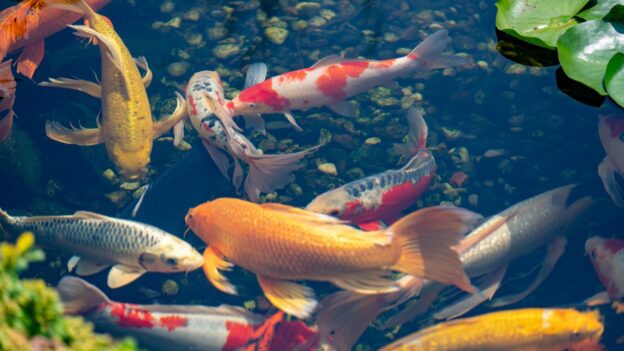
The koi pond vs garden pond decision starts with understanding what you want the water to do. A koi pond functions as a fish-support system built to sustain koi health, while a garden pond serves as a landscape feature emphasizing plants and natural aesthetics. Your choice affects construction depth, filtration complexity, maintenance intensity, budget, and long-term care requirements.
Below, you will find a side-by-side comparison that helps Orange County homeowners evaluate both options before committing to design or excavation. Climate, space, fish or plant priorities, and service tolerance all influence whether a koi pond or garden pond fits your property. Orange County Pond Services has designed, built, and maintained custom water features across Southern California since 2001, and the guidance below reflects what holds up in this climate.
Key Takeaways
- Koi ponds function as fish-support systems requiring planned volume, stocking limits, strong filtration, and oxygen management
- Garden ponds prioritize plants, water sound, and wildlife habitat with lower biological complexity than koi ponds
- Orange County’s year-round heat and sun increase algae pressure and oxygen demand compared to cooler climates
- Installation costs depend on depth, excavation, liner or concrete choice, filtration equipment, and site access conditions
- Professional evaluation matches pond type to yard space, grade, fish or plant goals, and maintenance tolerance
Koi Pond Vs. Garden Pond: Core Purposes and Intended Use
Koi ponds exist primarily to support fish health and display koi as the centerpiece. Garden ponds function as landscape or ecosystem features that highlight plants, water sound, and wildlife.
Understanding this difference clarifies why each pond type requires distinct planning, equipment, and maintenance. Your intended experience determines which system fits your property and care capacity.
| Comparison Point | Koi Pond | Garden Pond |
|---|---|---|
| Primary purpose | Fish health and koi display | Plants, water sound, and wildlife habitat |
| Typical depth | Deeper build to steady water temperature and volume | Shallower build when fish load stays low |
| Filtration | Biofilter, pump, and UV or clarifier | Simpler filtration, or none in fish-free designs |
| Stocking | Planned limits, about 2 to 3 adult koi per 1,000 gallons | Small fish populations or plants only |
| Routine care | Water testing, sludge removal, equipment monitoring | Debris removal, plant care, pump upkeep |
| Suits owners who | Want an interactive living centerpiece | Want a lower-demand landscape feature |
Fish Health Drives Koi Pond Design
Koi ponds are fish-support systems where biological load drives every design decision. Koi stocking and filtration must be planned from the start because underbuilding creates water-quality and oxygen issues.
For a 1,000-gallon pond, maximum safe stocking is 2-3 adult koi. Guidance on how many koi a 1,000-gallon pond can hold explains why mixing stocking categories such as adults, subadults, and juveniles disrupts oxygen balance and growth rates.
Landscape and Wildlife Goals Suit Garden Ponds
Garden ponds prioritize plants, water sound, wildlife attraction, and visual appeal as landscape focal points. They function as ecosystem features rather than fish habitats, allowing more flexible design and lower biological load.
Garden ponds support varied plant selections and smaller fish populations without requiring intensive filtration. This flexibility suits homeowners seeking peaceful water elements without fish-focused maintenance.
Lifestyle Preferences Shape the Pond Choice
Koi ponds require ongoing upkeep, costs, and commitment to maintain fish health and water quality. Neither koi ponds nor garden ponds operate as zero-maintenance features despite size or design simplicity.
Your tolerance for water testing, equipment monitoring, and seasonal adjustments determines which pond type aligns with your schedule. Honest assessment of care capacity prevents frustration and system failure.
Koi Pond vs Garden Pond Build Methods and Construction Depth
Koi ponds are usually deeper and more engineered than garden ponds, which can remain shallower and smaller. Depth, circulation, and filtration infrastructure affect excavation complexity and equipment placement.
Full pond installation includes design, digging, equipment setup, filtration system, UV lights, layout, water treatment, and long-term planning. Our guide to pond design and installation in California walks through how build method differences determine project duration and structural requirements.
Essential Construction Elements for Koi Ponds
Koi pond construction requires precise depth calculations, heavy-duty liner or concrete selection, and integrated filtration systems. Poor planning can make a koi pond more expensive and take longer to complete than originally estimated.
Important factors to evaluate before installing a koi pond include stocking goals, available space, and maintenance access. These considerations prevent costly redesigns after excavation begins.
Garden Pond Construction Varies by Design
Design factors include shape, landscape features, structures, grade, and slope, affecting final appearance and function. Garden ponds accommodate flexible sizing and shallower depths when fish load remains minimal or absent.
Preformed shells, flexible liners, and varied pump configurations allow customization without requiring heavy engineering. This adaptability suits properties with limited excavation access or smaller budgets.
Site Factors That Affect Pond Installation in Orange County
Cost factors include soil type, depth, excavation difficulty, land clearing, permits, liner materials, and ongoing maintenance. Orange County properties vary widely in grade, soil composition, and utility placement, affecting project complexity.
Sun exposure, drainage patterns, and proximity to trees influence algae growth and debris accumulation. Knowing what to expect during a professional pond installation helps you evaluate these site conditions before construction and avoid operational problems and emergency repairs.
Water Quality and Filtration Differences Between Pond Types
Koi ponds carry higher fish waste and oxygen demand compared to garden ponds with lower fish loads. This biological difference determines filtration system size, pump capacity, and UV clarifier requirements.
Filter performance directly affects water-quality problems, stressed fish, and maintenance escalation. Undersized or poorly matched filtration creates chronic algae blooms and fish health crises.
| Equipment | Koi Pond Requirement | Garden Pond Requirement |
|---|---|---|
| Biological filter | Sized to the full fish load and fed continuously | Optional, sized to plant load and small fish counts |
| Pump | Turns the full water volume roughly once per hour | Lower flow works when fish load stays minimal |
| UV clarifier | Standard support against summer algae blooms | Helpful in full-sun yards, not always required |
| Aeration | Needed through warm nights when oxygen drops | Useful for circulation and mosquito control |
Filtration Matters More in Koi Ponds
Koi ponds require critical filtration, including biofilter, pump, and UV or clarifier components to process fish waste. Garden ponds use simpler filtration when fish load remains low, or the system operates fish-free. Warm water also holds less oxygen, so pond oxygen levels need watching through summer.
Southern California’s warm temperatures create oxygen stress because fish need more oxygen while warmer water holds less. Choosing the right pond filtration system prevents dissolved oxygen crashes and ammonia spikes during summer heat.
Algae Pressure Affects Both Pond Types in Southern California
Orange County’s climate creates year-round algae pressure that challenges both koi and garden ponds. Standard filtration may not match Orange County’s year-round algae pressure conditions without proper sizing and UV support.
Orange County heat and sun make algae and oxygen planning more important than in cooler climates. Preventing algae growth in an Orange County pond takes correct filter sizing and UV support, because underestimating this local factor leads to green water and repeated chemical or cleaning intervention.
Circulation Controls Mosquitoes and Protects Water Quality
Mosquito larvae live and grow in ponds, bird baths, and other standing water throughout Southern California. Poorly circulating water can become a mosquito concern if pumps fail or flow becomes inadequate.
UC IPM recommends reducing standing water and keeping reservoirs and filters clean to limit breeding habitat. UC IPM also advises changing water in bird baths, pet dishes, and watering troughs every week.
Maintenance Requirements for Koi Ponds and Garden Ponds
Koi ponds demand regular water quality monitoring, algae control, sludge removal, and pump or filter care. Garden ponds require debris removal, plant care, algae control, and pump upkeep when moving water systems are installed.
Both pond types need consistent attention to prevent system degradation and aesthetic decline. Understanding backyard pond maintenance requirements helps homeowners plan realistic care schedules and budget ongoing support.
| Maintenance Task | Koi Pond Frequency | Garden Pond Frequency |
|---|---|---|
| Water testing | Weekly through the warm months | Monthly or seasonal |
| Debris and skimmer clearing | Weekly | Weekly during leaf drop |
| Filter media rinse | Every 2 to 4 weeks | Every 1 to 2 months |
| Sludge removal | Yearly, sooner with heavy feeding | Every 1 to 2 years |
| Plant trimming | Seasonal | Seasonal, more often with dense planting |
| Pump and equipment check | Monthly | Monthly |
Koi Pond Care That Supports Fish Health
Koi ponds risk fish stress, algae overgrowth, oxygen problems, disease, and emergency repair if underbuilt or neglected. Expert advice on koi care addresses water chemistry, feeding, seasonal adjustments, and equipment monitoring.
Consistent testing and observation prevent chronic problems that escalate into fish loss or system failure. A year-round koi pond maintenance schedule covers more ground than visual inspection alone.
Garden Pond Maintenance Focuses on Plants and Debris
Garden ponds risk murky water, plant decline, mosquito or stagnation concerns, and leaks if underbuilt or neglected. Plant management, debris netting, and seasonal trimming maintain aesthetic appeal and ecological balance.
Mosquito prevention in ponds relies on proper circulation and biological control rather than chemical intervention. Maintaining flow and removing stagnant zones eliminates breeding habitat naturally.
OC Pond Green to Clean Services Support Long-Term Upkeep
OC Pond specializes in taking water features from green to clean and maintaining that condition year-round. OC Pond services include fountain maintenance, garden fountain repair, pond repairs, pond cleaning, pond construction, pond installations, pond filtration, pond management, koi pond maintenance and construction, and water garden maintenance and repair.
OC Pond has served Southern California since 2001 with expertise in Orange County ponds and climate-specific challenges.
Koi Pond and Garden Pond Cost Comparison
Koi pond cost drivers include excavation depth, liner or concrete choice, filtration system, pump size, UV equipment, fish purchase, safety features, and site access. Garden pond costs depend on size, liner or preformed shell, plants, pump or fountain features, and waterfall construction.
Understanding costs and budget considerations before excavation prevents mid-project surprises and incomplete installations. Realistic budgeting includes equipment, ongoing maintenance, and seasonal adjustments.
| Cost Driver | Effect on Koi Ponds | Effect on Garden Ponds |
|---|---|---|
| Excavation depth | Higher, deeper digs and more spoil removal | Lower, shallower profiles |
| Liner or concrete | Reinforced shells and thicker liners | Preformed shells or standard liners |
| Filtration and pumps | Larger systems sized to fish waste | Smaller systems, or none |
| Electrical and safety | Dedicated circuits, barriers, and covers | Basic pump power |
| Livestock and plants | Koi purchase and quarantine | Aquatic plants and a few small fish |
| Ongoing service | Monthly or bi-weekly visits are typical | Seasonal visits are often enough |
Cost Drivers for Koi Pond Installation
Koi pond installation requires deeper excavation, larger filtration systems, and higher-capacity pumps than garden ponds. Poor planning can make a koi pond more expensive and take longer to complete than anticipated.
Safety barriers, electrical service, and liner reinforcement add costs that garden ponds may avoid. These investments protect long-term fish health and system reliability.
Typical Garden Pond Cost Influences
National professional pond installation costs range from $1,221 to $5,669 depending on size and complexity. Most homeowners spend about $3,384 on average for professional installation nationwide.
Soil type, depth, excavation difficulty, land clearing, permits, liner materials, and ongoing maintenance affect final costs. Garden ponds stay on the lower end when depth and equipment remain minimal, and monthly pond maintenance costs in Orange County give a clearer picture of what upkeep adds each year.
Professional Evaluation Before Committing to a Build
National cost ranges are not Orange County quotes because actual costs depend on design, excavation conditions, equipment choices, and site access. Professional evaluation identifies hidden constraints such as utility lines, soil conditions, and drainage issues before digging begins.
Orange County properties present unique grade, sun exposure, and space challenges requiring local expertise. A site-specific consultation prevents budget overruns and design failures.
Choosing Between a Koi Pond and Garden Pond in Orange County
Your decision depends on whether fish or landscape elements serve as the primary feature. Koi ponds suit homeowners who prioritize living fish as interactive centerpieces requiring dedicated care.
Garden ponds suit homeowners who prefer plant-focused design, water sound, and lower biological complexity. Both options add beauty when matched to realistic maintenance capacity and space constraints.
Choose a Koi Pond If You Prioritize Fish as a Living Feature
Koi ponds are right when you want fish health, movement, and display as the central experience. Accepting deeper construction, stronger filtration, oxygen management, and ongoing koi care becomes part of ownership.
If watching koi and managing their ecosystem brings satisfaction, koi ponds justify the time and financial investment. Commitment to water quality and fish welfare also drives how long a koi pond lasts.
Choose a Garden Pond If You Prefer a Plant-Focused or Natural Look
Garden ponds are right when plants, water sound, and natural aesthetics matter more than fish. Lower fish load allows simpler filtration and reduced biological monitoring.
Homeowners seeking peaceful water elements without intensive fish care find garden ponds more sustainable. Flexibility in depth and design accommodates varied landscape styles and budgets, and water plants carry much of the visual interest that fish provide in a koi pond.
Climate and Space Considerations Affect the Decision
Orange County’s year-round sun and heat increase algae growth and oxygen demand for both pond types. Koi ponds require larger volumes and stronger circulation to handle temperature stress and fish waste.
Space constraints may favor garden ponds when yard size limits excavation depth or equipment placement. Climate and space together determine which pond type operates reliably without constant intervention, and seasonal pond care for Orange County residents shows how the workload shifts through the year.
Aligning Your Pond Choice With Long-Term Service and Care Needs
Long-term success requires matching pond type to your available time, budget, and maintenance tolerance. Koi ponds demand consistent attention to water chemistry, filtration performance, and fish health regardless of season.
Garden ponds require plant management, debris control, and algae prevention but allow more flexibility in care frequency. Choosing a pond maintenance service provides professional support when time or expertise becomes limited.
Match Your Orange County Home with the Right Pond Type and Build Approach
Choosing between a koi pond and garden pond affects every aspect of construction, maintenance, and enjoyment. Koi ponds function as engineered ecosystems supporting fish health through planned depth, stocking limits, high-capacity filtration, and ongoing koi care.
Garden ponds serve as landscape features emphasizing plants, water aesthetics, and natural appeal with lower biological demands. Orange County’s climate, your available space, and realistic maintenance capacity determine which option delivers lasting satisfaction.
Professional evaluation identifies grade, soil, sun exposure, and drainage factors that affect both pond types. Orange County Pond Services brings over two decades of local expertise to help homeowners design, install, and maintain ponds suited to Southern California conditions.
Contact OC Pond to evaluate your space, water-quality needs, fish or plant goals, and maintenance plan before excavation begins. Call 949-653-2305 to talk with a pond specialist or request a free quote, and we will review your site conditions with you. Explore professional pond services to match your Orange County home with the right pond type and build approach.
Frequently Asked Questions
Can a garden pond be converted into a koi pond later?
Yes, though the conversion usually costs more than building for koi from the start. Most garden ponds are too shallow and too small in volume to hold stable water chemistry once koi are added. The rebuild normally involves deeper excavation, a larger biofilter, a higher-capacity pump, and often a UV clarifier. Have the existing shell and plumbing inspected first so you know whether any of the structure can be reused.
How deep does a koi pond need to be in Orange County?
Koi need enough depth to keep water temperature steady through hot Southern California afternoons. Koi ponds in this area run deeper than garden ponds so the lower water column stays cooler and holds dissolved oxygen. Depth also gives fish room to escape herons and other predators. The right number depends on volume, stocking plans, and the grade of your property, which is why depth gets set during the site evaluation.
Do garden ponds attract mosquitoes?
Standing water breeds mosquitoes, but a moving garden pond usually does not. Mosquito larvae need still water, so a working pump and a well-placed waterfall or spitter break the surface and remove the habitat. UC IPM recommends keeping reservoirs and filters clean and refreshing nearby standing water weekly. Mosquito fish are another option in ponds without koi that would eat them.
Which pond type costs more to maintain each year?
Koi ponds cost more to run because the fish load drives testing, filtration, and energy use. Pumps run continuously, filter media needs regular rinsing, and water chemistry needs checking through the warm months. Garden ponds need debris removal, plant care, and periodic pump service, which takes less time and fewer supplies. Both hold up better on a service plan that catches small problems before they turn into repairs.
How long does it take to build a pond in Orange County?
Timelines depend on size, site access, and how much of the yard needs regrading. A modest garden pond can go in quickly once the design is settled and materials are on site. Koi ponds take longer because excavation runs deeper and the filtration system needs plumbing, electrical work, and testing before any fish go in. Permits, soil conditions, and utility locates can add time, so the schedule gets confirmed after the site visit.
