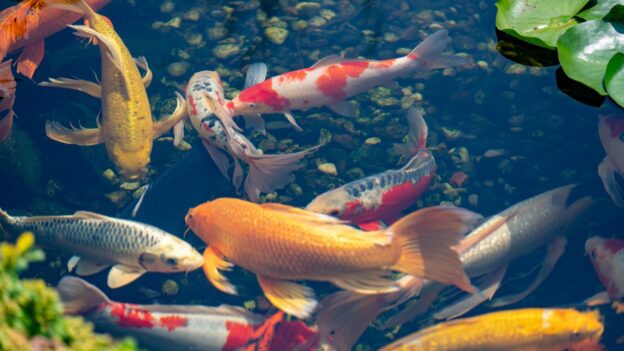
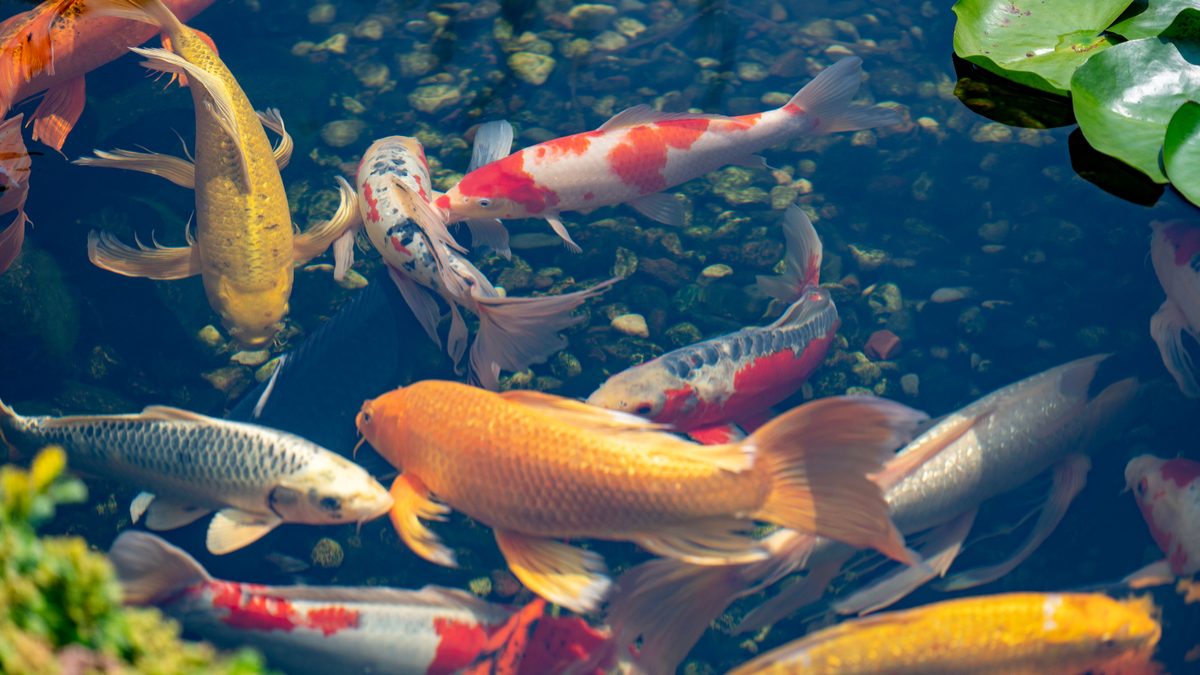
 Water feature design & fundamentals for small Orange County backyards balance aesthetic goals with space constraints and regional climate demands. Suburban lots typically measure 0.25-0.5 acres, requiring careful planning to accommodate proper pond depth and filtration while maintaining usable yard space. Orange County’s Mediterranean climate creates challenges, including 1-2 inches of weekly evaporation and predator management for raccoons and herons.
A successful koi pond design in limited spaces prioritizes depth over surface area for thermal stability and fish protection. A properly constructed small backyard pond measuring 500-1,000 gallons can support healthy koi with adequate mechanical filtration, biological filtration, and consistent aeration. Strategic integration of native aquatic plants, variable-speed pumps, and smart monitoring enables homeowners to create vibrant water ecosystems without overwhelming maintenance demands.
Key Takeaways
- Koi ponds require a 3-4 feet minimum depth, mechanical and biological filtration, and proper aeration systems for fish health
- Small backyard ponds typically cost $3,000-$15,000 mid-range, with 40-80 hours of annual maintenance, compared to simpler fountain options
- Orange County’s warm climate demands robust heat management through shade plants, deeper sections, and enhanced aeration for dissolved oxygen
- Compact pond design starts with site assessment, including drainage, utilities, soil conditions, and proximity to GFCI-protected electrical outlets
- Smart controls, auto-fill systems, and water quality sensors reduce maintenance burden while supporting sustainable operation in drought-prone regions
What Defines a Koi Pond and Its Key Design Features?
A koi pond is a purpose-built aquatic habitat designed to support the specific health requirements of koi fish through controlled water quality and environmental conditions. Essential design elements include minimum depth specifications, dual filtration systems, continuous aeration, and predator protection mechanisms.
The defining characteristic separating koi ponds from other water features is the biological load management system required for fish survival. Koi continuously release ammonia through respiration and waste, which, without proper filtration, quickly becomes toxic. Professional installations integrate mechanical removal of solid debris and biological conversion of dissolved toxins to maintain the zero-ammonia environments koi require.
What Are the Essential Components of a Healthy Koi Pond?
Mechanical filtration physically removes leaves, fish waste, and algae particles before they decompose and degrade water quality. Biological filtration hosts beneficial bacterial colonies that convert toxic ammonia into nitrites, then into less harmful nitrates. Proper systems implement skimmers and bottom drains for mechanical removal, paired with bio-filters or bog filters containing high-surface-area media where bacteria colonize.
Pond depth must reach a minimum of 3- 4 feet to provide thermal stability, protecting fish from temperature extremes and a deep refuge from aerial predators. Adequate aeration through waterfalls, fountains, or dedicated air pumps maintains dissolved oxygen levels critical for koi respiration and beneficial bacteria function.
How Does Climate Influence Koi Pond Design in Orange County?
Koi thrive in water temperatures between 39° and 68° F, making Orange County’s warm summers a significant design consideration. Water features lose 1-2 inches per week through evaporation in warm climates, requiring strategic planning for heat management and water conservation. Deeper pond sections and floating plants provide essential shade and cooler refuge zones where fish escape surface temperature peaks.
Optimal site selection provides partial sun exposure for 4-6 hours daily while avoiding heavy tree debris that clogs filtration. Strategic placement away from full afternoon sun reduces thermal stress and algae growth. Auto-fill systems maintain consistent water levels efficiently, addressing evaporation losses and Orange County’s permanent drought regulations requiring recirculated water use.
What Are Predator Management Strategies for Residential Ponds?
Raccoons, herons, and other urban wildlife are common predators throughout Orange County, targeting koi ponds. Effective protection requires multi-layered approaches, including stainless steel mesh installed under liners during construction to prevent burrowing access.
Motion-activated sprinklers provide humane deterrence by startling approaching predators. Fish caves and deeper pond sections offer safe refuge where koi retreat when threatened. Combined strategies significantly reduce predation risk, though complete elimination requires vigilant monitoring and seasonal adjustment.
How Do Koi Ponds Compare to Other Small Backyard Water Features?
Koi ponds represent specialized, high-investment water features requiring 40-80 hours of annual maintenance compared to simpler fountain alternatives. Self-contained fountains operate on closed-loop systems needing only 4-8 hours yearly upkeep, while pondless waterfalls eliminate standing water and fish-related care entirely. Market composition reflects these differences, with self-contained fountains capturing 45% market share versus koi ponds at 6-8%.
Budget ranges vary dramatically from $200-$800 mid-range fountain installations to $3,000-$15,000 mid-range koi pond systems requiring professional excavation and equipment. Property value enhancement also differs significantly, with koi ponds providing 5-10% increases in premium markets.
| Water Feature Type | Annual Maintenance | Mid-Range Install Cost | Market Share |
|---|---|---|---|
| Koi pond | 40-80 hours | $3,000-$15,000 | 6-8% |
| Pondless waterfall | Minimal (no standing water) | $10,000-$25,000 | ~15% |
| Self-contained fountain | 4-8 hours | $200-$800 | 45% |
What Are the Differences Between Koi Ponds and Pondless Waterfalls?
Pondless waterfalls create aesthetic and auditory benefits of flowing water without requiring traditional pond basins or standing water maintenance. These systems recirculate water through underground reservoirs, eliminating drowning risks and mosquito breeding sites. Mechanical design uses pumps typically rated 1,000-5,000 GPH to move water upward through rock cascades.
The fundamental limitation is that pondless waterfalls cannot support koi or substantial aquatic life due to a lack of deep-water habitat. These features represent approximately 15% of the global water-feature market, appealing to families prioritizing child safety and environmental consciousness.
When Is a Self-Contained Fountain a Better Fit?
Self-contained fountains operate on closed-loop recirculation where water continuously moves through submersible pumps and decorative elements. These compact features capture 45% of the market share due to low entry costs and minimal installation complexity. Basin capacity typically ranges from 20 to 100 gallons, sizing appropriate for tabletop, pedestal, and small courtyard installations.
Annual maintenance requirements of only 4-8 hours make self-contained fountains ideal for homeowners prioritizing ease of care over habitat creation. Starting small with proven fountain designs allows first-time buyers to experience water feature benefits without overwhelming commitments.
How Do Maintenance Needs Vary Among Water Feature Types?
Koi ponds demand 40-80 hours per year for maintaining filtration systems, monitoring water quality, managing seasonal transitions, and supporting fish health. Self-contained fountains require only 4-8 hours yearly for pump cleaning, mineral deposit removal, and water replacement. Planning for maintenance costs at 5-10% of the installation cost annually helps homeowners budget realistically beyond initial construction.
Feature lifespan varies correspondingly, with properly maintained koi ponds lasting 20-30+ years and formal fountains enduring 30-50+ years. Understanding these long-term commitments before installation prevents buyer regret.
What Budget and Space Considerations Affect Koi Pond Planning?
Budget-tier koi ponds starting at $500-$2,000 typically utilize preformed rigid liners and basic filtration suitable for very small installations. Mid-range projects costing $3,000-$15,000 include custom flexible EPDM liner ponds holding 500-1,000 gallons with professional mechanical and biological filtration systems. Premium installations reaching $15,000-$60,000+ feature engineered designs exceeding 2,000 gallons with redundant equipment, sophisticated controls, and extensive hardscape integration.
Orange County’s median property value of $962,600 supports premium water feature investments where 5-10% property value enhancement justifies substantial initial expenditure. Suburban lot sizes typically measuring 0.25-0.5 acres physically constrain maximum feasible pond dimensions. Space allocation must balance pond surface area, equipment concealment, maintenance access, and preserved usable yard space.
What Are Typical Cost Ranges for Small Residential Koi Ponds?
Small backyard pond installations in Orange County typically fall within $3,000-$15,000 mid-range budgets covering excavation, liner, filtration, and basic landscaping. Budget options using preformed rigid liners accommodate 100-500 gallons at $500-$2,000. Premium custom builds utilizing flexible EPDM liners reach $15,000-$60,000+ for systems exceeding 2,000 gallons with architectural integration and automated controls.
Comparative pricing shows self-contained fountains cost only $200-$800 mid-range, while pondless waterfalls range $10,000-$25,000. Installation complexity drives significant cost differences, with excavation, electrical work, and professional labor accounting for 60-70% of total koi pond investment.
| Budget Tier | Price Range | Typical Capacity and Features |
|---|---|---|
| Budget | $500-$2,000 | 100-500 gallons, preformed rigid liner, basic filtration |
| Mid-range | $3,000-$15,000 | 500-1,000 gallons, custom EPDM liner, professional mechanical and biological filtration |
| Premium | $15,000-$60,000+ | 2,000+ gallons, engineered design, redundant equipment, sophisticated controls |
How Does Backyard Size Limit or Enable Pond Features?
Suburban lots typically measuring 0.25-0.5 acres provide adequate space for small backyard pond installations while maintaining functional yard areas. Preformed rigid liners accommodate 100-500 gallons in compact footprints. Flexible EPDM liner installations scale from 500 gallons up to 5,000+ gallons depending on available ground area.
Small backyard and patio installations represent approximately 10% of global water-feature market, reflecting space constraints in urban and suburban residential settings. Koi ponds occupy 6-8% of total water-feature market share partially due to minimum size requirements.
What Role Do Water Conservation Regulations Play in Design?
Water conservation regulations in Orange County restrict outdoor water use through permanent drought measures requiring recirculating systems for decorative features. Recirculating pump systems are mandatory for legal operation.
Water features can lose 0.5-1 inch per week to evaporation during summer months, accelerating to 1-2 inches weekly in consistently warm climates. Drought-tolerant landscaping around pond perimeters reduces total property water demand while complementing water feature aesthetics. Auto-fill systems integrated with smart controls maintain optimal water levels efficiently while documenting consumption for regulatory compliance.
How Do You Plan and Prepare Your Backyard Site for a Koi Pond?
Site preparation begins with a comprehensive evaluation of drainage patterns, ensuring water flows away from house foundations and adjacent properties. Soil assessment identifies clay content that naturally holds water versus rocky conditions, increasing excavation costs. Utility location verification protects against damage to water lines, gas lines, and buried electrical cables during excavation operations.
Professional utility marking services provide accurate underground infrastructure maps, preventing costly repairs. These foundational site factors determine feasibility, cost, and construction timeline.
What Site Factors Impact Pond Location and Size?
Adequate drainage is the primary site factor, with water flowing away from the house and adjacent properties. Soil conditions dramatically affect excavation difficulty and cost, with clay naturally retaining water while rocky terrain requires expensive earth-moving equipment. Utility proximity determines safe excavation zones.
An optimal pond location receives partial sun for 4-6 hours daily, balancing beneficial light for plants against excessive heat and algae promotion. Positioning away from heavy tree debris reduces filtration system clogging. Fountains and water features should minimize direct sunlight and wind exposure, which accelerate evaporation.
How Should Electrical and Water Connections Be Managed Safely?
GFCI-protected outlets prevent electric shock by immediately cutting power when ground faults occur near water features. Site selection must verify proximity to electrical outlets within 50 feet to avoid expensive electrical line extensions. All outdoor electrical connections require GFCI protection meeting National Electrical Code requirements.
Chlorine in municipal tap water is highly toxic to koi and must be removed through chemical treatment before entering ponds. Water supply access enables convenient filling and manual refill operations, though auto-fill systems eliminate manual monitoring. Hiring professionals for electrical and excavation work ensures code compliance and protects against liability.
What Permitting and HOA Considerations Are Typical in Orange County?
Neighbors and HOA requirements often include setback distances from property lines, noise restrictions limiting pump and waterfall operation hours, and architectural review board approval. Site selection must account for these regulatory constraints before finalizing design specifications.
Orange County municipalities may require building permits for ponds exceeding certain volumes or depths, with electrical work mandating licensed electrician involvement. Understanding these approval processes allows realistic project scheduling and avoids legal complications.
What Construction Methods and Materials Are Best for Small Koi Ponds?
EPDM liner is a flexible rubber material for custom-built ponds, allowing irregular shapes and varied depths to match site conditions. This construction method dominates installations requiring 500-5,000+ gallon capacity. Flexible liners conform to excavated contours, enabling naturalistic designs with variable-depth zones and integrated shallow plant shelves.
Preformed rigid liners offer simplified installation for small 100- to 500-gallon ponds where standardized shapes fit site requirements. EPDM liner replacement becomes necessary every 15-20 years as the material degrades from UV exposure, while rigid liners often last longer but cannot be reshaped easily.
What Are the Pros and Cons of Preformed vs. Custom Liners?
Preformed rigid koi pond liners accommodate 100-500 gallons in standardized shapes like kidney, oval, and rectangular configurations. These products simplify installation for DIY homeowners. Limited size and shape options restrict design creativity, though simplified construction reduces labor costs and installation time significantly.
Flexible EPDM liner koi ponds scale from 500-5,000+ gallons in completely customizable configurations matching site constraints and aesthetic visions. Professional installation ensures proper underlayment, wrinkle elimination, and secure edge treatments. Liner susceptibility to punctures from sharp rocks or invading tree roots requires careful excavation preparation.
How Is Filtration and Aeration Integrated Into Pond Design?
Mechanical filtration removes physical debris, including leaves, waste, and algae particles, before decomposition releases dissolved pollutants. Proper filtration system selection considers pond volume, fish load, and available maintenance time. Biological filtration utilizes beneficial bacteria colonies converting toxic ammonia and nitrites into less harmful nitrates.
Implementation requires both mechanical components like skimmers and bottom drains, plus biological elements including bio-filters and bog filters. Bog filters support beneficial bacteria and plant growth simultaneously, providing dual water treatment and aesthetic landscaping value. Proper aeration via waterfalls, fountains, or dedicated air pumps ensures dissolved oxygen levels support both fish respiration and aerobic bacteria populations.
What Aquatic Plants and Shelter Features Support Fish Health?
Integrating aquatic plants provides natural filtration through nutrient uptake, shade reducing water temperature, and aesthetic softening of artificial pond edges. Strategic plant selection includes floating varieties providing surface coverage, marginal species along shallow edges, and submerged oxygenators improving dissolved oxygen levels.
Providing shade and shelter with floating plants or deeper pond sections gives koi refuge from predators and temperature extremes. Fish caves constructed from rock or purpose-built structures offer secure hiding spots reducing stress. Protecting against predators with stainless steel mesh under liners prevents burrowing animals from accessing pond bottoms, while motion-activated sprinklers deter surface hunters.
How Can Technology Enhance Koi Pond Care and Sustainability?
Smart controls adoption varies by generation, with Millennials at 89% and Gen X at 75%. Baby Boomers demonstrate 60% adoption rates. IoT-enabled pond monitoring systems track water quality parameters, pump performance, and environmental conditions remotely via smartphone applications.
Investing in smart controls reduces maintenance burden through automated responses to changing conditions. Variable-speed pumps adjust flow rates based on actual oxygen demand rather than operating continuously at maximum capacity. These technologies align with Orange County recommendations prioritizing water efficiency and sustainable operation.
What Smart Controls and Monitoring Systems Are Available?
Smart product adoption among Millennials reaches 89%, exceeding Gen X at 75% and Baby Boomers at 60%. These preferences drive development of IoT-enabled pond monitoring systems providing remote water quality tracking and automated equipment control. Available systems range from basic automatic feeders and lighting timers to comprehensive platforms monitoring pH, temperature, dissolved oxygen, and pump performance simultaneously.
Orange County homeowners benefit from smart controls managing heat stress and water levels during extended warm periods. Ion Gen water clarity systems provide electronic algae control reducing chemical treatment requirements and supporting eco-friendly pond operation. Integration with home automation platforms enables scheduling, remote monitoring, and automated responses optimizing pond health.
How Do Auto-Fill and Water Quality Sensors Improve Maintenance?
Installing automatic water supply for larger fountains or hot climates maintains consistent water levels despite evaporation losses. Auto-fill systems use float valves or electronic sensors activating water supply when levels drop below predetermined thresholds. Regular monitoring of water quality parameters including pH, ammonia, nitrite, and nitrate levels identifies developing problems before fish health deteriorates.
Ammonia and nitrite must be maintained at zero or near-zero levels in koi ponds to prevent acute toxicity. The optimal pH range for koi falls between 7.0 and 7.8, with automated dosing systems maintaining stable chemistry. Monitoring water quality from day one establishes baseline parameters and trains homeowners in recognizing normal conditions versus problems requiring intervention.
What Sustainable Materials and Water-Saving Features Are Recommended?
Prioritizing water efficiency through recirculating systems, auto-fill controls, and evaporation-reducing covers addresses Orange County’s permanent drought regulations. Strategic feature sizing balances aesthetic goals against practical water consumption limitations. Drought-tolerant landscaping around pond perimeters reduces total property irrigation demands while providing naturalistic visual integration.
Variable-speed pumps in East Bay, California, small backyard koi pond installations demonstrate a 3-4 feet depth design with enhanced efficiency. These systems adjust flow rates based on actual aeration needs rather than operating continuously at maximum capacity. Sustainable material selection, including recycled composite liners and reclaimed stone, reduces environmental impact while maintaining structural performance.
What Are Common Maintenance Practices and Challenges for Koi Ponds?
Regular water quality monitoring tests pH, ammonia, nitrite, and nitrate levels, identifying developing problems before fish health declines. Optimal pH range between 7.0 and 7.8 supports both fish health and beneficial bacteria populations. Ammonia and nitrite concentrations must remain at zero or near-zero levels, with any detectable amounts indicating filtration system inadequacy requiring immediate corrective action.
Periodic equipment checks clean pumps, inspect for mineral deposits, and identify leaks before minor problems escalate. Monitoring water quality from day one establishes baseline normal parameters, enabling recognition of abnormal readings signaling equipment failure or biological imbalance.
How Often Should Water Quality and Equipment Be Checked?
Monitoring water quality regularly through pH, ammonia, nitrite, and nitrate testing identifies problems early. Optimal pH range for koi between 7.0 and 7.8 requires testing weekly during initial pond establishment and monthly once stable parameters develop. Ammonia and nitrite must be maintained at zero or near-zero levels, demanding immediate attention when test readings show any detectable concentrations.
Periodic pump cleaning, mineral deposit inspection, and leak detection prevent equipment failures during peak summer months. Recommended practice establishes weekly visual inspections and monthly detailed equipment checks, including filter media cleaning and replacement.
What Are Best Practices for Seasonal Care in a Warm Climate?
Planning for heat management addresses Orange County’s extended warm periods where water temperatures can exceed koi’s optimal range of 39° to 68° F. Water features lose 1-2 inches per week in warm climates through evaporation, requiring consistent monitoring and replacement. Enhanced aeration through waterfalls, fountains, or dedicated air pumps maintains dissolved oxygen levels that decline as water temperature rises.
Providing shade and shelter with floating plants or deeper pond sections gives koi refuge from afternoon temperature peaks. Strategic plant selection includes heat-tolerant varieties maintaining coverage through summer. Monthly maintenance costs in Orange County reflect increased summer attention demands.
How Can Homeowners Manage Predator Risks Effectively?
Raccoons, herons, and other urban wildlife are common predators in Orange County, requiring vigilant protection strategies. Multi-layered defense approaches prove most effective, combining physical barriers, electronic deterrents, and environmental modifications. Stainless steel mesh under liners during construction prevents burrowing animals from accessing pond bottoms.
Motion-activated sprinklers provide humane deterrence, startling approaching predators without causing harm. Fish caves and deeper pond sections offer safe refuge where koi retreat when aerial predators like herons patrol overhead. Vulnerability to predators represents a significant koi pond disadvantage requiring ongoing vigilance and potential investment in multiple protection systems.
Design Strategies for Compact Orange County Koi Ponds
A successful OC koi pond design in limited spaces prioritizes vertical depth over horizontal surface area to maximize water volume. Small backyard pond installations measuring 500-1,000 gallons provide adequate koi habitat when the proper depth reaches 3-4 feet minimum. This vertical emphasis delivers thermal stability and predator protection within compact footprints suitable for typical 0.25-0.5 acre suburban lots.
Compact pond design integrates multi-functional features where waterfalls provide both aesthetic appeal and essential aeration for dissolved oxygen maintenance. Strategic placement near property corners or alongside yards maximizes usable central lawn area. Natural rock integration and native plant selection soften artificial edges, creating visually larger perceived spaces through careful proportional scaling.
Equipment concealment remains critical in small spaces where exposed pumps and filters detract from aesthetic goals. Underground vault installations, decorative rock arrangements, and strategic plantings hide mechanical components while maintaining service access. Variable-speed pumps reduce noise levels in close-proximity installations where sound carries directly to outdoor living spaces.
Smart technology adoption enables remote monitoring and automated control, reducing maintenance time demands. Auto-fill systems and water quality sensors provide early warning of developing problems before visual symptoms appear. These integrated technologies support successful long-term koi keeping in compact spaces where margin for error remains minimal compared to larger installations.
Orange County’s specific climate conditions require design adaptations addressing extended warm seasons and permanent drought regulations. Enhanced biological filtration using oversized bog filters processes higher waste loads generated by increased fish metabolism in warmer water. Strategic shade provision through floating plants, pergola structures, or strategically positioned trees reduces thermal stress without completely eliminating beneficial sunlight.
Water conservation features including recirculating systems and evaporation-reducing covers align installations with regional sustainability values and regulatory requirements. Professional design consultation optimizes available space, addresses site-specific challenges, and prevents costly mistakes common in DIY attempts. Comprehensive planning before construction ensures realistic expectations, appropriate budgeting, and achievable maintenance commitments supporting long-term success.
Community resources including local koi clubs and specialized retailers provide ongoing support, seasonal care guidance, and problem-solving assistance. Building relationships with regional professionals establishes reliable maintenance support and emergency response capabilities when problems exceed homeowner expertise.
Successful compact koi pond installations demonstrate that limited space need not prevent creating vibrant aquatic ecosystems. Proper design focusing on essential biological requirements rather than maximum size produces healthy, sustainable environments. Balanced expectations regarding fish quantity, maintenance commitments, and realistic budgeting ensure long-term satisfaction.
Transform Your Backyard With Expert Pond Solutions
Your vision of a thriving koi pond deserves professional expertise built on over 25 years of hands-on experience. Orange County Pond Services has served Southern California since 2001, specializing in compact pond design maximized for limited spaces. Our approach prioritizes your long-term success through proper biological design, sustainable operation, and realistic maintenance planning aligned with your available time.
We understand the overwhelming complexity homeowners face navigating equipment options, filtration requirements, and water quality management. Our team explains the “why” behind every recommendation, empowering you with knowledge supporting confident decision-making. Whether you’re planning your first pond or upgrading an existing system, we provide honest assessment of what’s truly needed versus unnecessary expensive additions.
Our one-year warranty on building materials and labor protects your investment from installation defects and equipment failures. We’ve saved countless ponds other companies recommended for complete replacement, demonstrating our repair-first philosophy saves thousands. Call (949) 653-2305 or contact Orange County Pond Services for a free quote through our online request form and start planning your backyard transformation.
Frequently Asked Questions
What is the minimum size for a healthy koi pond in a small backyard?
A minimum 500-gallon pond with 3-4 feet depth can support small koi populations when equipped with proper mechanical and biological filtration plus adequate aeration. Smaller preformed 100- to 500-gallon ponds accommodate goldfish or limited juvenile koi temporarily but cannot sustain adult fish long-term. Water volume directly impacts temperature stability and biological filtration capacity, making depth more critical than surface area in confined spaces.
How much does a small koi pond cost to install in Orange County?
Mid-range small koi pond installations in Orange County typically cost $3,000-$15,000, including excavation, EPDM liner, filtration systems, pumps, and basic landscaping integration. Budget preformed liner systems start around $500-$2,000 for DIY installations, while premium custom builds with automated controls exceed $15,000-$60,000 depending on size and complexity. Professional labor, electrical work, and excavation represent 60-70% of total costs.
Can I keep koi in a pond without a filtration system?
Koi cannot survive long-term in ponds lacking both mechanical and biological filtration systems to manage waste accumulation. Without filtration, toxic ammonia from fish waste quickly reaches lethal concentrations, causing acute poisoning or chronic stress leading to disease. Even small koi populations require adequate filtration capacity matched to fish biomass, feeding rates, and water volume supporting healthy biological nitrogen cycle processes.
What are the biggest challenges to maintaining a koi pond in Orange County?
Heat management during extended warm periods represents the primary challenge as water temperatures exceeding 68° F stress koi and reduce dissolved oxygen levels. Predator protection from urban wildlife, including raccoons and herons, requires multi-layered defense strategies combining physical barriers and electronic deterrents. Water conservation in compliance with drought regulations demands efficient recirculating systems and evaporation-reducing practices while maintaining adequate water quality for fish health.
How often should I test water quality in a new koi pond?
New pond installations require daily water quality testing during the first 4-6 weeks while beneficial bacteria colonies establish biological filtration capacity. Test pH, ammonia, nitrite, and nitrate levels using reliable liquid test kits providing accurate numerical readings rather than imprecise strip tests. Once stable parameters develop with zero ammonia and nitrite readings, reduce testing frequency to weekly for the first year and monthly thereafter during normal operation.
