Key Takeaways
- Fountains must be placed 3-6 feet from home foundations to prevent water damage and soil erosion
- Metal fountains last 20+ years while fiberglass/resin models average 3-7 years lifespan
- GFCI outlets are required within 15 feet of all outdoor fountain electrical connections
- Professional installation costs $1,200-$8,000+ while DIY materials alone cost $300-$2,500
- Surface preparation using concrete or packed gravel prevents settling and structural failure
An outdoor fountain in proximity to your home requires careful planning to avoid costly structural damage. Placement decisions must balance visual appeal with foundation protection, water runoff management, and electrical safety requirements.
Understanding fountain safety distance standards ensures your water feature enhances property value without compromising structural integrity. Proper spacing prevents moisture accumulation near foundations while maintaining convenient access for maintenance and pump replacement needs.
What Are the Types and Materials of Fountains?
Garden fountains dominate the residential market with 28% market share among all fountain categories. Wall-mounted fountains capture 22% market share, followed by tabletop fountains at 18%, pond fountains at 15%, and solar fountains at 10%.
Material selection directly impacts fountain longevity, maintenance requirements, and installation complexity near residential structures. Stone and metal fountains command premium prices but offer superior durability, while fiberglass and resin models provide affordable options for budget-conscious homeowners.
Which Fountain Types Are Common Near Homes?
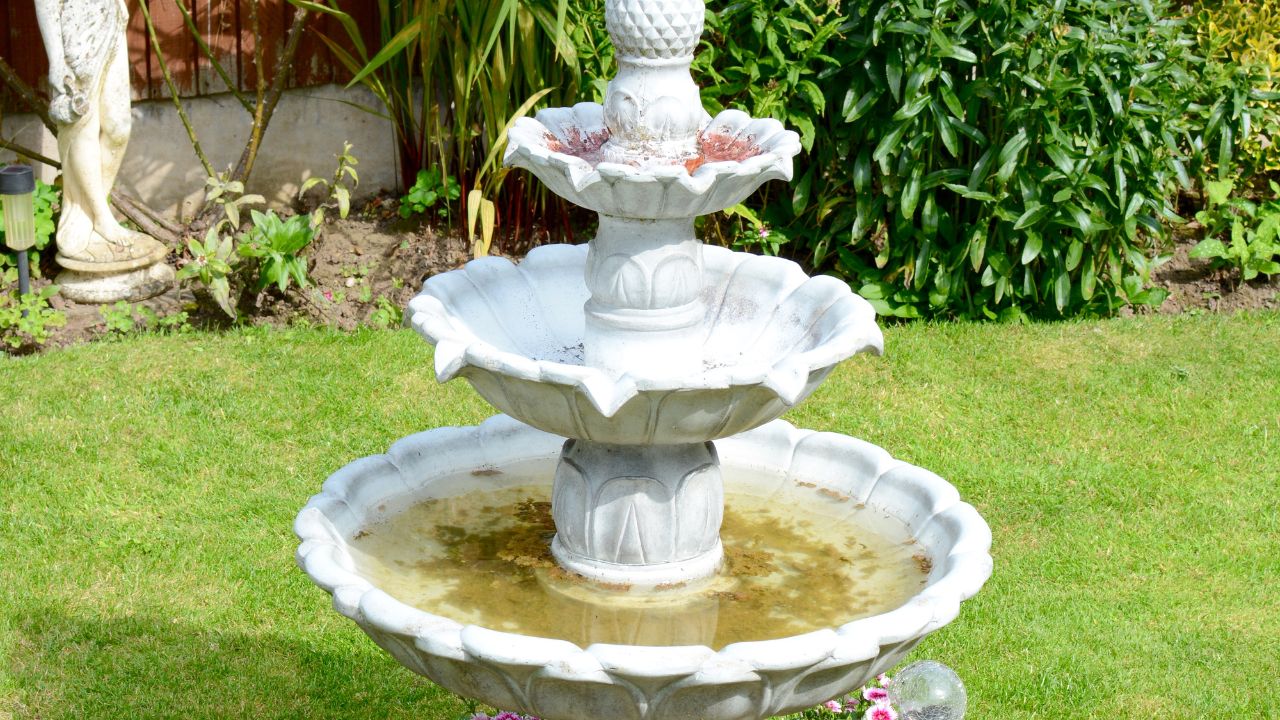
Garden fountains lead residential installations due to their versatile placement options and traditional aesthetic appeal. These freestanding units range from small tiered designs to large statement pieces suitable for expansive yards.
Wall-mounted fountains work well in space-constrained areas like patios and courtyards where fountain placement near home structures requires compact designs. Tabletop fountains serve apartments and small outdoor spaces, while pond fountains integrate with existing water features.
What Are the Key Fountain Materials and Their Traits?
Cast stone combines crushed stone, cement, and sand into molded forms that mimic natural stone appearance. Glass Fiber Reinforced Concrete incorporates glass fibers for added tensile strength, reducing weight while maintaining structural integrity.
Corten steel develops a protective rust patina that stabilizes over time without requiring additional surface treatments. Copper ages naturally to a distinctive green verdigris, while natural stone is carved from solid granite or marble blocks.
How Do Fountain Materials Affect Durability?
Metal fountains deliver the longest service life at 20+ years when properly maintained. Concrete fountains typically last 10-20 years, depending on climate conditions and weatherproofing treatments.
Fiberglass and resin fountains average just 3-7 years before requiring replacement due to UV degradation. Stone fountains remain susceptible to freeze-thaw damage without proper winterization, while fiberglass models fade noticeably under continuous sun exposure.
Why Is Proper Fountain Placement Important?
Correct fountain installation guidelines protect home foundations from water damage and prevent costly structural repairs. Poor placement can lead to basement flooding, foundation cracks, and soil erosion that undermines building stability.
Proper positioning also ensures electrical safety and simplifies ongoing maintenance access. Strategic placement away from trees reduces debris accumulation while maintaining aesthetic integration with existing landscape features.
What Risks Arise from Installing a Fountain Too Close to a House?
Water splashing and minor leaks accumulate near foundations when fountains sit too close to residential structures. This moisture causes soil erosion, basement seepage, and potential foundation settlement, requiring expensive remediation.
Inadequate clearance also complicates maintenance access for pump replacement and winterization procedures. Poor placement increases the risk of electrical hazards when extension cords run across walkways or through vulnerable areas.
How Does Water Runoff Impact Home Foundations?
Continuous moisture exposure softens soil adjacent to foundations, creating voids that compromise structural support. Water infiltration through foundation walls causes basement flooding, mold growth, and interior damage requiring extensive repairs.
Proper grading directs fountain overflow at least 6-10 feet away from residential structures. Ground slope should maintain a minimum 2% grade moving water away from foundations toward drainage areas.
What Are Electrical Safety Considerations for Fountain Placement?
All fountain electrical connections must utilize GFCI outlets to prevent electrocution hazards in wet conditions. GFCI stands for Ground-Fault Circuit Interrupter, a device that cuts power instantly when detecting current leakage.
Fountains should be placed within 15 feet of GFCI outlets to eliminate dangerous extension cord use. Outdoor-rated electrical boxes and weatherproof covers protect connections from moisture infiltration and environmental damage.
How Close Should a Fountain Be Placed to a House Foundation?
Fountains must be placed a minimum of 3-6 feet away from home foundations to prevent water damage. This clearance provides adequate protection against splashing while allowing space for maintenance access and equipment servicing.
Larger fountains with substantial water volume or high spray patterns require greater distances. Site-specific factors, including soil type, existing drainage patterns, and foundation materials, influence optimal spacing requirements.
What Are Recommended Minimum Distances from Foundations?
The 3-6 foot minimum clearance applies to standard residential fountain installations without excessive splashing. High-volume pond fountains or cascading features should maintain 8-10 feet of separation from foundation walls.
Choosing durable materials for your outdoor fountain influences placement decisions since heavier stone units require stable substrates farther from structures. Permeable paving or gravel beds help manage runoff within required setback zones.
How Does Splashing or Overflow Influence Placement?
Wind-driven spray carries water well beyond fountain basins during storms and high-wind conditions. Splash zones extend 2-4 feet from basin edges, depending on fountain height and water pressure settings.
Overflow events during heavy rain or pump malfunctions distribute water across larger areas. Installing catch basins or French drains within splash zones protects foundations while maintaining proper aesthetic placement.
What Clearance Is Suggested Near Trees and Landscaping?
Fountains should be placed 10-15 feet away from large trees to minimize leaf and debris accumulation. Falling leaves clog pumps, discolor water, and increase maintenance frequency throughout growing seasons.
Tree roots also interfere with fountain stability and underground plumbing connections. Adequate spacing prevents root damage to water lines while allowing trees to mature without disturbing fountain structures.
What Installation Factors Affect Fountain Safety and Longevity?
Professional installation costs $1,200-$8,000+ including labor and materials, versus DIY installation at $300-$2,500, materials only. Labor rates typically range $50-$150 per hour, depending on project complexity and regional market conditions.
Surface preparation and leveling determine fountain stability and prevent premature structural failure. Proper electrical connections, pump accessibility, and drainage integration require technical expertise that fountain installation guidelines address comprehensively.
When Should You Choose Professional vs. DIY Installation?
DIY installation suits lightweight fiberglass or resin fountains under 100 pounds with simple electrical requirements. Self-installation carries risks, including improper leveling, electrical hazards, and potentially voiding manufacturer warranties on equipment.
Professional installation becomes essential for stone or concrete fountains exceeding 200 pounds, requiring foundation work. Licensed contractors ensure code compliance, proper GFCI protection, and structural stability, preventing costly repairs after installation.
How Does Surface Preparation Influence Fountain Stability?
Installing directly on grass or loose soil leads to settling, leaning, and potential structural failure. Unstable substrates allow fountains to tilt as soil compresses unevenly under the weight and water saturation.
Fountains must be installed on level surfaces of poured concrete or packed gravel, providing stable support. Concrete pads should extend 6 inches beyond fountain bases with a 4-inch minimum thickness, preventing cracking under load.
What Role Does Pump Accessibility Play in Maintenance?
Most submersible pumps have average lifespans of 3-7 years, requiring periodic replacement for continued fountain operation. Designs incorporating removable basin covers or access panels simplify pump servicing without dismantling entire fountain structures.
Easy fountain installation includes planning pump access during initial setup phases to avoid future complications. Inaccessible pumps force complete fountain disassembly, dramatically increasing maintenance costs and system downtime.
How Do Regional and Demographic Preferences Influence Fountain Placement?
Urban fountains favor compact wall-mounted and tabletop designs fitting limited outdoor spaces in city environments. Suburban properties accommodate larger garden fountains and pond features with adequate spacing from residential structures.
Generational preferences impact material selection, with Baby Boomers preferring traditional stone while Millennials choose modern metal designs. Regional climate factors determine winterization requirements and material suitability for freeze-thaw cycles.
How Does Urban Vs. Suburban Location Affect Fountain Choices?
Space constraints in urban settings drive demand for wall-mounted fountains and small ceramic tabletop models. These compact options provide water feature benefits without consuming valuable patio or balcony square footage.
Suburban homeowners invest in larger garden fountains, pondless waterfalls, and integrated landscape features utilizing expanded lot sizes. Greater distances from neighboring properties allow flexibility in fountain placement without noise concerns.
What Materials and Types Do Different Generations Prefer?
Baby Boomers age 60+ favor traditional stone and cast stone fountains, emphasizing classic aesthetics and permanence. This demographic prioritizes durability and professional installation over cost savings from DIY approaches.
Millennials aged 28-43 prefer modern metal and fiberglass fountains with minimalist designs and eco-friendly solar options. Younger buyers emphasize affordability, ease of installation, and flexibility for future relocation or design changes.
How Do Regional Climate Factors Impact Placement Guidelines?
Freeze-thaw cycles in northern climates require winterization procedures or indoor fountain storage, protecting materials from cracking. Stone fountains prove particularly vulnerable without proper drainage and protective covering during freezing periods.
Southern California and similar mild climates allow year-round fountain operation without extensive winterization requirements. Hot, arid regions require shade consideration, preventing excessive water evaporation and algae growth from intense sun exposure.
What Are Cost Considerations Related to Fountain Installation Near a Home?
Proximity to existing electrical outlets reduces installation costs by eliminating expensive trenching for new service lines. Fountains requiring custom electrical work add $500-$1,500 to total project expenses, depending on distance and complexity.
Foundation preparation and grading near homes increases costs compared to open yard installations. Outdoor fountain installation near structures requires careful excavation, avoiding utility lines and maintaining proper drainage slopes.
How Does Installation Proximity Affect Overall Costs?
Installing fountains near foundations requires additional excavation care to avoid damaging underground utilities and drainage systems. Proximity work increases labor hours by 25-40% compared to open-area installations without structural concerns.
Concrete pad preparation near existing structures demands precise leveling and drainage integration, preventing water flow toward foundations. Professional contractors charge premium rates for foundation-adjacent work requiring specialized equipment and insurance coverage.
What Are Typical Price Ranges for Various Fountain Types?
Budget pre-made fountains cost $100-$200, averaging $150, while budget DIY kits range $300-$2,500 averaging $1,400. Mid-range fountains cost $300-$1,000, averaging $650, and premium models range $1,000-$3,000 averaging $2,000.
Ultra-premium custom fountains cost $3,000-$12,000+, averaging $7,500 for large stone or metal installations. Stone fountains range $500-$3,000+ while fiberglass/resin models cost $100-$800, metal fountains $800-$5,000+, and ceramic fountains $200-$1,500.
How Do Maintenance Needs Influence Long-Term Expenses?
Annual maintenance costs vary by material, with stone requiring periodic sealing at $150-$300 per treatment. Metal fountains need minimal care beyond pump replacement, while resin models require UV protectant applications to prevent fading.
Pond fountain maintenance includes pump servicing, water treatment, and debris removal, averaging $200-$500 annually for professional service contracts. DIY maintenance reduces costs but demands consistent time investment throughout operating seasons.
Which Safety Practices Ensure a Fountain Does Not Damage Your Property?
Foundation protection requires maintaining a minimum 3-6 foot clearances and installing proper drainage to prevent water accumulation. Regular inspection identifies leaks early before moisture damage compromises soil stability around residential structures.
Electrical safety demands GFCI protection on all outdoor fountain circuits, preventing electrocution hazards. Backyard pond safety guidelines extend to fountain installations requiring proper lighting, secure electrical connections, and child-safe basin designs.
How to Prevent Foundation Erosion and Water Intrusion?
Installing French drains or catch basins within fountain splash zones redirects water away from foundations. Permeable landscaping materials surrounding fountains allow water absorption while preventing surface pooling near structural elements.
Regular inspection of grading ensures water continues flowing away from foundations as soil settles over time. Applying waterproof sealants to foundation walls near fountains provides additional moisture protection during overflow events.
What Electrical Protections Are Required for Outdoor Fountains?
All electrical connections must utilize GFCI outlets, cutting power instantly when detecting current leakage to ground. GFCI devices prevent electrocution by interrupting circuits within milliseconds of fault detection in wet outdoor environments.
Outdoor-rated electrical boxes with weatherproof covers protect connections from moisture and environmental exposure. Underground conduit running electrical service to fountain locations requires a burial depth of 18-24 inches, meeting local electrical codes.
How to Manage Debris and Drainage Around the Fountain?
Installing mesh screens over fountain basins prevents leaves and debris from entering pump chambers, causing clogs. Regular cleaning removes accumulated organic matter before decomposition affects water quality and pump performance.
Positioning fountains away from trees reduces maintenance frequency while improving water clarity throughout operating seasons. Strategic landscaping using ground covers and decorative rocks around fountain bases improves drainage while enhancing visual appeal.
Ensuring Safe and Effective Fountain Placement Near Your Home
Proper outdoor fountain proximity balances aesthetic goals with practical safety requirements, protecting your property investment. Following minimum clearance standards, installing appropriate electrical protections, and preparing stable surfaces prevent common installation problems.
Material selection based on climate conditions and maintenance capabilities ensures fountains deliver years of reliable operation. Permit requirements for water features vary by jurisdiction, making professional consultation valuable for complex installations near structures.
Orange County Pond Services brings over two decades of experience helping Southern California homeowners create beautiful water features while protecting property integrity. Our specialists understand local soil conditions, drainage requirements, and installation best practices ensuring fountains enhance outdoor spaces without causing structural concerns.
Ready to Place Your Fountain the Right Way? Let Orange County Pond Services Help.
Getting the placement right matters more than most homeowners realize. The wrong distance from your foundation can lead to soil erosion, water damage, and costly repairs down the line. Orange County Pond Services has helped Southern California homeowners design and install fountains safely since 2001. Our team knows your local soil conditions, drainage patterns, and electrical code requirements — so your fountain looks beautiful and protects your property at the same time.
Whether you need expert guidance on fountain placement, professional installation services, or ongoing maintenance support, our team provides honest assessments and cost-effective solutions. Contact Orange County Pond Services to discuss your fountain project and receive a comprehensive evaluation tailored to your property’s specific needs.
