 Most fountain buyers lead with aesthetics and regret it later. Orange County’s median home value of $962,600, homeownership rate of 56.4%, and median household income of $116,289 create a market where wrong choices are expensive.
A fountain represents a long-term investment in property value and daily enjoyment. This outdoor fountain buying guide covers seven questions: type, style, scale, materials, maintenance, budget, and local rules. The global fountain market reached $3.8 billion in 2025, with residential use accounting for 84% of demand.
Key Takeaways
- Match fountain type to your property size—rock garden and tiered fountains suit larger suburban yards, while wall fountains work best in compact urban spaces
- Align fountain style with your home’s design language before selecting a model; mismatched aesthetics undermine property value
- Consider long-term landscape maturity, not just current conditions, when evaluating scale and placement
- Select materials based on Orange County’s sun exposure and water quality challenges; granite and cast stone outperform resin under sustained UV
- Plan realistic maintenance schedules before purchase, including weekly water checks during warm months and quarterly pump inspections
Question 1: What Type of Fountain Is Right for My Property?
Rock Garden Vs. Tiered Fountains
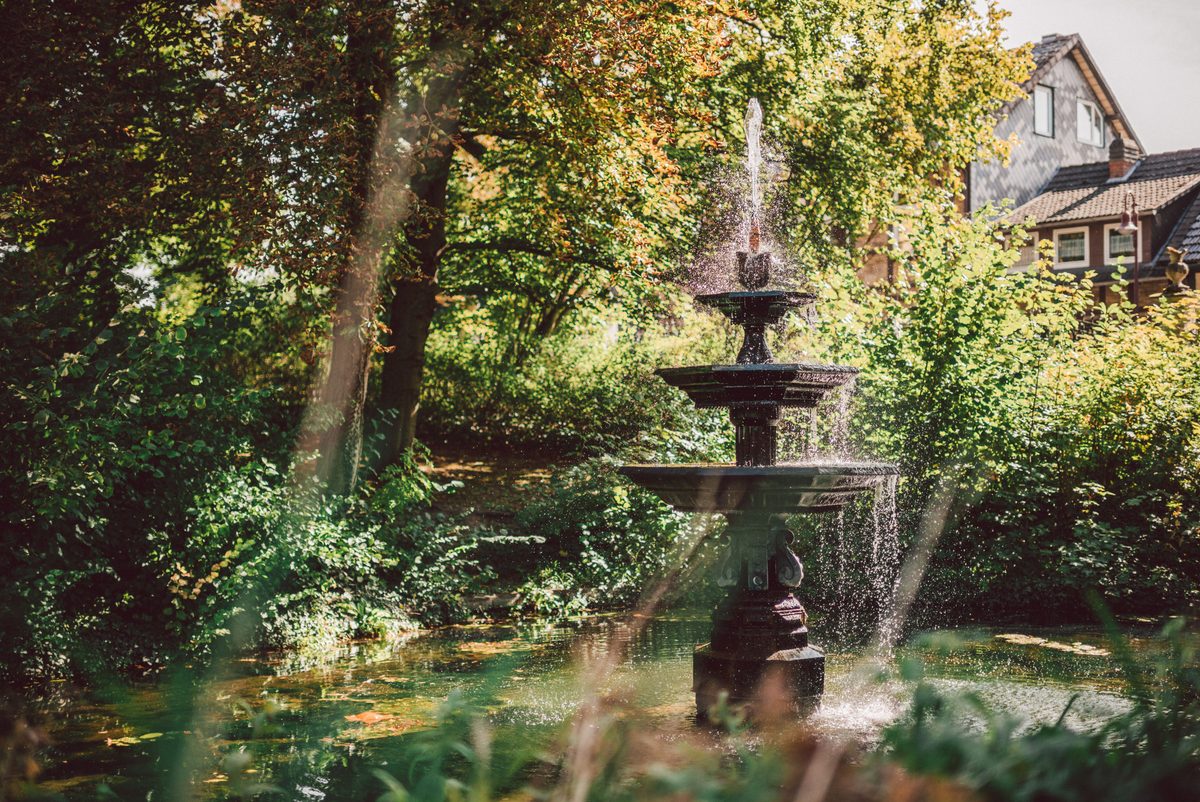
Rock garden fountains use natural stone, basalt, slate, or resin-rock composites with plant integration and wildlife appeal. Tiered fountains feature cast stone, concrete, fiberglass, or resin in formal multi-level cascades as symmetrical garden centerpieces. Price ranges span $300–$3,500 for rock garden models versus $206–$5,749+ for tiered designs.
Wall and Solar-Powered Fountains
Wall fountains create vertical water sheets with low footprints and 3–8 gallon basins, making them ideal for patios. Solar fountains incorporate solar panels or batteries with lightweight materials, offering an eco-friendly entry point for casual buyers. Wall models range from $1,579–$5,860, while solar options cost $99–$400.
Custom Fountain Designs
Custom fountains use granite, marble, cast stone, or mixed media with bespoke design. They work best for high-value properties where off-the-shelf options won’t match the landscape vision. Price ranges extend from $4,600 to $15,000 or more.
Question 2: Does This Fountain Style Match My Home and Landscape?
Identify Your Home’s Design Language First
Traditional style represents 24% of outdoor-renovation homeowners, transitional accounts for 15%, contemporary reaches 10%, modern captures 9%, and naturalized or native styles also reach 10%. Match the fountain category to your home’s design language before choosing a specific model. The garden fountains in Orange County market reflect this diversity with options spanning all major design categories.
How Customization Improves Integration
Customization options allow fountains to complement existing hardscape, planting beds, and architectural details. Well-landscaped homes show a 5.5%–11.4% perceived value increase, and the fountain either reinforces or undermines that benefit. Proper style matching ensures the fountain strengthens rather than weakens overall design cohesion.
Regional and Space Considerations
Southern California’s naturalized and contemporary design languages favor rock garden and clean-line wall fountains. Formal tiered fountains work best in symmetrical, manicured settings; mismatched styles read as an afterthought. Regional design preferences directly influence which fountain types integrate successfully into Orange County landscapes.
Question 3: Will This Fountain Fit My Space – Now and as the Landscape Matures?
Scale Considerations by Lot Type
Freestanding fountains include both rock garden and tiered options as subcategories, but large rocks overwhelm small yards. The wrong scale becomes obvious in smaller suburban lots where space constraints limit design flexibility. Suburban yards with larger dimensions suit tiered or rock garden fountains, while urban or smaller lots favor wall fountains and compact basins.
How to Evaluate Fit Before Buying
Mock up the footprint with stakes or a garden hose before purchasing any fountain. Check sightlines from key interior windows and primary outdoor seating areas to ensure visual balance. For rock fountains, plan for irregular groupings, varied sizes, and partially buried edges that create natural integration.
Landscape Maturity and Long-Term Fit
Landscapes evolve as trees grow, shrubs spread, and foot traffic patterns shift over time. Consider what the space will look like in 5–10 years, not just at installation. Gen X (41%), Millennials (38%), and Boomers (28%) all plan plant upgrades that will change the fountain’s visual context.
Installation and Power Requirements
Confirm power and operation requirements before site selection to avoid costly changes later. Check local code and utility requirements before finalizing placement to ensure compliance with Orange County regulations. Proper planning prevents installation delays and permits seamless fountain operation from day one.
Question 4: What Materials Will Hold Up in My Climate?
Material Performance in Southern California Conditions
Granite, cast stone, and concrete outperform resin in Orange County’s climate for long-term durability. Resin offers a lower cost but degrades faster under sustained UV exposure common in Southern California. Material selection directly determines how well the fountain will maintain its appearance over the years of use.
Durability Vs. Maintenance Trade-offs by Material
Durability ranks as a priority in 71% of product-purchase decisions among outdoor buyers. Higher-durability materials reduce long-term maintenance frequency and cost, offsetting higher initial investment. The relationship between material quality and maintenance burden becomes clear within the first year of ownership.
Sun Exposure and Water Quality Impacts
Excess sun accelerates algae growth, creating a persistent Orange County challenge for fountain owners. Hard water, debris, and exposed pumps shorten service life significantly if not managed properly. Evaporation in warm months can expose pumps and cause burnout—the most common avoidable failure. Wind-driven overspray creates maintenance problems and false leak perceptions that confuse many homeowners.
Question 5: How Much Maintenance Will This Fountain Actually Require?
Recommended Maintenance Schedule
Check the water level weekly in warm months because evaporation is significant in Southern California climates. Clean the basin and remove debris monthly to maintain water clarity and pump function. Inspect the pump quarterly to catch potential problems before they cause failures. Deep clean 2–3 times annually to remove mineral buildup and algae accumulation. Cover or winterize seasonally where needed to protect fountain components from weather damage.
Maintenance Differences by Fountain Type
Wall fountains feature simpler basins with lower debris accumulation compared to open basin designs. Rock garden fountains present more surface area, requiring more extensive debris management efforts. Solar fountains need additional panel maintenance and battery backup monitoring beyond standard pump care.
Realistic Cost and Effort Estimates
Annual electricity cost runs approximately $25 for continuously operating residential fountains. Variable-frequency pump controls can reduce energy use by up to 15% through optimized operation. Among fountain maintenance considerations, 21% of buyers cite “make it easier to maintain” as a top priority, yet many plan maintenance schedules after buying rather than before.
Question 6: What Is My True Total Budget – Purchase Price, Installation, and Ongoing Costs?
Price Ranges by Fountain Category
Solar models range from $99–$400, making them the most affordable entry point. Rock garden options span $300–$3,500, depending on material quality and size. Tiered fountains cost $206–$5,749+, with premium cast stone commanding higher prices. Wall fountains range from $1,579–$5,860 for quality installations. Custom designs start at $4,600 and extend beyond $15,000 for bespoke projects.
The Relationship Between Cost, Quality, and Longevity
Lower upfront cost often means higher long-term maintenance and earlier replacement requirements. Premium materials and pump housing design directly affect service life and total ownership cost. Understanding these trade-offs helps homeowners make informed decisions about initial investment versus ongoing expenses.
Operational Costs to Factor In
Electricity costs remain modest at roughly $25 per year for baseline fountain operation. Periodic professional servicing for the pump, filtration, and algae management adds variable costs over time. Poorly scaled or mismatched installations can erode the property value benefit entirely, turning the fountain into a liability.
Question 7: What Local Regulations and Environmental Factors Apply to My Property?
Orange County Permitting and Water-Use Rules
Permit requirements vary by city within Orange County, so confirm before purchasing any fountain. Water source restrictions and efficiency mandates affect fountain design and operation throughout Southern California. Utility requirements may affect the electrical supply for pump and lighting installations.
Climate-Specific Planning
Southern California sun accelerates algae growth and evaporation, so factor both into fountain and material selection. Wind-driven overspray is a common Orange County problem that affects maintenance load and can create apparent leak issues. These regional factors distinguish pond and fountain repair Orange County services from those in other climates.
How to Avoid Costly Compliance Errors
Work with an experienced local installer familiar with Orange County codes to prevent permit violations. Confirm all utility and permit requirements before ordering any fountain to avoid costly modifications later. Professional guidance helps navigate complex local regulations and ensures compliant installation from the start.
The right fountain starts with the right questions—type, style, scale, materials, maintenance, budget, and local rules. Orange County homes are high-value investments where a well-chosen fountain adds to property value while a poorly chosen one subtracts. Upgrading from average to excellent landscaping adds 10%–12% to home value, and the fountain is part of that equation.
Get Expert Answers Before You Buy Your Fountain
The seven questions in this guide point to one truth: fountain decisions are easier when someone who has answered them hundreds of times walks through them with you. Orange County Pond Services has spent 25 years evaluating Orange County properties, matching fountain types to home design, and helping homeowners avoid the costly mistakes that come from guessing.
Whether you are choosing between a wall fountain and a tiered design, weighing granite against cast stone, or trying to figure out if your city requires a permit, a single consultation can save you thousands and a lot of second-guessing.
Contact Orange County Pond Services to schedule a site evaluation. Our team will walk your property, review your home’s design language, check sun exposure and overspray patterns, and recommend a fountain that fits your space, your budget, and your maintenance comfort level. No upsell pressure. Just straight answers from a team that does this every day.
