 Selecting the right pond maintenance schedule determines both water quality and long-term system costs. Different pond types, fish populations, and environmental conditions require varying intervention frequencies to maintain ecosystem balance. Understanding how monthly and quarterly schedules affect pond health helps owners make informed decisions about professional care.
The choice between maintenance frequencies involves balancing cost effectiveness against preventive care benefits. Regular interventions prevent costly emergency repairs while maintaining clarity and supporting aquatic life. Matching your pond maintenance schedule to specific conditions ensures optimal results without unnecessary expense.
Key Takeaways
- Monthly maintenance prevents severe water quality issues and is preferred by 50% of pond owners
- Quarterly maintenance suits low-maintenance natural ponds and reduces annual service costs
- Professional care is recommended for ponds larger than 150 square feet and koi ponds
- Repair costs exceeding 50% of replacement value typically favor full pond reconstruction
- Pond location, size, and usage patterns significantly influence optimal maintenance frequency
What Is Pond Maintenance and Why Is Scheduling Important?
Pond maintenance is the systematic application of care tasks that preserve water quality and equipment function. Consistent scheduling prevents minor issues from escalating into expensive failures or ecosystem collapse. A well-structured pond maintenance routine addresses biological, mechanical, and chemical factors affecting water features.
Regular timing allows problems to be identified before visible symptoms appear. Scheduled visits enable technicians to track trends in pH, nutrient levels, and equipment performance. This proactive approach reduces emergency calls and extends the lifespan of pumps, filters, and liners.
What Are the Core Tasks in Routine Pond Maintenance?
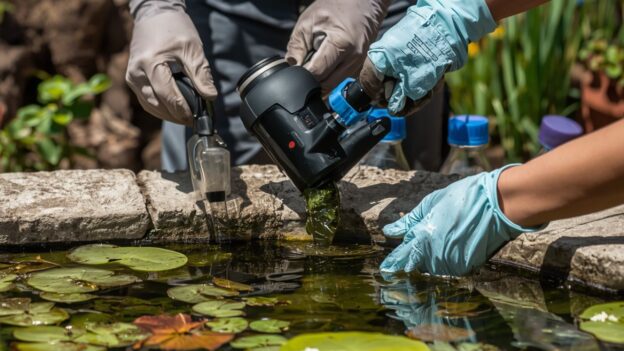
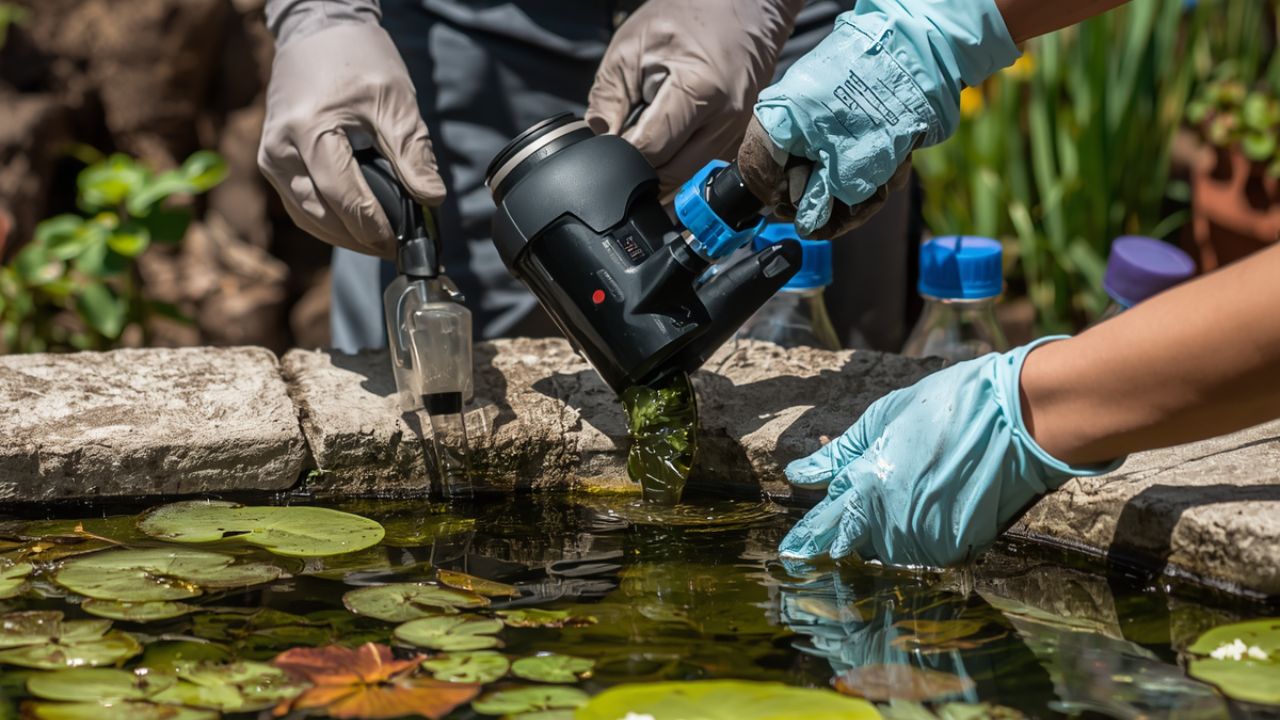
Routine maintenance involves regular interventions to maintain water quality and ecosystem balance. Water quality testing, algae control, debris removal, filter cleaning, and equipment inspection form the foundation of effective pond maintenance. These tasks prevent nutrient accumulation that fuels algae blooms and ensure mechanical systems operate efficiently.
Testing measures dissolved oxygen, ammonia, nitrite, nitrate, and pH to detect imbalances early. Algae control combines manual removal with targeted treatments addressing root causes. Filter cleaning removes accumulated organic matter that reduces circulation and oxygen exchange.
How Do Different Maintenance Frequencies Impact Pond Health?
Monthly pond care provides consistent oversight that catches problems during early development. This frequency prevents sudden algae blooms and maintains stable conditions for fish health. Monthly visits allow technicians to adjust treatments based on seasonal temperature changes and precipitation patterns.
Quarterly pond cleaning offers adequate intervention for natural ponds with minimal fish populations. This reduced frequency suits ponds with established plant communities providing biological filtration. However, quarterly schedules risk missing rapid water quality deterioration during warm months.
What Are Common Challenges Linked to Pond Maintenance Frequency?
Misdiagnosing water quality issues can lead to fish kills or accelerated pond degradation. Inexperienced technicians may treat symptoms rather than identify underlying structural or design problems. Incorrect frequency decisions allow sediment accumulation and nutrient loading to reach critical thresholds.
Applying incorrect treatments can cause ecosystem damage requiring months to reverse. Overuse of algaecides kills beneficial bacteria essential for nitrogen cycle processing. Insufficient maintenance frequency allows equipment wear to progress until catastrophic failure occurs.
How Do Monthly and Quarterly Maintenance Schedules Differ?
Monthly and quarterly schedules differ primarily in intervention frequency and problem prevention capability. Monthly visits provide four times the oversight, enabling faster response to emerging issues. This increased contact allows relationship building between technicians and pond ecosystems.
Quarterly schedules concentrate visits around seasonal transitions when pond chemistry changes most dramatically. Spring and fall visits prepare systems for temperature extremes while summer and winter checks maintain stability. Cost savings from reduced visits must be weighed against the increased risk of undetected problems.
What Are the Benefits of Monthly Maintenance?
Monthly maintenance prevents severe algae blooms by controlling nutrient levels before visible growth appears. This frequency enables gradual adjustments to beneficial bacteria populations and filtration media replacement schedules. Monthly visits build detailed records of water chemistry trends that inform treatment decisions.
Consistent oversight catches equipment failures before pumps seize or filters clog completely. Regular cleaning prevents sediment from compacting at depths requiring expensive hydraulic dredging. Fish health monitoring identifies disease outbreaks early when treatment success rates are highest.
What Are the Advantages of Quarterly Maintenance?
Quarterly maintenance reduces annual service costs while providing seasonal system adjustments. This schedule suits low-maintenance natural ponds where plant communities provide substantial biological filtration. Quarterly visits focus on major seasonal preparations like spring startup and fall winterization.
Property owners who enjoy hands-on involvement can perform weekly monitoring between professional visits. Quarterly professional oversight validates DIY efforts and corrects issues beyond homeowner capability. This hybrid approach balances cost control with expert guidance during critical periods.
Which Pond Types Are Best Suited for Each Schedule?
Professional management is recommended for ponds larger than 150 square feet due to increased complexity. Larger water volumes require sophisticated testing and treatment calculations beyond basic DIY approaches. Professional management is recommended for koi ponds where water quality directly impacts valuable fish health.
Ornamental ponds with minimal fish populations often thrive on quarterly schedules supplemented by owner monitoring. Natural ponds with established ecosystems and low stocking densities require less frequent intervention. Water features with mechanical filtration and high fish density demand monthly professional attention to prevent system overload.
How Do Consumer Preferences Influence Maintenance Frequency Choices?
Consumer preferences reflect individual priorities regarding cost, convenience, and desired involvement levels. Monthly maintenance is preferred by 50% of consumers seeking comprehensive professional oversight and minimal personal involvement. The majority values predictable scheduling and preventive care over reactive problem-solving.
Quarterly maintenance is preferred by 22% of consumers, balancing professional expertise with budget constraints. These owners typically supplement professional visits with personal monitoring and basic pond service maintenance. Weekly maintenance is preferred by 18% of consumers, primarily koi enthusiasts demanding optimal water conditions. As-needed or DIY approaches are preferred by 10% of consumers with smaller features or extensive personal knowledge.
What Factors Drive the Decision Between Monthly and Quarterly Plans?
Cost effectiveness receives a priority rating of 92 out of 100 among decision factors. Pond owners seek maximum value from maintenance investments without compromising water quality or fish health. Convenience and ease of use score 85 out of 100, as busy homeowners prefer hands-off solutions.
Time constraints drive many professionals and retirees toward comprehensive monthly contracts that eliminate personal monitoring. Budget-conscious owners calculate total annual costs, including emergency repairs, when comparing maintenance frequencies. Peace of mind from regular professional visits often outweighs modest cost savings from reduced schedules.
How Do Budget and Convenience Affect Maintenance Scheduling?
Budget considerations determine whether owners select monthly visits at $250-$450 per service or quarterly schedules. Annual maintenance costs ranging from $450 to $5,000 require careful financial planning. Many owners discover that monthly care prevents expensive emergency repairs that offset higher service frequency costs.
Convenience factors include scheduling flexibility, technician reliability, and comprehensive service scope during each visit. Owners value predictable monthly appointments that fit work schedules over sporadic emergency calls. Complete service during each visit eliminates the need for multiple vendor relationships and coordination efforts.
How Does Pond Type or Usage Modify Scheduling Needs?
Koi ponds require monthly or weekly attention due to high fish density and strict water quality demands. These specialized features justify premium maintenance costs through fish health protection and long-term value preservation. Ornamental ponds focused on aesthetic appeal can often thrive with quarterly professional visits.
Swimming ponds demand frequent testing and treatment to meet health safety standards for human contact. Wildlife ponds designed for ecological benefit prioritize natural balance over manicured appearance. Seasonal recreation ponds may require intensive monthly care during use periods and minimal winter oversight.
When Should Pond Repairs or Replacements Be Considered?
Pond repairs or replacements become necessary when equipment fails or structural integrity deteriorates beyond minor patching. Aging infrastructure eventually reaches a point where continued repairs exceed replacement value. Systematic evaluation of repair costs, failure frequency, and long-term performance guides these critical decisions.
Persistent problems despite regular maintenance signal underlying design flaws or material degradation requiring major intervention. Professional assessment compares repair expenses against replacement costs to determine optimal financial strategy. Timing major work during off-seasons minimizes disruption and often secures better contractor availability.
What Criteria Determine Repair Vs. Replacement Decisions?
If the repair cost exceeds 50% of the new installation cost, consumers lean toward replacement. This threshold reflects the marginal value of investing heavily in aging infrastructure with limited remaining lifespan. Three or more significant issues within 12 months typically trigger replacement decisions as cascading failures indicate systemic problems.
Liner age, equipment efficiency, and sediment accumulation combine to create comprehensive condition assessments. Concrete pond surfaces showing extensive cracking or delamination rarely justify repair expenses approaching $20,000. Modern replacement ponds offer improved filtration technology and energy efficiency that reduce ongoing operating costs.
How Does Maintenance Frequency Impact the Need for Repairs?
Consistent monthly maintenance identifies equipment wear before catastrophic failures occur, reducing emergency repair frequency. Regular filter cleaning prevents pump overwork that accelerates motor bearing wear and seal deterioration. Proactive replacement of aging components during scheduled visits costs less than emergency service calls.
Infrequent maintenance allows minor leaks to progress until liner sections require replacement rather than simple patching. Neglected sediment accumulation forces expensive hydraulic dredging instead of routine cleanouts. The cumulative cost of deferred maintenance often exceeds disciplined monthly care by substantial margins.
What Are the Signs That Indicate Major Repairs or Full Replacement?
Persistent, unresolvable water quality issues indicate underlying structural or design flaws requiring comprehensive solutions. Chronic algae blooms despite aggressive treatment suggest inadequate filtration capacity or poor circulation design. If sediment accumulation exceeds 25% of pond depth, hydraulic dredging is necessary to restore oxygen levels.
Replace the liner if the PVC or EPDM liner is over 15-20 years old and exhibiting multiple leaks. Material degradation at this age makes continued patching ineffective as new leaks develop faster than repairs. Equipment requiring replacement parts no longer manufactured signals the need for complete system upgrades.
How Does Pond Size and Location Affect Maintenance Scheduling?
Pond size and location create distinct maintenance requirements based on environmental exposure and system complexity. Larger ponds dilute pollutants more effectively but require proportionally greater effort for thorough cleaning. Geographic location determines temperature ranges, precipitation patterns, and seasonal workload distribution.
Urban ponds face increased contamination from runoff and atmospheric pollutants, requiring more frequent intervention. Rural settings provide cleaner water sources but may introduce agricultural chemicals or wildlife impacts. Matching pond upkeep timing to local climate patterns optimizes maintenance effectiveness and cost efficiency.
What Are Urban Vs. Rural Pond Maintenance Needs?
Suburban areas account for 42% of residential ponds, balancing property size with landscaping ambitions. These ponds typically feature moderate sizes with professional landscaping integration and regular maintenance contracts. Rural areas account for 41% of ponds, often larger natural features with minimal mechanical systems.
Urban areas account for 17% of ponds, typically smaller features with intensive filtration to combat limited space. Urban ponds experience higher pollution loads from vehicle emissions and construction dust, requiring frequent filter maintenance. Rural ponds may need less frequent cleaning but face challenges from agricultural runoff and wildlife interaction.
How Does Pond Size Influence Maintenance Frequency and Cost?
Small ponds under 500 gallons can often be maintained quarterly with diligent owner monitoring between visits. Medium ponds from 500 to 2,000 gallons benefit from monthly professional care to maintain stable conditions. Large ponds exceeding 2,000 gallons require sophisticated management but enjoy greater chemical stability between visits.
Size directly affects monthly pond maintenance costs through time requirements and chemical volumes needed for treatment. A 1,000-gallon pond may require $300 monthly, while 5,000-gallon features demand $500 or more. Larger features also incur higher repair costs when equipment scaled to greater volumes fails.
What Are Typical Maintenance Preferences Across Demographics?
Age group 50-64 years represents 35% of pond owners, typically possessing both property space and disposable income. This demographic values professional services that eliminate the physical labor associated with pond maintenance. Age group 35-49 years represents 28% of pond owners installing features for family recreation and property enhancement.
Age group 65+ years represents 25% of pond owners who increasingly rely on professional care due to physical limitations. This segment prioritizes convenience and comprehensive service over cost considerations. Age group 18-34 years represents 12% of pond owners, constrained by lower homeownership rates and tighter budgets.
What Are the Cost Implications of Monthly Vs. Quarterly Maintenance?
Cost implications extend beyond direct service fees to include prevented repairs and extended equipment lifespan. Routine maintenance costs $250-$450 per visit with annual totals ranging from $450 to $5,000. Monthly schedules triple or quadruple service fees compared to quarterly plans, but reduce emergency repair frequency.
Comprehensive cost analysis includes water testing supplies, treatments, equipment replacement, and potential emergency service premiums. Quarterly schedules initially appear economical but may incur higher repair costs from undetected problems. Long-term financial planning should consider ten-year total ownership costs rather than isolated annual maintenance expenses.
How Do Routine Maintenance Costs Compare Between Schedules?
Routine maintenance costs $250-$450 per visit, resulting in $450-$5,000 annually, depending on schedule and pond complexity. Monthly plans generate $3,000-$5,400 in annual service fees for standard residential ponds. Quarterly schedules reduce direct service costs to $1,000-$1,800 annually but may increase supplemental expenses.
Price variations reflect pond size, fish populations, equipment complexity, and regional labor rates. Koi ponds demand premium pricing due to specialized knowledge requirements and strict water quality standards. Natural ponds with minimal mechanical systems cost less to maintain but require larger initial investments in balanced ecosystems.
What Are the Financial Risks of Infrequent Maintenance?
Infrequent maintenance allows gradual equipment degradation to reach failure points, requiring expensive emergency repairs. Neglected pumps may seize completely, requiring $300-$800 replacements instead of $50 bearing services during routine visits. Undetected leaks can waste thousands of gallons while damaging surrounding landscapes.
Algae blooms left unchecked may require complete pond draining and power washing at $1,500-$3,000. Fish kills from poor water quality eliminate valuable koi collections worth thousands of dollars. Property value impacts from poorly maintained eyesore ponds can exceed tens of thousands in lost equity.
How Do Repair and Replacement Costs Factor into Maintenance Planning?
Minor repairs cost $200-$600 per incident for issues like pump replacement or small liner patches. Major repairs range from $2,500 to $40,000, with average residential dredging around $15,000. Partial replacement projects cost $2,000-$8,000 for targeted upgrades like complete filtration system overhauls.
Full replacement ranges from $3,680 to $14,500 for typical residential ponds, with large projects reaching $80,000. Comparing these expenses against annual maintenance costs reveals that consistent care prevents most major repairs. A disciplined monthly maintenance program costing $4,000 annually easily justifies itself against a single $15,000 dredging project.
How Can Pond Owners Choose the Best Maintenance Schedule for Their Needs?
Pond owners should evaluate their specific conditions against decision frameworks balancing multiple competing priorities. Longevity and durability rate 88 out of 100 in importance as owners seek lasting solutions. Environmental impact scores 72 out of 100, reflecting growing awareness of sustainable practices.
Aesthetic appeal rates 65 out of 100, important but secondary to functional performance and cost considerations. Systematic evaluation of pond type, fish populations, owner availability, and budget constraints guides optimal frequency selection. Professional consultation provides an objective assessment when owners feel uncertain about appropriate care levels.
What Decision Frameworks Help Balance Cost, Convenience, and Pond Health?
Effective decision frameworks begin with an honest assessment of personal time availability and technical knowledge. Owners willing to perform weekly monitoring can successfully extend professional visits to quarterly schedules. Those preferring complete hands-off convenience should select monthly or weekly professional contracts.
Cost analysis should calculate the total five-year ownership expenses, including maintenance, repairs, and potential replacements. A comprehensive guide to backyard pond maintenance helps owners understand the full scope of care requirements. Frameworks should prioritize preventing ecosystem collapse over minimizing short-term service expenses.
When Is Professional Maintenance Preferred Over DIY Approaches?
DIY management has hidden risks despite appearing cost-effective initially. Professionals possess water chemistry expertise and diagnostic equipment unavailable to most homeowners. Complex problems like chronic water quality issues require systematic testing and treatment adjustment beyond DIY capability.
Time-constrained homeowners discover that DIY approaches consume more hours than anticipated. Professional contracts provide liability protection and warranty coverage that DIY efforts cannot match. Koi ponds and features larger than 150 square feet particularly benefit from expert care and professional pond fountain maintenance.
How to Align Maintenance Frequency with Long-Term Pond Sustainability?
Long-term sustainability requires matching maintenance intensity to ecosystem complexity and human use expectations. Natural ponds designed for wildlife habitat may thrive with minimal intervention beyond seasonal cleanouts. Intensively managed koi ponds demand consistent attention to maintain water parameters within narrow acceptable ranges.
Seasonal adjustments allow reduced winter oversight in mild climates while increasing summer visits during peak biological activity. Sustainable approaches balance ecosystem health with resource consumption, including water, electricity, and chemical treatments. Planning for equipment lifecycle replacement prevents crisis spending when pumps or filters reach the end of useful life. Understanding when to repair or replace pond pumps helps owners make sustainable long-term decisions.
Evaluating Monthly Vs. Quarterly Pond Maintenance for Effective Pond Management
Selecting between monthly and quarterly maintenance schedules requires careful analysis of pond characteristics and owner priorities. Monthly care provides superior problem prevention and consistent water quality at a higher annual cost. Quarterly maintenance reduces service expenses while demanding greater owner involvement and accepting increased repair risk.
Most pond owners discover that monthly professional care delivers optimal value through preventing emergencies and extending equipment lifespan. The decision ultimately depends on balancing cost-effectiveness, convenience preferences, and specific pond requirements.
Learning how to keep your pond clean and healthy helps owners make informed choices about professional versus personal care responsibilities.
Orange County Pond Services has helped Southern California pond owners since 2001 develop maintenance schedules optimized for local climate conditions. Our repair-first philosophy ensures clients receive honest assessments of whether monthly or quarterly care suits their specific situations. Every maintenance plan includes comprehensive water testing and equipment inspection to prevent costly failures.
Not Sure Which Maintenance Schedule Your Pond Actually Needs?
Every pond is different. The right maintenance frequency depends on your pond’s size, fish population, filtration setup, and the environmental conditions specific to Orange County. Getting it wrong can mean algae outbreaks, equipment failure, or costly emergency repairs down the line.
Orange County Pond Services has helped homeowners across Orange County keep their ponds clean, balanced, and thriving since 2001. Whether your pond needs monthly attention or a well-structured seasonal plan, we’ll assess your specific setup and recommend the schedule that protects your investment — without paying for more than you need.
Ready to establish a maintenance schedule that keeps your pond beautiful year-round? Contact our team at Orange County Pond Services for a free consultation and customized care plan designed for your water feature’s unique needs.
