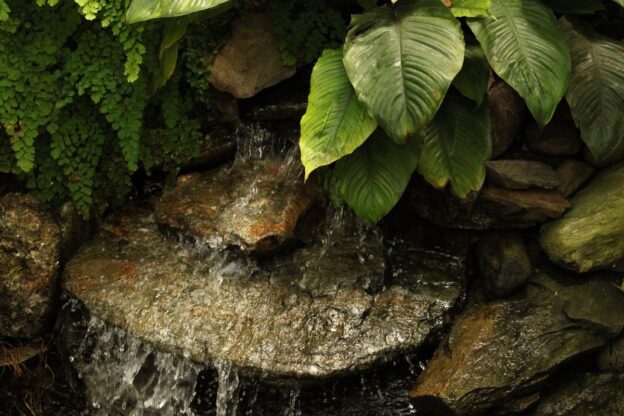
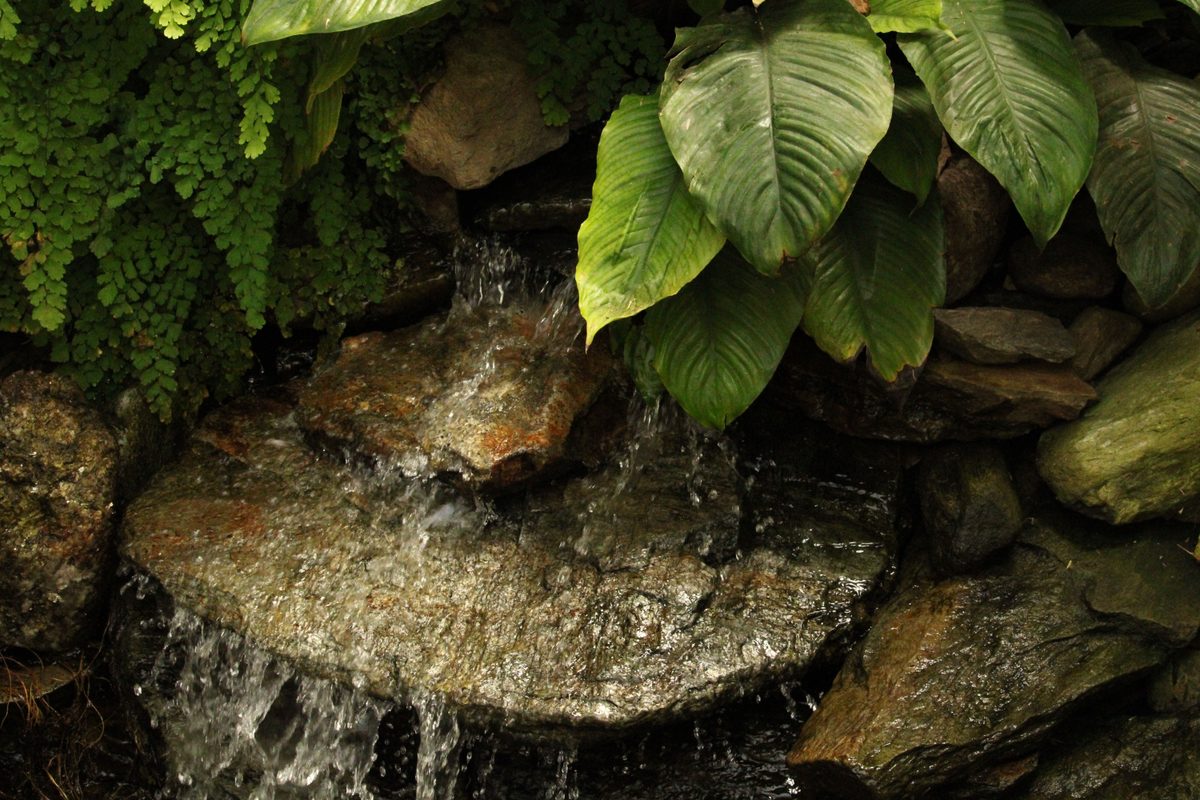
 A rock garden fountain transforms outdoor spaces by combining water movement with natural stone textures and surrounding vegetation. The global outdoor water fountain market reached $3.8 billion in 2025 and is forecast to grow to $6.4 billion by 2034, with freestanding fountains holding 34.2% of the market. In the U.S., residential demand accounts for 84% of landscaping water features, and fountains are responsible for 64% of demand gains through 2025.
A natural-looking fountain succeeds when it appears embedded in the landscape rather than staged above it. Rock garden fountain design requires careful attention to stone placement, concealed mechanics, plant selection, and site-specific conditions that match Southern California climates. This guide provides practical steps to plan, build, and maintain a fountain that enhances your outdoor space while avoiding common design mistakes.
Key Takeaways
- Use irregular stone groupings with varied sizes and partially buried edges to create organic visual flow
- Conceal pump lines and reservoir edges to ensure water paths appear geologic rather than mechanical
- Select native or climate-adapted plants that tolerate moisture and integrate naturally with stone textures
- Evaluate site conditions, including sun exposure, wind patterns, and local water regulations, before installation
- Plan for weekly water checks and seasonal maintenance to prevent algae buildup and pump burnout
What Is a Rock Garden Fountain and Why Choose It?
A rock garden fountain is a water feature constructed from natural stone or stone-look materials that recirculates water through irregular rock groupings. These fountains work well in native planting schemes where homeowners prioritize sensory calm and organic landscape integration. Rock fountains typically use basalt, slate, natural fieldstone, or resin-rock composites to create water paths that mimic natural streams or springs.
Rock garden fountains appeal to nature-oriented homeowners who want features that complement drought-conscious or naturalistic landscapes. Unlike traditional tiered fountains designed for symmetrical courtyards, rock fountains blend into surrounding vegetation and require careful plant selection to maintain visual cohesion. The price range spans $300 to $3,500, depending on stone quality, size, and whether materials are natural or composite.
Key Features and Materials of Rock Garden Fountains
Rock fountain construction relies on irregular stone shapes and textures that avoid uniform geometry. Natural stone options include basalt columns, slate slabs, and river boulders, while resin-rock composites offer lighter weight and lower cost with realistic surface finishes. Both material types must support pump integration, water flow paths, and secure stacking without visible adhesive lines.
Choosing durable materials becomes especially important in Southern California climates, where sun exposure accelerates mineral buildup and algae growth. Rock garden fountain prices range from $300 for small resin assemblies to $3,500 for premium natural stone installations with integrated reservoir systems. Material selection should balance aesthetic goals with long-term durability and maintenance requirements.
Benefits of Natural Integration and Sensory Appeal
Rock garden fountains compete on natural integration and sensory calm rather than formal centerpiece presence. Water flowing over irregular stone surfaces produces softer, more variable sounds compared to uniform cascades from tiered fountain bowls. This acoustic quality works well in contemplative garden zones, seating areas, and spaces designed to attract birds and beneficial insects.
The visual advantage lies in how rock fountains relate to existing grade, boulders, and plant textures without requiring symmetrical placement. Homeowners who prioritize native plants and water-efficient landscapes find rock fountains easier to integrate because stone groupings tolerate moisture variability and shade pockets. This flexibility reduces design conflicts between hardscape and planting zones while supporting wildlife habitat goals.
Comparing Rock Garden Fountains to Other Fountain Styles
Rock fountains best suit nature-oriented homeowners, while tiered fountains serve traditional homeowners seeking formal centerpieces. Tiered fountain price ranges from $206 for basic resin models to $5,749 and above for premium cast-stone versions. Wall fountain prices span $1,579 to $5,860 and work well in compact patios where vertical installations save floor space.
Solar fountain prices range from $99 to $400 and appeal to eco-conscious buyers prioritizing lower electricity costs and simplified installation. Custom fountain prices start at $4,600 and exceed $15,000 for bespoke designs involving designer collaboration. Each category serves distinct lifestyle needs, with rock fountains occupying the middle ground between budget solar options and high-end custom installations.
Which Elements Make a Rock Garden Fountain Look Natural?
Natural rock garden fountain design depends on irregular stone placement, concealed mechanics, and plant integration that mimics established ecosystems. The first visual test is whether the fountain appears to have emerged from the site or been placed on top of it. Garden design experts recommend using random stone groupings rather than rigid rows, with rough textures reading as more organic than polished surfaces.
Scale must align with available yard space because large rocks can overwhelm small areas despite their visual appeal. Partially burying stone edges, varying stone sizes within each grouping, and concealing pump lines all contribute to geologic authenticity.
Selecting Irregular Stones and Groupings
Use irregular rock groupings with varied sizes to avoid uniform geometry that signals artificial placement. Stones should include larger anchor pieces and smaller transition rocks that fill gaps and support natural water flow. Partially buried edges help stones appear settled into the landscape rather than stacked above grade.
Concealed pump lines prevent visual breaks between stone surfaces and surrounding soil or groundcover. Mock up stone positions before finalizing placement to test sightlines from multiple viewing angles. This preparation reduces the need for repositioning heavy materials after installation.
Concealing Pump and Water Lines for Organic Flow
Pump and water line concealment is essential for maintaining the illusion of natural water sources. Reservoir edges should sit below grade or behind stone faces to prevent visible basin rims. Flexible tubing can be routed through drilled stone cores or behind stacked rock faces, depending on fountain height and water volume.
Water flow should emerge from stone crevices or upper surfaces rather than exposed nozzles mounted above the stone grouping. This approach mimics seeps and springs found in natural rock outcroppings. Proper concealment also protects pump components from sun exposure and reduces maintenance frequency by preventing debris accumulation.
Integrating Native Plants and Climate-Adapted Vegetation
Select native or climate-adapted plants that tolerate reflected moisture or shade pockets created by stone groupings. Native plants appear in 83.3% of landscape projects because they require less irrigation, resist local pests, and support regional wildlife populations. Suitable species include ferns, sedges, and low groundcovers that naturalize around stone edges without competing for visual dominance.
Plant selection should account for moisture gradients created by fountain overspray and reflected humidity from water surfaces. Species tolerant of both dry conditions and occasional moisture spikes perform best in fountain perimeter zones.
How Do Site Conditions Influence Rock Garden Fountain Design?
Site conditions determine fountain scale, material selection, and long-term maintenance requirements. Evaluate available space first to ensure stone groupings fit yard dimensions without overwhelming circulation paths or sight lines. Large rocks create compelling focal points in spacious yards but diminish usable space in compact settings.
Sun exposure, wind patterns, and local climate regulations all affect fountain performance and operating costs. Homeowners must consider how these variables interact before selecting fountain size, materials, and placement.
Assessing Space and Scale in Your Outdoor Area
Evaluate available space by measuring the proposed fountain footprint and surrounding clearance zones. Mock up the fountain’s position using temporary markers or cardboard templates to visualize its presence from multiple viewpoints. This step prevents scale mismatches that become obvious only after installation, when stone placement is difficult to adjust.
Large rocks can overwhelm small yards by blocking sight lines and reducing functional circulation space. Fountain height should align with nearby vertical elements such as fences, walls, or tree canopies to maintain visual balance.
Managing Sun Exposure, Overspray, and Water Efficiency
Sunny sites raise algae and cleaning burden because excess sun accelerates algae growth in standing water. Wind-driven overspray creates maintenance problems by affecting nearby seating zones, walls, and adjacent planting areas. Both factors increase the frequency of basin cleaning and water replacement compared to shaded or wind-protected locations.
Evaporation can expose pumps and cause burnout if water levels drop below intake ports during hot weather. Weekly water checks become necessary in the summer months to prevent equipment damage. Variable-frequency pump controls potentially reduce electricity costs by up to 15% while maintaining adequate water circulation.
Considering Local Climate and Regional Restrictions
Check local code and utility requirements before fountain selection to avoid permitting issues or water-use violations. Orange County guidelines address landscape irrigation, plumbing connections, and electrical installations for outdoor water features. Some jurisdictions require permits for electrical work or plumbing modifications, depending on the fountain size and power source.
Regional water restrictions may limit fountain operation during drought periods or require recirculating systems that minimize water loss. Understanding these requirements early prevents costly design changes or removal orders after installation.
What Are the Essential Steps to Plan and Build Your Rock Garden Fountain?
Planning a rock garden fountain begins with site evaluation and placement decisions that affect visual impact and maintenance access. First, identify an area where the fountain can visually relate to grade, boulders, planting, and circulation paths. Mock up the footprint and sightlines before purchase to confirm the fountain fits the intended space.
Stone arrangement and water path construction require careful attention to pump placement, reservoir sizing, and overflow management. Plant selection should occur after stone placement to ensure species match final moisture patterns and light conditions.
Preparing the Site and Positioning the Fountain
Site preparation includes grading for drainage, clearing vegetation from the installation area, and establishing level surfaces for stone placement. Electrical outlets must be positioned within safe reach of the pump while remaining concealed from primary viewing angles. Proper drainage prevents water accumulation that undermines stone stability.
Positioning the fountain requires consideration of viewing angles, sun exposure, and proximity to seating or activity zones. Garden fountains in Orange County often benefit from morning sun and afternoon shade to balance algae control with comfortable ambient temperatures. Final placement should allow maintenance access without requiring stone removal or landscape disturbance.
Arranging Stones and Building the Water Path
Stone arrangement begins with positioning anchor rocks that define the fountain’s footprint and vertical profile. Smaller stones fill gaps and support water flow paths between major pieces. Stones should be secured with construction adhesive or mortar, depending on height and stability requirements, with adhesive joints concealed behind stone faces.
Water paths are created by routing flexible tubing through drilled stone cores or behind stacked surfaces to hidden outlet points. Flow rate and pump capacity must match the stone surface area to prevent dry spots or excessive overflow. Testing water patterns before final stone securing allows adjustments that improve visual flow.
Selecting and Installing Appropriate Plants
Plant selection follows stone installation to ensure species match final site conditions. Choose native or climate-adapted species that tolerate the moisture and light levels created by the completed fountain. Groundcovers, low ferns, and sedges work well in perimeter zones where they soften stone edges without competing visually with water features.
Installation spacing should account for mature plant sizes to prevent overcrowding that hides stone textures or blocks water views. Mulching around planted areas reduces weed competition and moisture loss.
How Can You Maintain a Rock Garden Fountain for Longevity and Beauty?
Maintenance discipline determines whether rock garden fountains remain assets or become frustrations. Pond and fountain repair in Orange County often involves addressing preventable issues caused by inconsistent water monitoring and pump care. Routine tasks include water level checks, basin cleaning, pump inspections, and seasonal adjustments that prevent equipment failure and preserve water quality.
Outdoor fountains running continuously may cost roughly $25 per year in electricity for standard plug-in residential models. Variable-frequency control potentially reduces electricity costs by up to 15% while maintaining adequate circulation.
Routine Water Level Monitoring and Pump Care
Water level monitoring prevents pump burnout caused by evaporation, exposing intake ports. Weekly checks are necessary during warm months when evaporation rates peak. Top-offs should use clean water to avoid introducing contaminants that accelerate algae growth or mineral buildup.
Pond pump maintenance includes quarterly inspections of intake screens, impellers, and electrical connections. Debris accumulation reduces flow rates and increases energy consumption. Regular cleaning extends pump life and maintains consistent water circulation.
Cleaning Techniques and Algae Control
Basin cleaning requires monthly removal of leaves, debris, and sediment that accumulate in reservoir areas. Algae control involves balancing sun exposure, water temperature, and biological additives that inhibit growth without harming surrounding plants. Keeping your pond clean in California requires understanding regional water chemistry and climate patterns that affect algae proliferation.
Deep cleaning two to three times annually removes mineral deposits and algae films that discolor stone surfaces. Use non-toxic cleaners compatible with plants and wildlife to avoid ecosystem damage. Scrubbing stone textures with soft brushes prevents surface etching while improving water clarity.
Seasonal Maintenance and Winterizing Procedures
Seasonal fountain care in Orange County focuses on preparing for temperature extremes and adjusting operation schedules. Winter months require reduced run times or complete shutdowns in areas experiencing freezing temperatures. Drain lines and remove pumps in climates where ice formation could crack stone surfaces or damage equipment.
Spring startup involves refilling reservoirs, testing pump function, and inspecting stone stability after winter weather. Summer maintenance emphasizes water level monitoring and algae prevention through increased circulation or shade adjustments. Fall tasks include removing leaf debris and reducing operating hours as temperatures decline.
What Questions Should Homeowners Ask Before Buying a Rock Garden Fountain?
Homeowners should evaluate fit, function, and future maintenance requirements before committing to a rock garden fountain purchase. Align style with both the home and budget by examining material durability, installation needs, and surrounding landscape conditions.
Aesthetics consideration drives 71% of product purchasers, while durability consideration equally influences 71% of buyers. Maintenance objectives matter to 21% of homeowners who prioritize easier upkeep.
Evaluating Fit, Style, and Material Suitability
Style alignment requires assessing whether a natural rock aesthetic complements existing landscape design. Traditional homes may struggle to integrate naturalistic fountains unless the surrounding landscapes already emphasize native plantings. Contemporary properties benefit from sculptural rock arrangements that echo architectural minimalism.
Material durability affects long-term value retention and maintenance frequency. Natural stone withstands weather better than resin composites but costs more and requires professional installation. Examine material specifications for freeze resistance, sun stability, and stain resistance before finalizing selections.
Installation, Power, and Maintenance Needs
Assess power and operation requirements, including electrical outlet proximity, voltage specifications, and backup power options. Solar fountains reduce wiring complexity but depend on consistent sun exposure. Outdoor fountain installation becomes more complex when electrical work requires permits or professional assistance.
Maintenance objectives should address water level monitoring, pump care, and cleaning frequency. Fountains requiring weekly attention may not suit time-constrained homeowners.
Aligning Fountain Choice with Landscape Maturity and Use
Review surrounding landscape conditions, including mature tree canopies, existing hardscape, and plant establishment. Fountains installed in developing landscapes may need repositioning as trees grow and shade patterns shift. Mature landscapes limit installation flexibility because established plants and roots restrict excavation.
Consider how outdoor activities and traffic patterns affect fountain placement and safety. Fountains near play areas require shallow basins and secure stone placement. Proximity to seating zones should balance ambient sound with conversation comfort.
What Common Design and Buying Mistakes Should Be Avoided in Orange County?
Orange County homeowners face specific challenges related to water efficiency, sun exposure, and local regulations. Buying for catalog appeal instead of site scale leads to fountains that overwhelm compact yards or create circulation problems. Larger suburban lots accommodate freestanding rock features better than urban properties with constrained outdoor space.
Ignoring local code, permit, and water-source issues causes installation delays or removal requirements. Southern California’s sun accelerates algae growth and evaporation compared to temperate climates.
Addressing Scale and Site-Specific Challenges
Mock up fountain footprints using temporary markers to visualize actual size before purchasing oversized features. Small yards require compact rock assemblies that preserve usable space while providing water, sound, and movement. Large statement pieces work only in properties with sufficient yard depth to maintain balanced proportions.
Site-specific challenges include drainage patterns, wind exposure, and existing vegetation. Wind-driven overspray affects nearby walls and furniture while increasing water loss.
Navigating Local Permitting and Water Regulations
Check local code and utility requirements before selection to identify permit needs for electrical, plumbing, or structural work. Orange County guidelines vary by jurisdiction and may require inspections for outdoor water features, depending on size and complexity. Failure to obtain required permits risks fines or mandatory removal.
Water regulations during drought periods may restrict fountain operation or require recirculating systems that minimize consumption. Understanding these limitations early ensures fountain designs comply with local ordinances.
Planning for Sun Exposure and Long-Term Maintenance
Sunny sites accelerate algae growth, requiring more frequent cleaning and water treatment. Shade moderation through strategic plant placement or structural elements reduces algae proliferation without eliminating natural light. Balance sun exposure with maintenance capacity to avoid fountains that become visual liabilities.
Long-term maintenance planning includes pump replacement schedules, stone resealing needs, and equipment upgrades. Underestimating maintenance time and cost leads to neglected fountains that detract from property value. Plan for weekly water checks, monthly basin cleaning, and seasonal adjustments that preserve fountain performance.
Designing a Rock Garden Fountain That Looks Natural: Integrating Form, Function, and Site Context
Natural-looking fountain design succeeds when irregular stones, concealed mechanics, and native plants create features that appear embedded in the landscape. U.S. landscaping water-feature demand is forecast to reach $1.0 billion in 2025, with residential uses accounting for 84% of demand in 2020. This growth reflects homeowner interest in outdoor features that enhance curb appeal while supporting water-efficient and low-maintenance landscapes.
Rock garden fountain design requires attention to stone selection, pump placement, plant integration, and site-specific conditions that affect performance and longevity. Southern California homeowners must balance aesthetic goals with sun exposure, water efficiency, and local regulations. Proper planning prevents common mistakes, including scale mismatches, inadequate maintenance preparation, and code violations.
Successful fountain projects begin with a thorough site evaluation and material selection that matches climate conditions. Natural stone assemblies perform best when installed by experienced professionals who understand drainage, electrical requirements, and long-term ecosystem balance. Since 2001, Orange County Pond Services has helped Southern California homeowners design and maintain water features that preserve natural beauty while addressing regional challenges.
Bring Your Rock Garden Fountain Vision to Life with Orange County Pond Services
A fountain that truly looks natural depends on dozens of small decisions made in the right order: which stones anchor the composition, how the pump and lines stay invisible, where the water emerges, and which plants fill the surrounding gradients. Get those choices right from the start and your fountain reads as part of the garden. Get them wrong, and you spend years repositioning stones, fighting algae, or replacing pumps that were never sized correctly for the design.
Since 2001, Orange County Pond Services has designed, built, and maintained water features for homeowners across Southern California. We will walk your property, listen to the feel you have in mind, and recommend a stone arrangement, pump setup, and planting plan that fits your site, your style, and your maintenance preferences. If you already have a fountain that isn’t performing the way you pictured, we can diagnose what is happening and advise honestly on whether a refresh, repair, or full rebuild is the right path forward.
Contact Orange County Pond Services to schedule a consultation and start planning a rock fountain that looks like it has always belonged in your garden.
